Why Does This Confusion Exist?
It is a fair question. Both are made of plastic. Both come in rolls. Both are sold at the same agri-input shops. They even sit next to each other in most catalogues. But they work in completely different ways and serve completely different purposes on a farm. Confusing the two leads to wrong purchases, poor crop results, and avoidable losses. This blog breaks both products down simply, so anyone, from a wholesaler to a farmer, can pick the right one.What Agricultural Mulching Films Actually Do
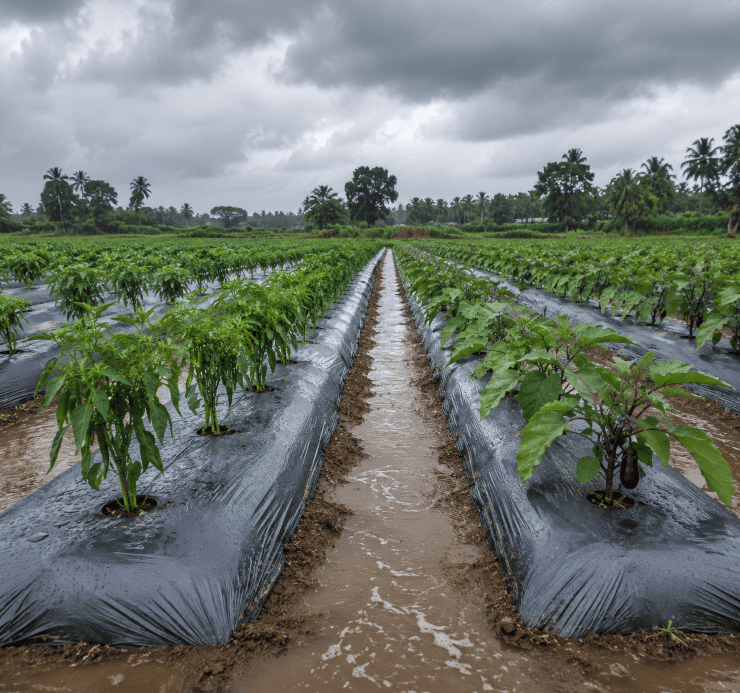
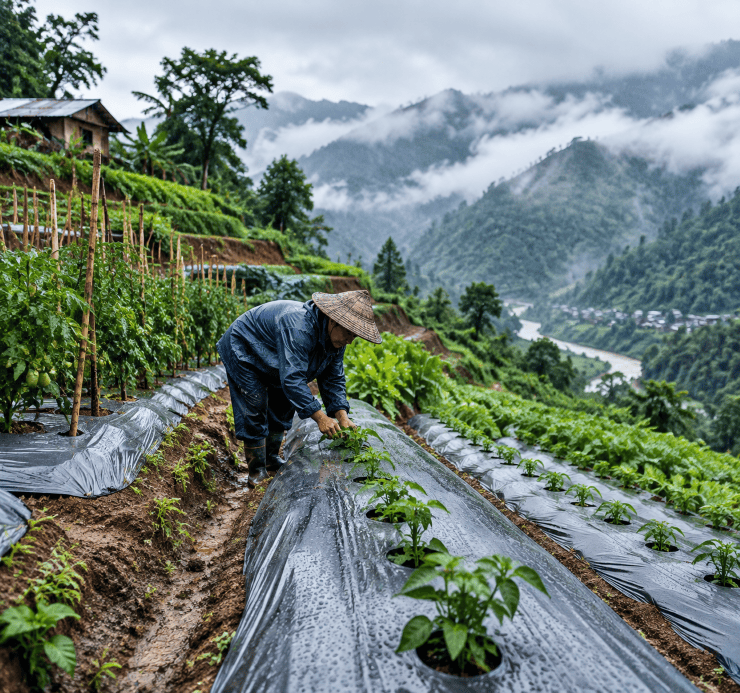
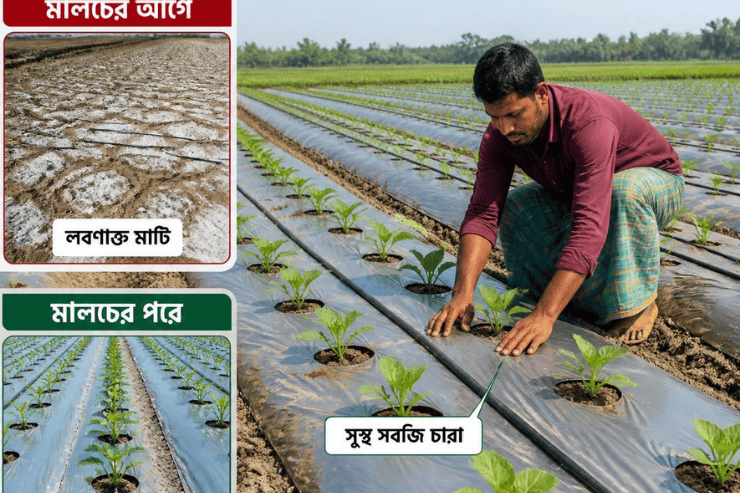
Agricultural mulching films are thin plastic sheets typically made from polyethylene (PE), that are spread over prepared soil beds. Holes are punched at planting points. The rest of the soil surface stays covered throughout the crop cycle. Here is what this covering does:- Retains soil moisture - The film prevents water from evaporating between irrigation cycles. This directly reduces how much water a farm needs.
- Suppresses weed growth - Sunlight cannot reach the covered soil. Weeds do not get the energy to germinate or grow.
- Stabilises soil temperature - Dark-coloured films absorb heat and keep root zones warm in cooler months. Lighter or reflective films keep the soil from overheating in summer.
- Keep fertilisers in place - Nutrients applied under the film stay in the root zone instead of washing or leaching away.
- Protects roots from surface stress - The film creates a physical buffer between the plant root system and harsh surface conditions.
What Are the Benefits of Shade Net
Shade nets work at the opposite end of the plant. A shade net is a woven mesh sheet made from HDPE (High Density Polyethylene). It is installed on poles or a frame structure above the growing area. Its function is to filter and reduce what reaches the crop from above - sunlight, rain, wind, and airborne pests. Here is what a shade net controls:- Sunlight intensity - Shade nets are rated by the percentage of light they block - 35%, 50%, 75%, and 90% are the standard options. A 35% net is used for crops that need plenty of light but need some filtering. A 75% to 90% net is for shade-sensitive plants and nurseries.
- Canopy temperature - On intense summer days, a shade net can lower the temperature under it by several degrees, reducing heat stress on leaves and developing fruit.
- Rain and wind force - The mesh absorbs the impact of heavy rainfall and slows strong winds, both of which can damage young plants, knock off flowers, or wash out seedbeds.
- Pest and bird entry - Shade nets with a fine mesh structure also act as a physical barrier against insects, birds, and flying pests.
Meghalaya Crops That Work Best With Shade Net Manufacturing in Meghalaya of farm inputs like mulch film and shade nets is still very limited. Most supply comes from manufacturers in West Bengal and other states. Local dealers depend entirely on how reliable and on-time their suppliers are - distributors who stock both products and deliver consistently during planting season hold a clear advantage. A buyer coming in for mulch film is very likely the same person who needs a shade net; stocking both means the full sale stays with you.
- Anthurium and Orchids - Meghalaya is known for its floriculture. Anthurium and orchids are shade-loving plants. They cannot survive under direct sun. A 75% to 90% shade net is essential for these crops. It creates the dim, humid condition these flowers need to grow well.
- Ginger and Turmeric - Both crops prefer partial shade, especially when young. A 35% to 50% shade net during the early growth stage protects the young shoots from harsh sun and reduces rain damage to the soil bed.
- Lettuce and other Leafy Vegetables - These are heat-sensitive. Too much direct sun causes them to bolt; meaning they go to seed too quickly and become unusable. A 35% to 50% shade net keeps the temperature manageable and extends the harvest window.
- Nursery seedlings for any crop - A shade net for nursery use is standard practice in Meghalaya. Seedlings for tomato, chilli, capsicum, strawberry, and flower crops are all started under shade before being transplanted. A 50% to 75% shade net is the right range for nursery beds; enough shade to protect, enough light to grow.
- Broccoli and Cauliflower - These brassica crops are grown in the cooler months in Meghalaya. They are sensitive to heat and heavy rain. A 35%to 50% shade net over these crops manages temperature and reduces physical damage from rainfall.
- Heavy monsoon rain causes surface runoff and washes nutrients away from soil beds
- Plastic mulch film holds moisture in and keeps the soil surface stable
- Young ginger shoots are sensitive to direct sun and physical rain damage — a shade net above manages both
- Mulch film keeps fruit clean, soil moist, and weeds away from shallow roots
- A shade net in the nursery phase protects young plants before transplanting
- Both are needed at different stages of the same crop
- These flowers cannot survive direct sun or heavy rain hitting the blooms
- A 75%–90% shade net is essential above the growing area
- Mulch film on the soil bed below controls moisture and prevents weed competition around the roots
The Core Difference: Mulch Film vs. Shade Net
| Mulch Film | Shade Net | |
| Where it is placed | On the soil surface | Above the crop, on a frame or poles |
| What it manages | Soil moisture, weeds, soil temperature, nutrient retention | Sunlight, canopy temperature, rain, wind, pests |
| Primary material | Polyethylene (PE) | HDPE woven mesh |
| How it is measured | Thickness in microns (20 - 100) | Shading percentage (35% to 90%) |
| Typical lifespan | 1 - 2 crop cycles | Multiple seasons with proper handling |
How Should Sourcing Be Done?
The following applies whether you are a dealer building your inventory or a large farm manager sourcing directly from mulch film manufacturers in Kolkata or elsewhere. For mulch film:- Material quality: The film should be made from 100% virgin polyethylene. Recycled material leads to uneven thickness and weaker UV performance.
- Thickness: Match the micron to the crop duration and handling conditions. 20 - 25 microns for short-duration crops or careful manual laying. 30 - 50 microns where longer field life or mechanical laying is involved.
- UV stabilisation: This is non-negotiable. A film without UV treatment will degrade within weeks in direct sunlight, making it useless before the crop cycle ends.
- Width options: Bed widths vary by farm and crop. A reliable supplier should offer at least 2.5 ft, 3 ft, 3.25 ft, and 4 ft widths.
- Roll length: Standard lengths are 400m, 500m, 600m, and 800m. Confirm roll specifications before ordering to avoid mismatch with your laying equipment or farm size.
- Reinforced edges: Prevents tearing during laying, particularly important on uneven terrain or when using mechanical layers.
- Shading level: 35%–50% for crops that need most of their sunlight. 75%–90% for nurseries and plants that cannot handle strong sun.
- Width: Measure your frame or structure before you order. Too wide wastes material. Too narrow leaves gaps.
- Material: 100% virgin HDPE with UV stabilisation, just like mulch film.
- Reinforced edges: Very important if the net is going up in a windy area. Weak edges fray fast and the net falls apart sooner.
Choosing the Right Agricultural Mulching Films Supplier
The demand for agricultural mulching films and shade nets is not going down. Government schemes are pushing protected farming. Farmers who try mulch film almost never go back to farming without it; the crop results speak for themselves. For dealers and distributors, a few things to keep in mind:- Stock both products - If a buyer needs mulch film, there is a very good chance they also need a shade net. Having both means more sales from the same buyer.
- Choose mulch film suppliers with real variety - different widths, thicknesses, and colours. If your supplier has a limited range, you will end up turning buyers away.
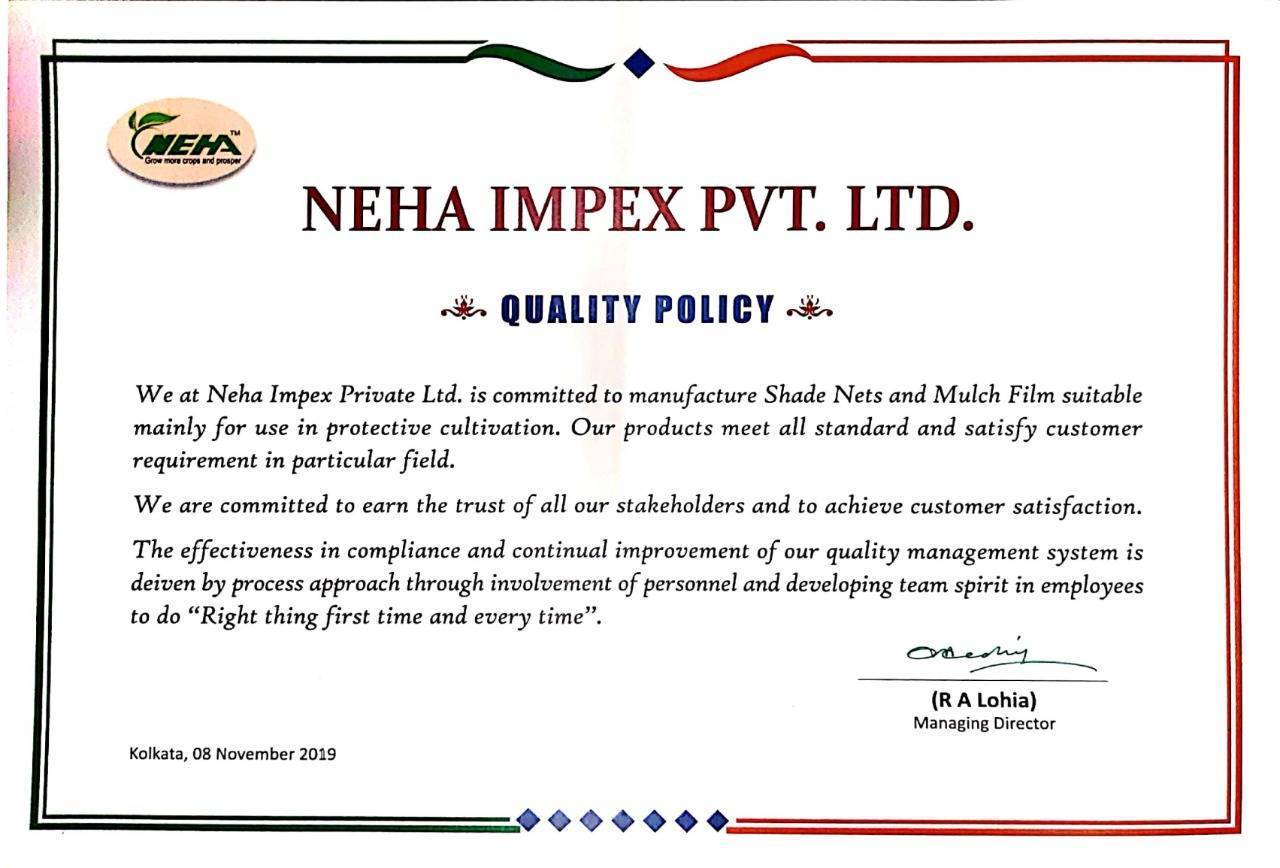
- Go with ISO-certified manufacturers - Government horticulture departments and large farms usually require this before they buy.
- Check how reliable the supply is - A supplier who runs out of stock during planting season is a problem. Know their capacity and how long they take to dispatch before you rely on them.
Ask Yourself these Before Selecting the Right Supplier
The following are the questions for evaluating any manufacturer or supplier for both mulch film and shade net.- Do they manufacture themselves? In-house manufacturing means they control what goes out. A trader sourcing from different factories cannot guarantee consistency.
- Do they have a wide product range? You need one supplier who can cover all your buyer needs: different sizes, thicknesses, and colours.
- Are they ISO certified? This is a documented quality standard. Many institutional and government buyers will ask for this.
- How long have they been in business? More years and more clients means more problems already solved. New suppliers are still figuring things out.
- Can they deliver on time? Especially during peak season. Ask about their dispatch timelines and what they do when demand goes up.
- Do they give technical help? A good manufacturer tells you which product is right for which crop and region. This helps you advise your buyers better.