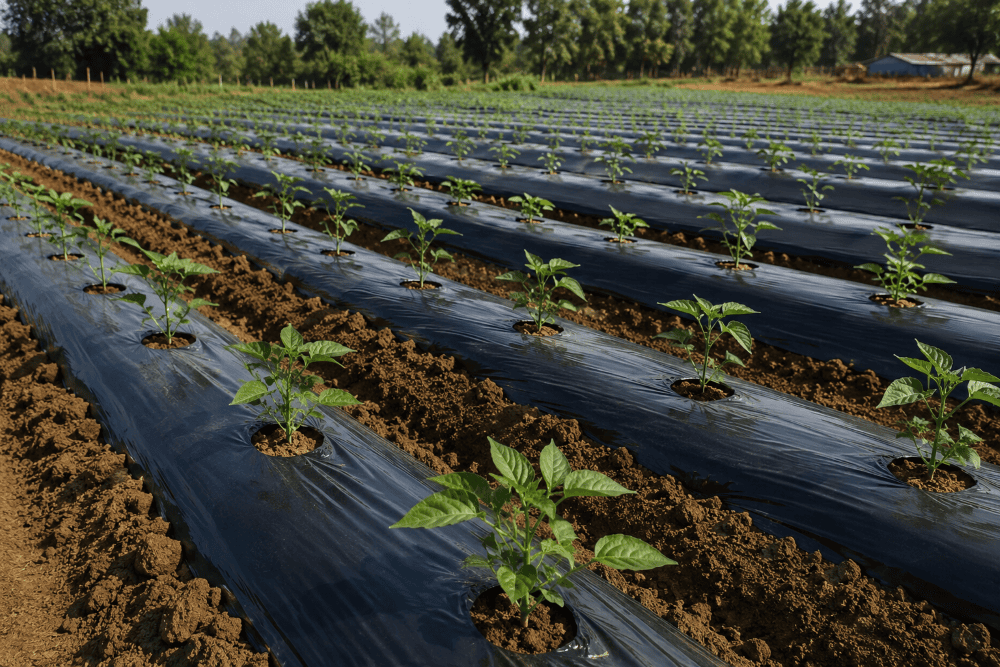
You both ordered mulch film at the same time. Same product. Similar crops. But when harvest came around, their yield was noticeably better. The soil under their film stayed moist longer. Their weeds were almost non-existent. And their crop quality looked cleaner, more even. So what went wrong on your end? Nothing went wrong, exactly. But a few variables were mismatched and in agriculture mulch film, small mismatches quietly add up over an entire season. Here's what those variables are, explained simply.  

It Starts With the Soil Type

This is the one most farms overlook entirely. Mulch film works differently depending on what is underneath it. Sandy soil drains fast and holds very little moisture. Clay soil holds too much and can get waterlogged. Loamy soil sits in the middle and is usually the most responsive. When you lay the same film on different soil types without adjusting anything else:
  • Sandy soil loses moisture faster even under film needs a higher seal at edges
  • Clay soil can trap heat and moisture too long needs better edge ventilation
  • Loamy soil responds predictably the film does exactly what it promises
If your neighbour has loamy soil and you have sandy or clay-heavy land, the same mulch films will perform differently. It is not a quality issue. It is a soil-match issue. Fix: Know your soil type before choosing film thickness and colour. If your soil is sandy, wider film with tighter edge anchoring makes a real difference.  

Colour Is a Technical Choice, Not a Visual One

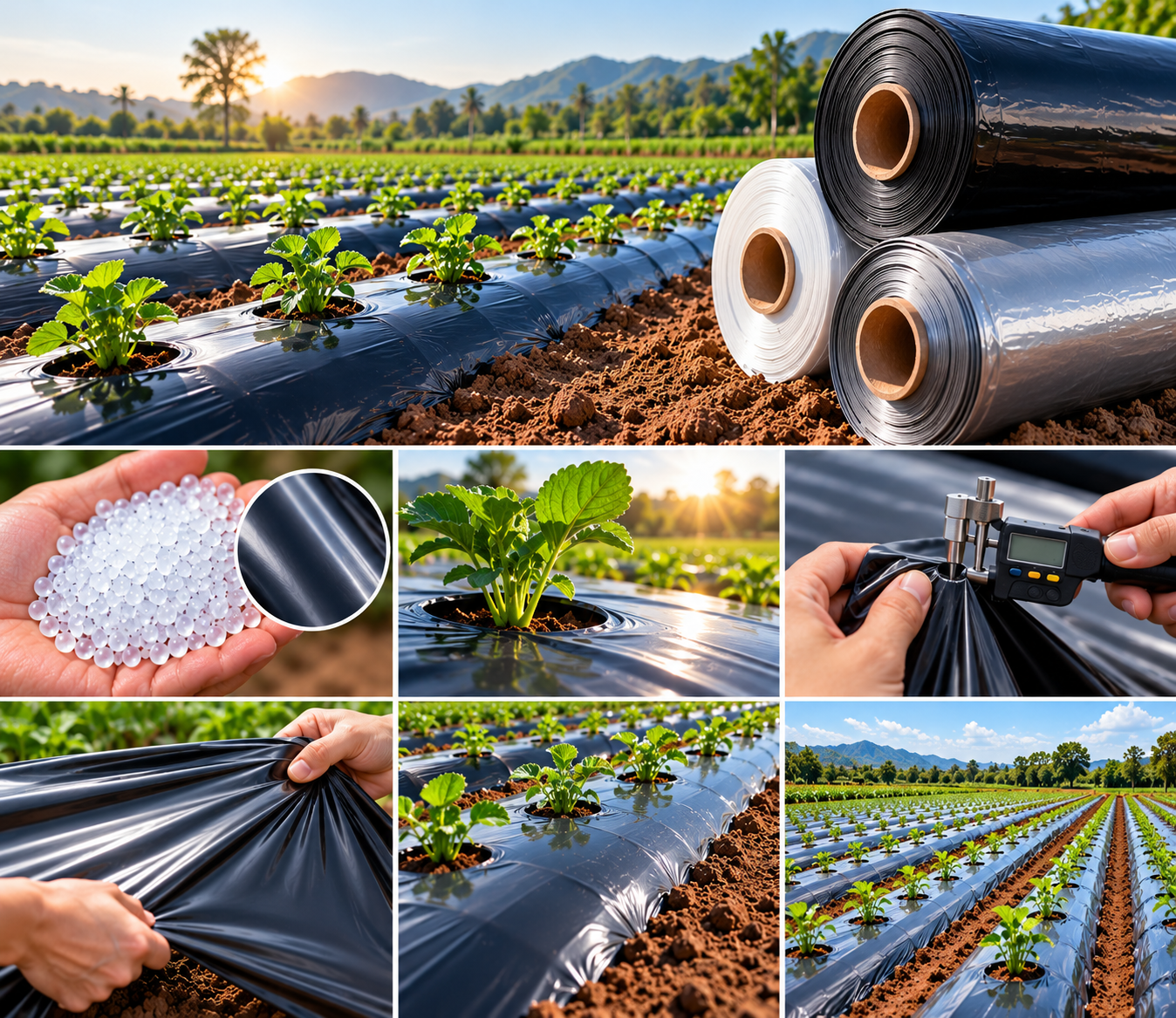
Most farms pick black because it is the most common. And black works well, for the right conditions. But plastic mulch film comes in multiple colours for a reason. Each colour interacts with sunlight, soil temperature, and pests differently.
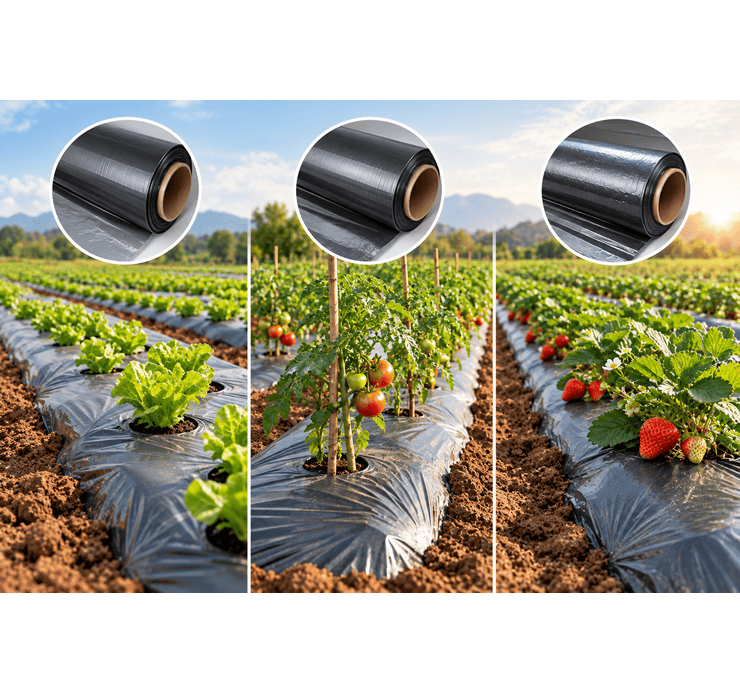
Film ColourBest ForWhat It Does
BlackWeed control, warm-season cropsBlocks light fully, warms soil
Silver / ReflectivePest-sensitive crops, hot climatesRepels aphids, keeps soil cooler
Transparent / ClearSoil solarisation, early seasonWarms soil fastest, allows some weed growth
Bi-colour (Black-Silver)Versatile, most horticulture cropsWeed control + pest deterrence combined
If your neighbour is growing the same crop but using silver film while you are using black in peak summer heat, their soil will be cooler, their pest pressure lower, and their produce quality more consistent. The colour of your agricultural mulching films is a field decision, not a preference.  

Micron Matters More Than People Think

Micron is the thickness of the film. And in large farms, getting this wrong is one of the most common and most expensive mistakes.
  • Low micron (15–20 micron): Lighter, cheaper, but wears out faster is fine for short-duration crops
  • Standard micron (25 micron): Works for most single-season crops
  • Higher micron (30+ micron): More durable, better for mechanised laying, longer crop cycles
If your neighbour runs a longer crop cycle or uses a mechanical film-laying machine and sourced a 30-micron film, their film holds longer, anchors better, and maintains soil conditions more consistently through the season. A thinner film on a long-duration crop starts degrading mid-season. Once it does, moisture escapes, weeds push through, and you lose the benefits you paid for. When speaking to any mulch film suppliers, always share your crop duration, not just your crop name.  

How You Water Changes Everything

This is the part nobody talks about enough. The same mulch film Kolkata farmers buy performs very differently depending on whether you use drip irrigation or flood irrigation underneath it. With drip irrigation:
  • Water goes directly to the root zone
  • The film keeps evaporation almost fully in check
  • Moisture stays consistent at the root level throughout the day
With flood irrigation:
  • Water spreads across the surface before the film absorbs it
  • Gaps or loose film edges allow pooling, which can cause root rot
  • Uneven moisture distribution reduces the film's effectiveness significantly
If your neighbour paired their film with drip irrigation and you used flood irrigation, they would see better results almost automatically, even with the exact same film. Mulch film works best when paired with a targeted water delivery system. That combination is where the real performance difference shows up.  

Installation Is Half the Product

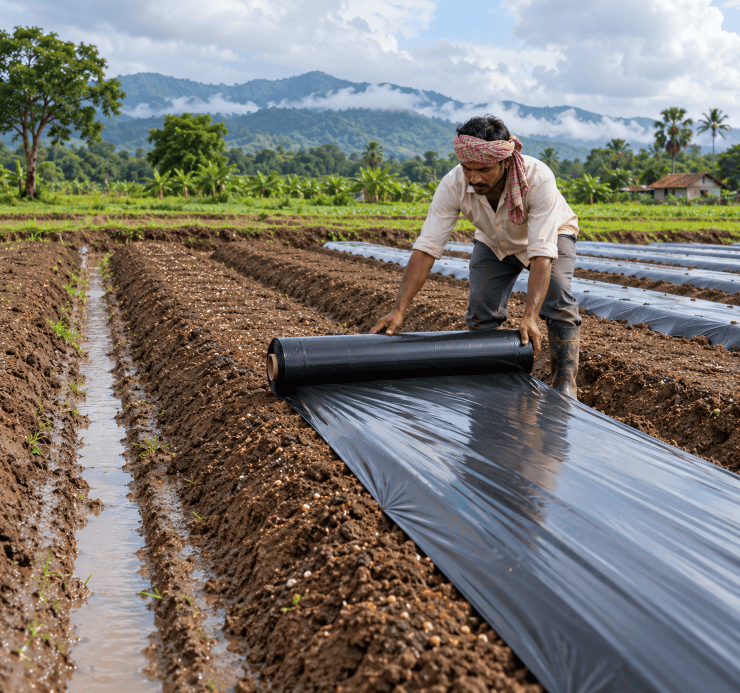
A good film installed loosely will always underperform. This is one of the most searched questions on Quora, Reddit, and farming forums, and the answer is almost always the same: the film was right, but the installation was not. Common installation mistakes that reduce mulch film performance:
  • Loose edges that let wind lift the film and break soil contact
  • Gaps between film sections where weeds push through
  • Film laid on unprepared, clumpy, or debris-filled soil
  • Planting holes cut too wide, exposing unnecessary soil surface
  • Insufficient anchoring on slopes or in windy regions
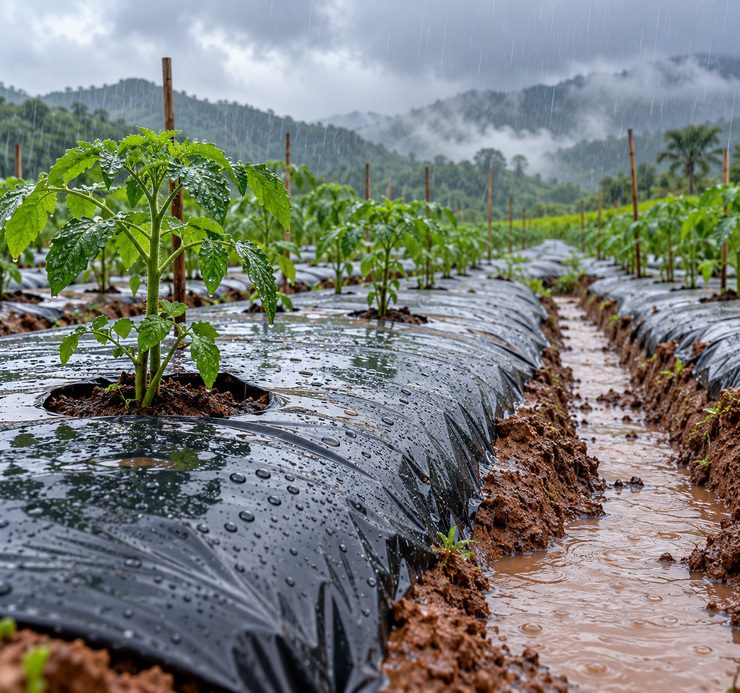
Your neighbour may have spent an extra hour on soil preparation and edge anchoring. That extra hour compounds in value across the entire growing season. Rule of thumb: Prepare the soil surface as if the film were not coming. Level, clear, and firm. Then lay.  

Where the Film Came From Also Plays a Role

Two rolls that look identical can behave differently over a season. Inconsistent UV stabilisation, uneven thickness, or low-grade additives in the film material all shorten performance life. This is not visible at purchase. It shows up six weeks into the season when edges start lifting, or the film becomes brittle earlier than expected. This is where sourcing from established mulch film manufacturers in Kolkata makes a practical difference for farms across Bengal, Odisha, Bihar, and the North-East. Manufacturers with consistent production standards, documented micron accuracy, and UV treatment specs give you predictable results, season after season. Buying the cheapest roll available might look the same on day one. By week eight, the difference is visible.  

Get the Right Film for Your Farm

The gap between your results and your neighbour's usually comes down to one of five things: soil type, film colour, micron, irrigation method, or installation. Rarely is it the film brand itself. The farms that consistently get better results are the ones that treat mulch film as a matched system and not a one-size-fits-all sheet. Colour matched to the crop. Micron matched the season length. Width matched to the bed size. Irrigation matched to the film type. If you are not sure which combination suits your farm, NehaMulch Film has been producing agricultural mulching films since 1991 from Kolkata, with a product range built around exactly this kind of practical decision-making. A quick conversation with their team can save you an entire season of guessing.  

FAQs

Q1) Why does mulch film work better on some crops than others? Different crops have different soil temperature, moisture, and light requirements. A film colour or micron that suits one crop may actively work against another. Always match the film spec to the crop need, not just the field. Q2) Does soil preparation before laying film actually make a difference? Yes, significantly. Loose, uneven, or debris-filled soil creates gaps under the film that reduce moisture retention and allow weeds to push through. Flat, firm, prepared soil gives the film consistent soil contact, which is where most of its benefits come from. Q3) Can I use the same film for multiple crop cycles? It depends on the micron and material quality. Low-micron films are typically single-season. Higher-micron films with strong UV stabilisation can sometimes carry through two shorter cycles, but this depends on how the film was removed, stored, and re-laid. Q4) Why do I still get weeds under my black mulch film? Usually because of installation gaps near planting holes, loose edges, or film that has thinned and cracked mid-season. Black film blocks light, but only where it maintains full contact with the soil. Any gap becomes a weed entry point. Q5) Is silver mulch film worth the extra cost? For crops vulnerable to aphids, whiteflies, or heat stress, yes, the yield and quality improvement typically recovers the cost difference quickly. For crops in cooler conditions with low pest pressure, black or bi-colour is usually sufficient. Q6) How do I know which micron to ask for? Share your crop type, crop duration, and whether you use machine or manual laying with your supplier. A supplier who asks these questions before recommending a product is one worth working with.

Looking for a high-quality
Mulch Film for your farm?