Hill Farming Changes How Mulch Film Behaves
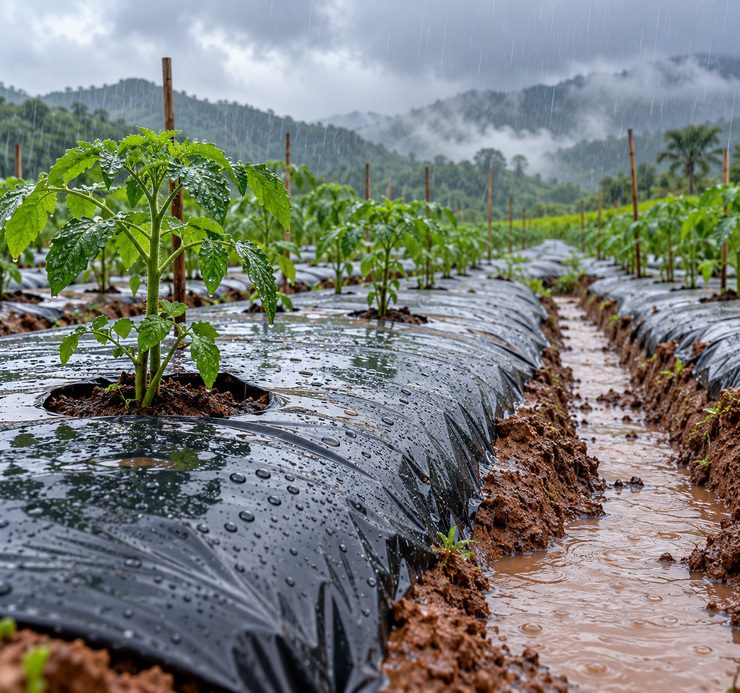
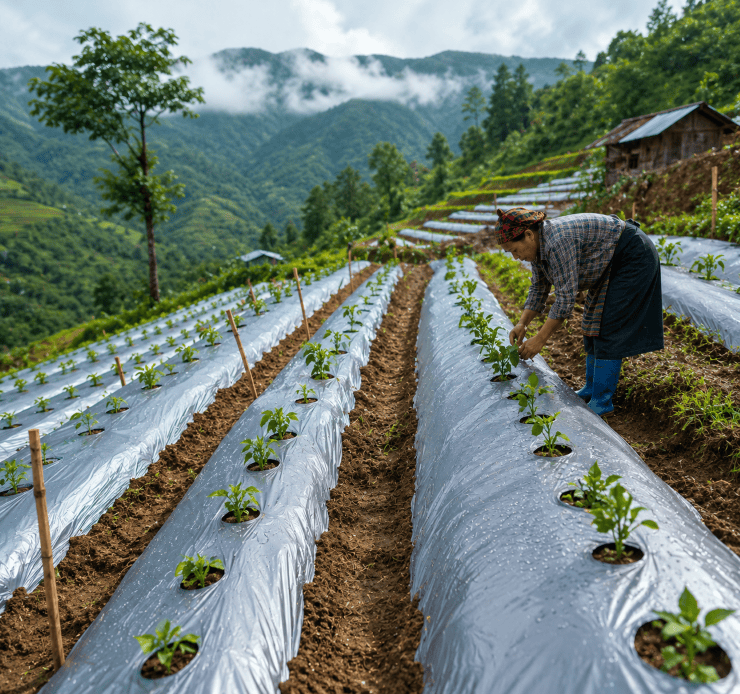
On flat land, agricultural mulching films sit still. Gravity works in your favour. Rain drains away from the film rather than across it. On a slope, everything is different:- Rainwater runs across the film surface at speed, pulling at edges and creating pressure on anchor points
- Soil underneath the film shifts downward slowly over a season
- Wind hits at different angles depending on valley and ridge positions
- Temperature swings between morning and afternoon are sharper at altitude
The Soil and Climate Reality of Arunachal Pradesh Farming
Before choosing any agriculture mulch film, it helps to understand what the land is actually doing.| Factor | Hilly Northeast Conditions | Impact on Mulch Film |
| Soil type | Often loamy to clay-heavy on slopes | Holds moisture but shifts downward under film |
| Rainfall | Heavy and concentrated during monsoon | Tests edge anchoring severely |
| Humidity | Consistently high, especially in valley zones | Speeds up material degradation in low-grade film |
| Temperature | Wide daily swings at altitude | Causes expansion and contraction in film surface |
| UV exposure | Higher at altitude | Breaks down poorly stabilised film faster |
Mulch Film Types That Work on Slopes
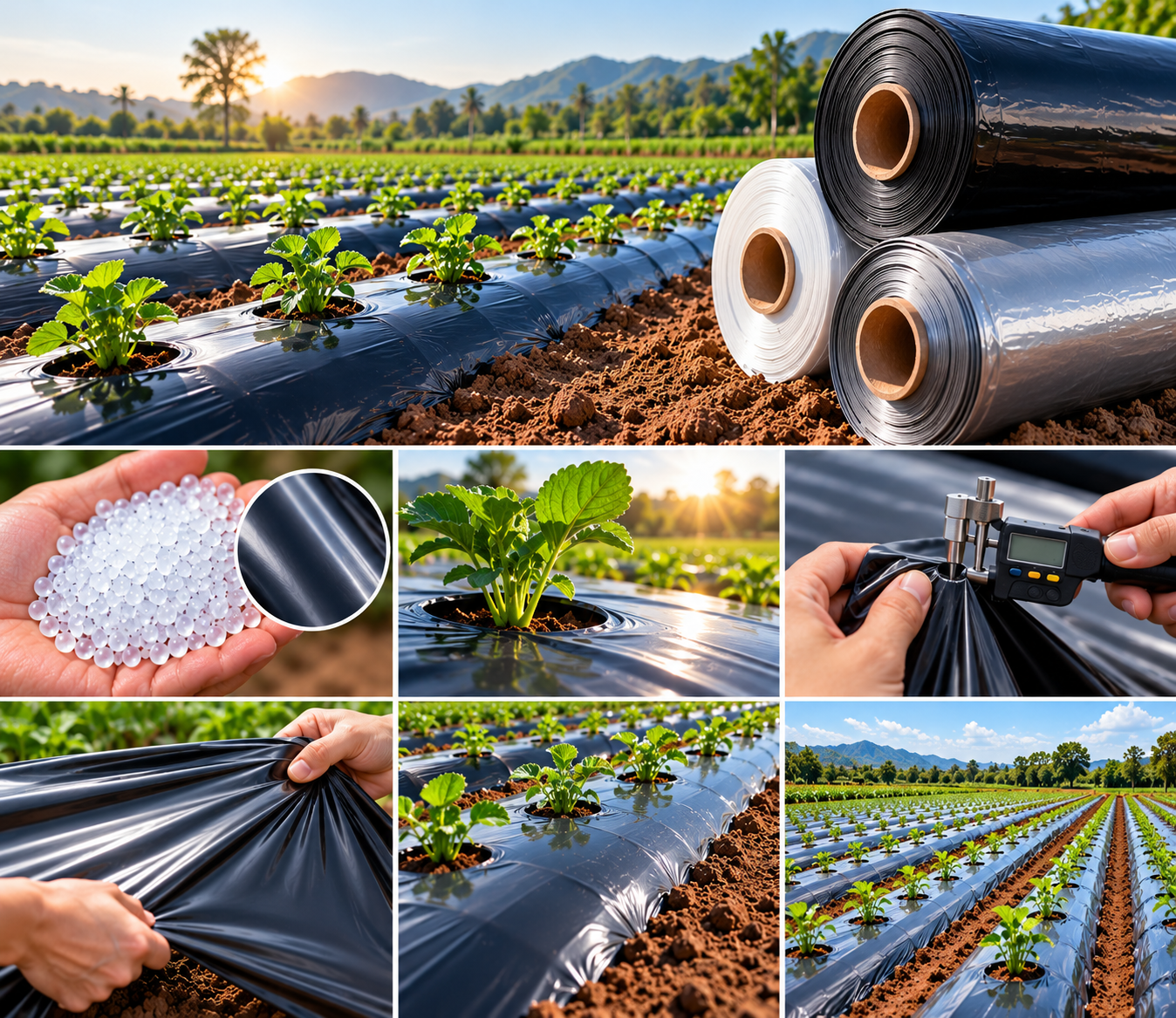
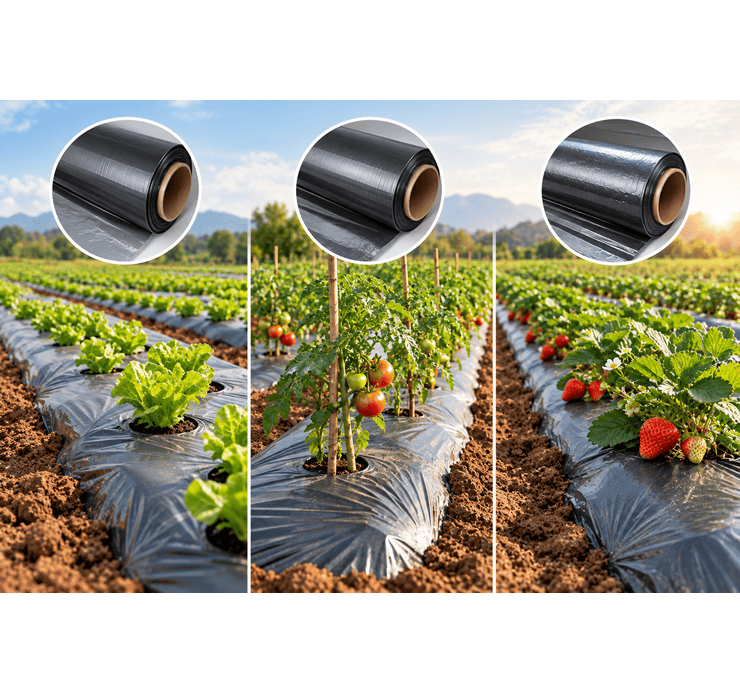
Not every film type handles hilly terrain equally. Here is a direct comparison:- Black Mulch Film: Works well for weed suppression on terraced vegetable beds. In high-humidity zones, it can trap excess moisture if drainage is not managed. Best used with proper slope-aligned installation.
- Silver / Bi-Colour Film: Handles altitude well. The reflective surface helps manage temperature swings. Bi-colour (black-silver) is the strongest all-round performer for hilly farms that blocks weeds from below, reflects heat from above, and handles rain runoff better because the surface sheds water faster.
- Transparent Film: Not recommended for high-rainfall zones. Water pooling on transparent film on a slope creates weight pressure that loosens edges quickly.
- Biodegradable Mulch Film: Breaks down naturally in the soil. In high-humidity, high-rainfall conditions, biodegradable film can decompose faster than expected, sometimes before the crop cycle ends. Works better for shorter crops (45–60 day cycles) than longer ones. Good option for organic farms and export-certified operations.
Biodegradable vs. Plastic Mulch Film for Hilly Terrain
This is one of the most searched comparisons among Northeast India farmers right now. Here’s your answer:| Biodegradable Film | Plastic Mulch Film | |
| Best for | Short cycles, organic farms | Long cycles, high-volume farms |
| Post-harvest retrieval | Not needed | Required |
| Performance in heavy rain | Degrades faster in humid conditions | Consistent through full monsoon |
| Cost | Higher per acre | Lower per acre |
How to Install Mulch Film on a Slope
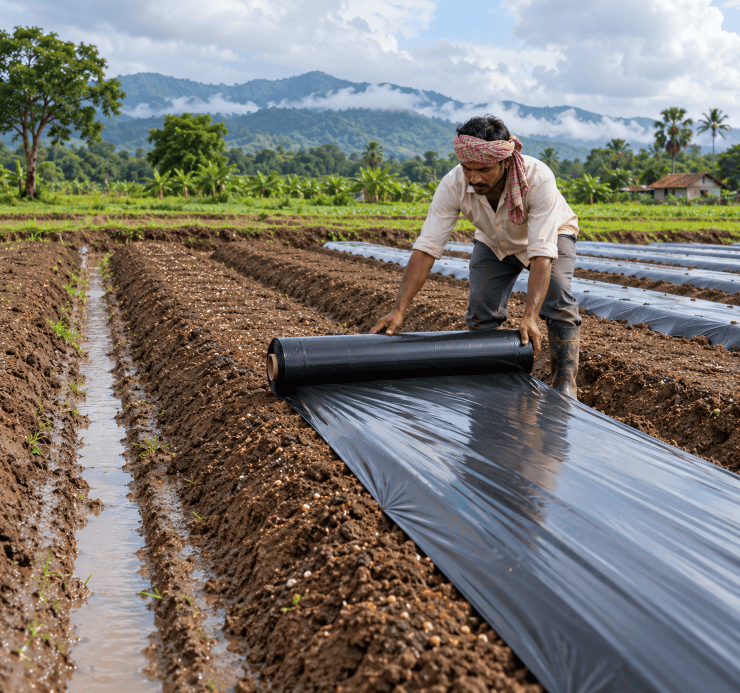
Installation on hilly terrain is where most farms lose the most value. The film itself is fine. The method is not. What changes on a slope:- Edge anchoring must go deeper on flat land, 5 to 8 cm is standard. On slopes, 10 to 12 cm minimum, especially on the uphill side where runoff pressure is highest
- Lay film across the slope, not along it, running film lengthways down a slope channels rainwater underneath the edges. Laying across the slope sheds water to the sides
- Create drainage breaks every few metres on long terraced beds, small unfilmed gaps every 3 to 4 metres allow water to escape without lifting the film
- Use additional soil anchoring at the centre on long run, a line of soil pressed along the middle of the film prevents ballooning in wind
- Check anchor points after the first heavy rain, the first monsoon event always reveals where installation is weakest
Your Farm's Altitude Decides Which Mulch Film You Need
Most mulch film buying decisions start with crop type. In Arunachal Pradesh, they should start with altitude because the climate conditions at different elevations change what the film is actually up against. The state has three distinct farming altitude belts, each with a different combination of rainfall, UV intensity, humidity, and temperature swing:| Altitude Zone | Key Areas | Climate Conditions | Film Recommendation |
| Low (below 500m) | Pasighat, Tezu, Roing | High rainfall, high humidity, moderate UV | 25–30 micron black or bi-colour with deep edge anchoring |
| Mid (500m–1500m) | Ziro, Along, Daporijo | Heavy monsoon, wide temperature swings, higher UV | 30 micron bi-colour or silver, strong UV stabilisation essential |
| High (above 1500m) | Tawang, Bomdila, Dirang | Lower rainfall but sharp frost risk, intense UV at altitude | 30+ micron black film for soil warming, UV-rated material mandatory |
Kiwi in Ziro, Ginger in Subansiri: Which Mulch Film Suits Better?
Arunachal Pradesh grows some of India's most distinctive and high-value crops. Many of them have very specific soil moisture, temperature, and pest management needs that directly influence which agriculture mulch film works best.| Crop | Where It Grows | Key Challenge | Recommended Film |
| Kiwi | Ziro Valley | Needs consistent root moisture on slopes, sensitive to waterlogging | Bi-colour, it retains moisture, prevents overheating |
| Ginger & Turmeric | Lower Subansiri, Papum Pare | Soil erosion on slopes, moisture retention through long crop cycle | Black, it deep moisture retention, weed suppression on terraced beds |
| King Chilli (Bhut Jolokia) | Lohit, border areas near Assam | Extremely pest-sensitive, needs reflective deterrence | Silver, aphid and whitefly repellence at ground level |
| Large Cardamom | Changlang, humid forest-edge zones | Shade-loving, high humidity, needs controlled soil moisture | Black, moisture retention without overheating in shaded plots |
| Passion Fruit | Emerging across mid-altitude zones | Export-quality consistency, even soil conditions needed | Bi-colour, it stable soil temperature and moisture for premium output |
| Potato (terraced) | Tawang, Bomdila | Soil exposure on steep terraces, uneven temperature | Black, soil warming in cooler zones, prevents surface crust |
| Peas and Cabbage | High-altitude cold zones | Short growing window, frost risk at edges of season | Black, it maximises soil warmth during limited warm months |
Checklist Before Buying Mulch Film for a Hilly Farm
Before placing any order with mulch film suppliers, ask these questions directly:- UV stabilisation rating: At higher altitudes, UV intensity increases. Film without strong UV stabilisation degrades faster here than on plains
- Micron thickness for your crop duration: Share how long your crop runs. A 25-micron film on a 90-day crop in high rainfall is under-specified
- Roll width options: Terraced beds are often narrower than standard flat-field beds. Confirm whether custom widths are available
- Supplier logistics to Northeast India: Delivery reliability matters as much as product quality for remote farm locations. Established mulch film manufacturers in Kolkata serve Northeast India regularly and offer shorter lead times compared to suppliers based in Western India