There is a question that sits quietly in the minds of many Indian farmers who are shifting to organic cultivation — "If I use mulch film on my fields, will I lose my organic certification?"
It is a fair concern. And the honest answer is: it depends on the type of mulch film you choose.
Let us break this down clearly, so you can make a decision that protects both your certification and your crop.
The Growing Shift Towards Organic Farming in India
Organic farming is no longer a niche practice in India. With rising consumer awareness, premium pricing in domestic and export markets, and government support under schemes like NPOP (National Programme for Organic Production) and PGS-India, more farmers are actively transitioning from conventional to organic methods.
But here is the challenge — organic farming requires weed control, moisture retention, and soil temperature management without the use of synthetic chemicals. This is precisely where mulching films have always played a vital role in modern agriculture. And this is where the confusion begins.
What Does Organic Certification Actually Say About Mulch Film?
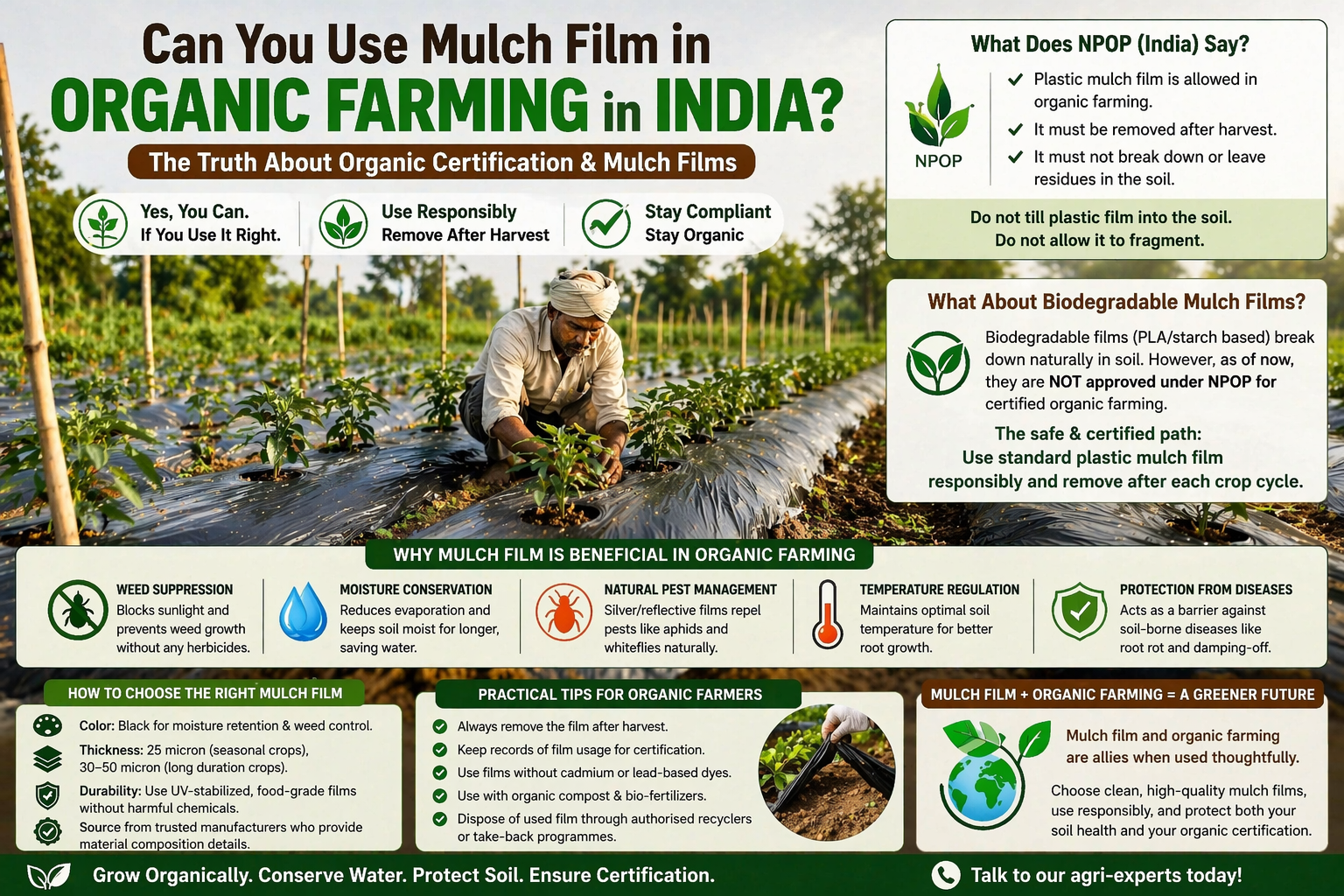
Under India's NPOP standards governed by APEDA, the use of plastic mulch film is not prohibited on organic farms, as long as it is removed from the field after harvest and does not contaminate the soil with residues or heavy metals.
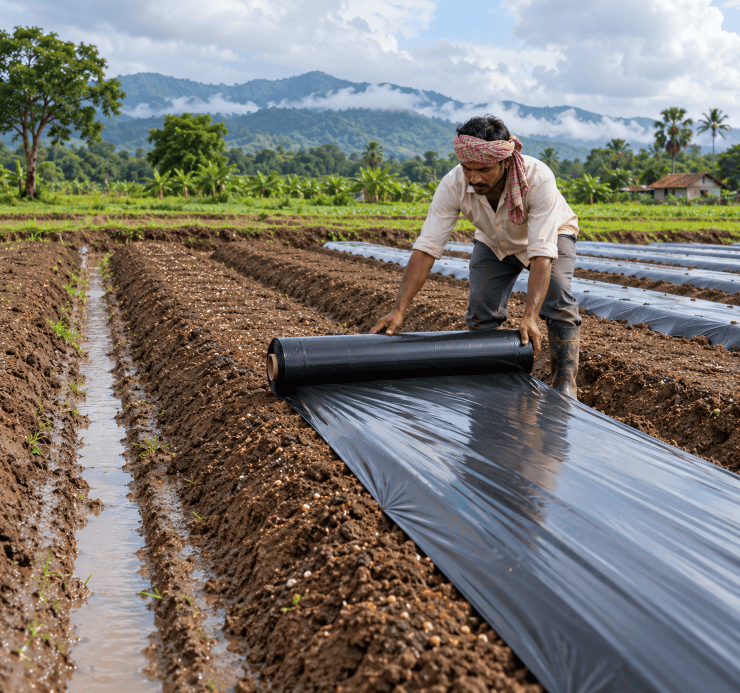
In simple terms: standard agriculture mulch film can be used during the crop cycle in organic farming, provided it is lifted before it degrades and leaves fragments in the soil.
What is not permitted is tilling plastic film into the soil, allowing it to break down and release microplastic residues — because that would compromise soil health and violate organic standards.
This is a critical distinction that most mulch film suppliers and agronomists rarely explain clearly to farmers.
Where Biodegradable Mulch Films Come In
The conversation around mulching films and organic farming has evolved significantly in recent years. Biodegradable mulch films — made from bio-based polymers such as PLA (polylactic acid) or starch blends — are designed to break down naturally in the soil after use.
The appeal is obvious: no removal, no landfill waste, no leftover plastic fragments.
However, it is important to note that no biodegradable plastic mulch film is currently approved for certified organic farming globally, including under NPOP, because their long-term impact on soil microbiota and the completeness of their biodegradation under Indian field conditions is still under scientific review.
So, for now, the practical and certified path remains: use standard plastic mulch film responsibly, and remove it after each crop cycle.
The Real Benefits of Using Mulch Film in Organic Farming
Even within organic systems, well-chosen mulching films deliver results that are difficult to replicate with other methods:
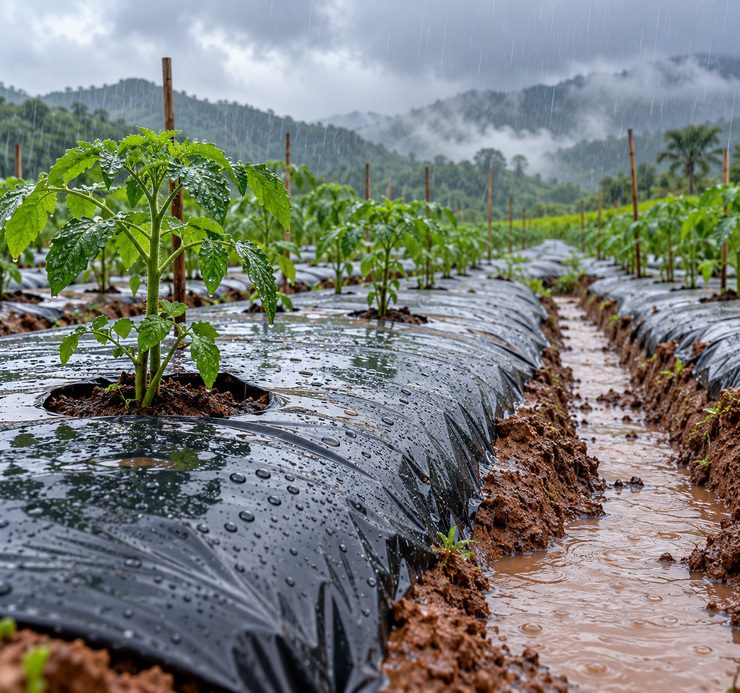
- Weed suppression without herbicides — Black plastic mulch film blocks sunlight, preventing weed germination entirely. In organic farming, this is invaluable, as synthetic weedicides are off the table.
- Soil moisture conservation — Organic farms typically rely on natural inputs and minimal irrigation. Agriculture mulch film significantly reduces evapotranspiration, meaning your soil stays moist longer between waterings or rains.
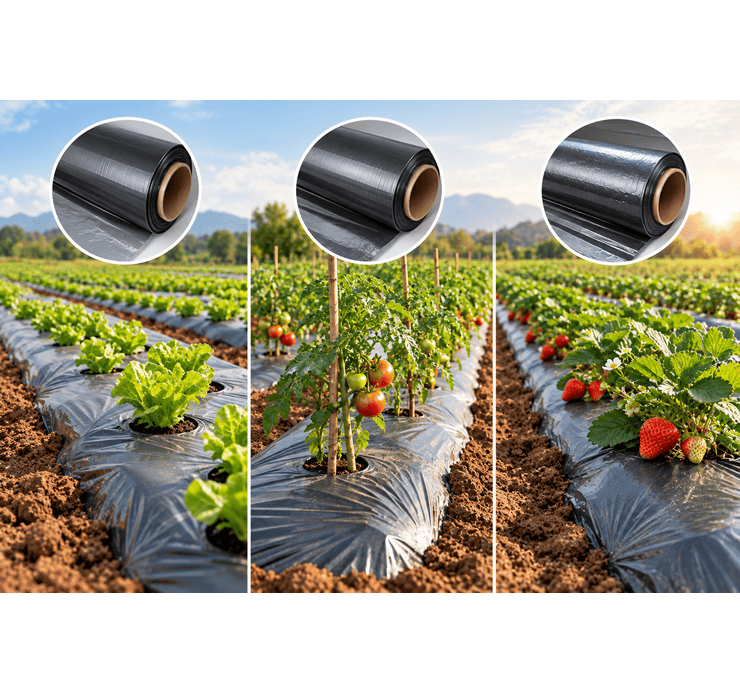
- Natural pest management — Silver or reflective mulch films disorient aphids and whiteflies, reducing pest pressure without chemical sprays — perfectly aligned with organic principles.
- Improved soil temperature — Especially useful during the rabi season or in cooler highland regions, mulch film maintains optimal root-zone temperatures, enabling healthy crop establishment without any chemical intervention.
Choosing the Right Mulch Film for Your Organic Farm
Not all mulch films are created equal. For organic farmers, the quality and composition of the film matters deeply.
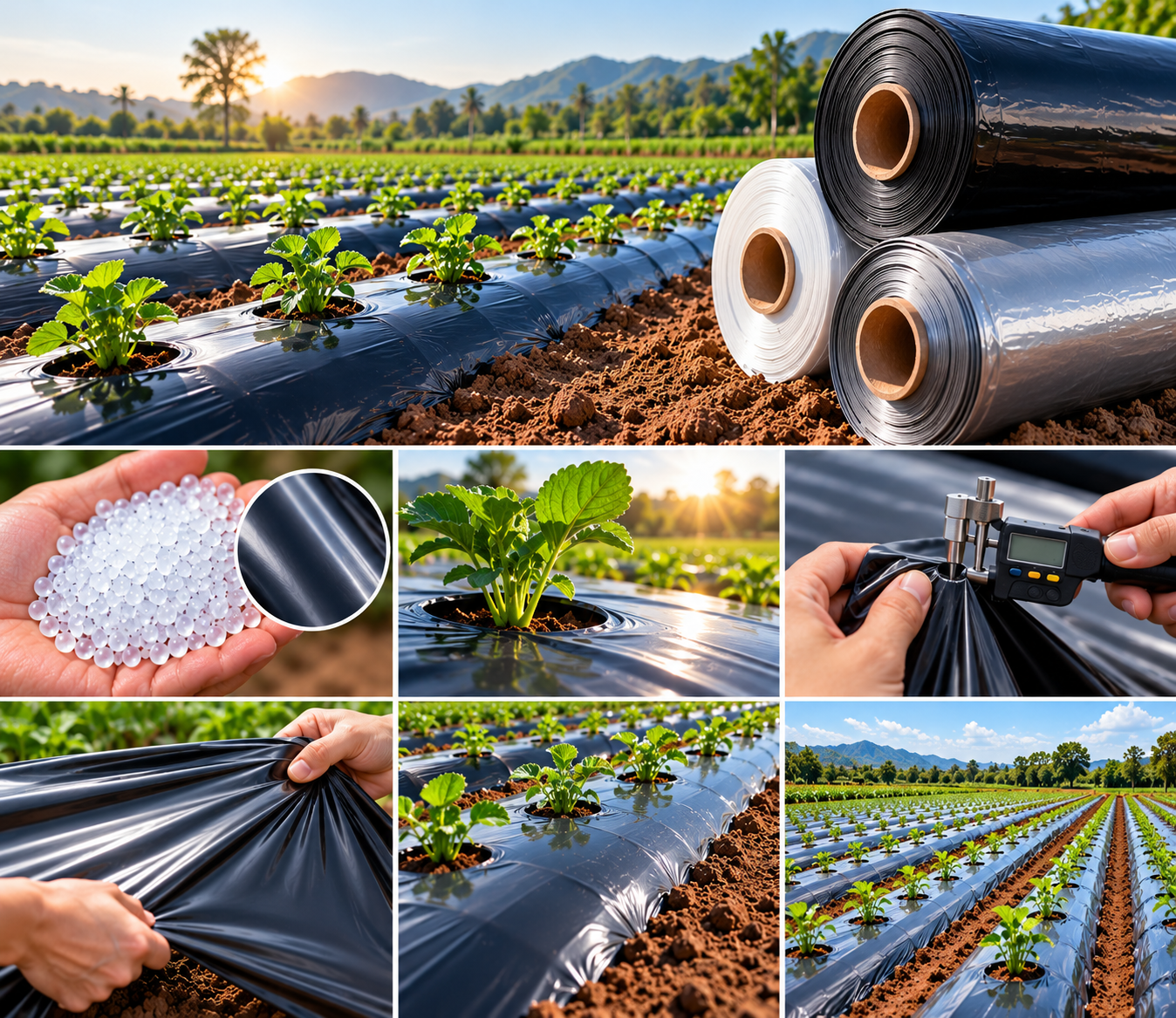
Ensure you source from reputable mulch film manufacturers who can provide clear material composition data — particularly confirming the absence of heavy metal-based pigments or harmful plasticisers. Films using food-grade pigments and UV stabilisers that do not leach into soil are the ones to look for.
The thickness also matters. A minimum of 25 microns for seasonal crops and 30–50 microns for longer-duration crops ensures the film stays intact throughout the cycle and can be cleanly removed — a key compliance requirement under organic certification.
Practical Tips for Organic Farmers Using Mulch Film
- Always remove the film after harvest. Do not let it fragment in the field.
- Keep records of film usage as part of your annual organic production plan — certification inspectors may ask.
- Opt for films without cadmium or lead-based dyes. Ask your supplier explicitly.
- Pair it with organic compost and bio-fertilisers beneath the film for best results.
- Dispose of used film responsibly through authorised plastic recyclers or your local agrodealer take-back programme.
A Greener Path Forward
Mulch film and organic farming are not opposites — they are allies, when used thoughtfully.
The key is choosing a film that is clean in composition, handled responsibly during and after the crop cycle, and sourced from a manufacturer who understands the needs of quality-conscious, certification-aware farmers.
At Neha Mulch Film, we craft agriculture mulch film that meets the demands of modern, responsible farming. Whether you are a certified organic grower or transitioning towards it, our films are engineered to deliver performance without compromise — clean materials, consistent quality, and the kind of reliability that serious farmers deserve.
Ready to grow organically — the smarter way? Talk to our agri-experts today and find the right mulching film for your farm.
❓FAQs — People Also Ask
Q1. Does using plastic mulch film disqualify me from organic certification in India?
Not automatically. Under NPOP standards, plastic mulch film can be used in organic farming as long as it is completely removed from the field after the crop cycle and does not contaminate the soil. Always inform your certifying agency and maintain records of its use.
Q2. Are biodegradable mulch films approved for certified organic farming?
Currently, no commercially available biodegradable plastic mulch film is approved for use in certified organic farming under NPOP or global organic standards, as their safe and complete biodegradation in natural field conditions has not yet been fully verified.
Q3. Which colour of mulch film is best for organic vegetable farming?
Black mulch film is most commonly used in organic vegetable farming as it blocks weed growth entirely without herbicides. Silver/reflective mulching films are recommended where pest pressure from aphids and whiteflies is high, since they deter insects naturally.
Q4. Can mulch film replace the need for synthetic pesticides on an organic farm?
Partially, yes. Mulch film significantly reduces weed competition and certain insect pests, reducing the farmer's dependence on any intervention — synthetic or organic. It works best as part of an integrated organic crop management system.
Q5. Where can I find mulch film manufacturers who supply films suitable for organic farms?
Look for established mulch film manufacturers or mulch film suppliers who can share material safety data sheets for their films. Verify the absence of heavy metal-based pigments. Reputable plastic mulch manufacturers and mulch manufacturing companies will always be transparent about their film composition on request.