Why Arunachal Pradesh's Rainfall Pattern Makes Farming Harder
Vegetable growers here aren't dealing with ordinary monsoon rain — the intensity and terrain combine to create challenges most flat-field farming advice simply doesn't cover. Unlike plains regions with moderate, evenly spread rain, Arunachal Pradesh deals with:- Very high total rainfall concentrated over a few months
- Steep, terraced, or sloped farmland prone to erosion
- Frequent landslide-prone patches near cultivated land
- High humidity that speeds up fungal disease
- Sudden downpours followed by sharp temperature drops
How Mulch Film Protects Vegetable Crops on Hill Terrain
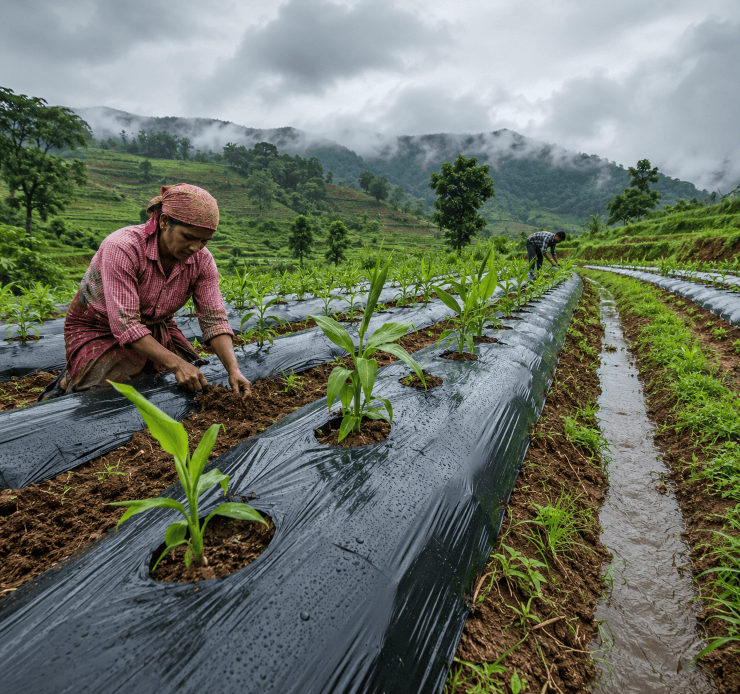
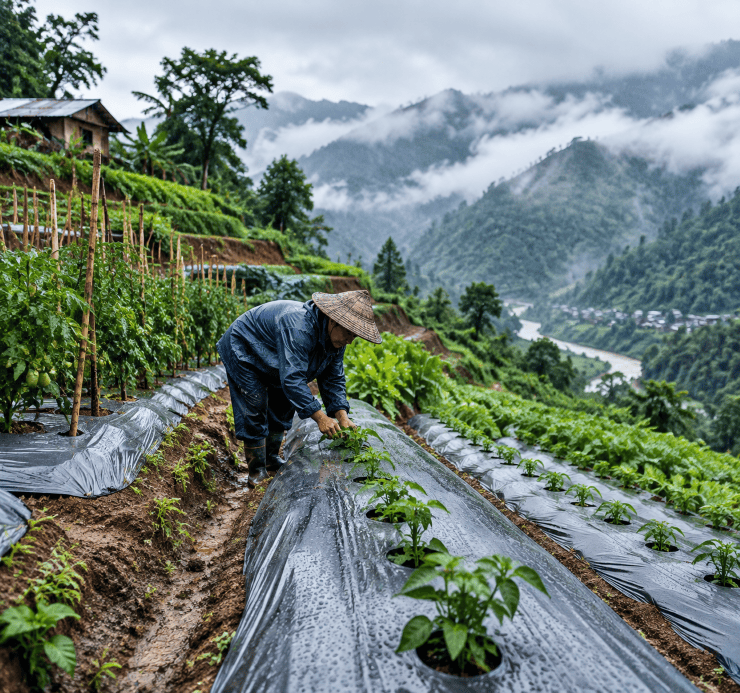
On sloped and terraced land, rain doesn't just fall — it moves, taking soil, nutrients, and stability with it. Here's what a properly laid mulch film actually does to counter that.Prevents Topsoil and Nutrient Loss on Slopes
On terraced or sloped beds, heavy rain doesn't just soak the soil — it drags it downhill, taking nutrients with it. A mulch layer absorbs the direct impact of rainfall and stops loose topsoil from sliding away, which matters far more here than on flat land.Reduces Waterlogging Around the Root Zone
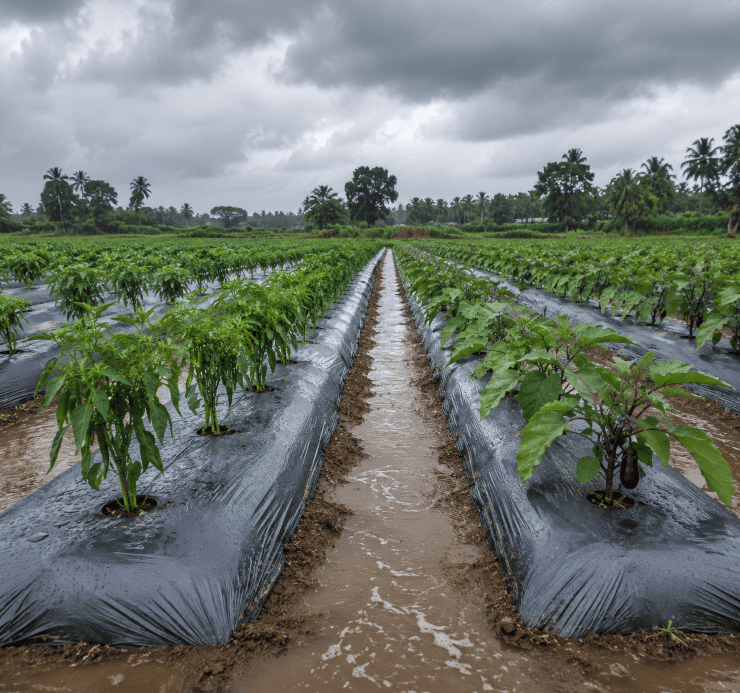
This is the biggest doubt farmers have, and it's a fair one on terraced fields where water has nowhere to go but down. A properly laid mulch film, combined with correctly angled terrace beds, channels excess water sideways and off the bed instead of letting it collect around the plant's crown — which is usually what actually causes root rot, not the film.Controls Weed Growth That Explodes in Humid Conditions
High humidity and constant moisture push weeds to grow aggressively between rain spells. Mulch film blocks light from reaching weed seeds, cutting down weed pressure without extra hours of manual clearing on difficult sloped ground.Keeps Produce Clean and Reduces Rot
Crops like tomatoes, king chilli, cucumber, and leafy greens sitting on constantly wet, muddy terraced soil are highly prone to fungal rot. Mulch film keeps the fruit and stem off the ground, directly improving what survives to harvest and what fetches a better price.Buffers Sudden Temperature Swings
Hill weather can shift from hot and humid to cool and wet within hours. A mulch layer keeps the root zone temperature more stable through these swings, reducing stress on the plant and supporting steadier growth.Does Mulch Film Cause Waterlogging on Terraced Fields?
This is where technique matters more than the film itself. Waterlogging under mulch typically happens because of:- Flat or poorly sloped terrace beds
- Planting holes that are too small or badly placed
- Film that's too thin to handle heavy water flow
- No drainage channel cut between terrace rows
Choosing the Right Mulch Film for Hill and Monsoon Conditions
Not every roll of film performs the same way once heavy rain and rough terrace handling come into play. Colour, thickness, and where you source it from all decide how well it holds up through the season.Film Colour
- Black film — strong weed control, suited to most terrace vegetable crops
- Silver-black film — reflects heat and helps manage pest pressure in humid weather
- Perforated film — pre-punched holes support faster drainage on heavy-rainfall slopes
Film Thickness
Thicker film (around 25–30 microns) holds up far better against water pressure, wind, and rough terrace handling than thin, low-grade sheets that tear within weeks.Buying From the Right Source
Quality varies a lot between sellers. Choosing established mulch film manufacturers over unbranded local rolls matters even more on hill farms, where the film has to survive constant moisture and rough handling for an entire season without tearing.How to Lay Mulch Film on Terraced or Sloped Beds
Getting the layout right before the rain starts matters more than the film itself. A simple sequence, done in order, makes the difference between a bed that drains well and one that turns into a waterlogged patch.- Shape terrace beds with a gentle, consistent slope for natural drainage
- Clear stones and clods that could puncture the film during heavy use
- Anchor the film tightly along every edge, since wind and rain loosen poorly fixed sheets fast
- Cut planting holes at correct spacing for the specific crop
- Cut drainage channels between terrace rows before the first heavy spell hits
Common Mistakes to Avoid
Most mulch film failures on hill farms come down to a handful of avoidable errors, not the material itself. Watch out for these before they cost you a harvest:- Laying film on flat terrace beds with no drainage slope
- Using thin, low-grade film that tears in wind and heavy rain
- Leaving film edges loose, letting water seep underneath
- Buying from unreliable mulch manufacturing companies without checking thickness or grade
- Ignoring drainage channels between rows on sloped land
Is Mulch Film Worth It in This Kind of Rainfall?
For most hill and terrace vegetable growers, yes. The cost is generally recovered through:- Less soil and nutrient loss on slopes
- Fewer losses from rot and fungal disease
- Reduced weeding labour on difficult terrain
- Better-quality produce that sells at a higher price