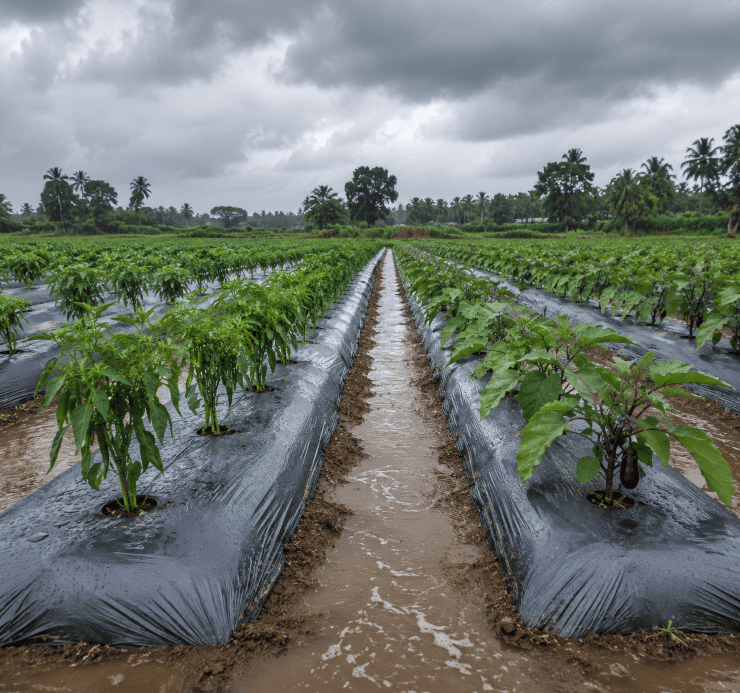
What Waterlogging Does to Roots Underground
Most farmers assume waterlogging means "too much water." The real problem is what that water replaces. Healthy soil has air pockets between particles. Roots use that air, specifically oxygen, to absorb nutrients and stay alive. When waterlogged soil fills those pockets with water, the oxygen disappears. What happens next, in order:- Roots stop absorbing nutrients within 24 to 48 hours of waterlogging
- Root cells begin to die from oxygen starvation, not water damage
- Rot-causing pathogens in the soil become active in wet, airless conditions
- The plant above ground looks completely normal for 3 to 5 days
- By the time wilting appears, 60 to 70% of root function is already gone
How Mulch Film Slows Water Reaching the Root Zone
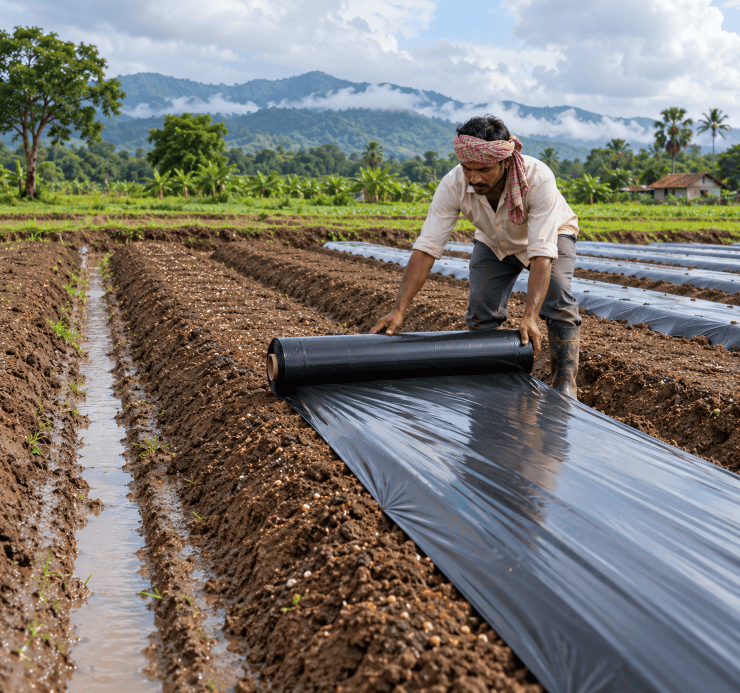
This is where mulch film plays a specific and practical role, not as a complete solution, but as a barrier that buys time. When rainfall hits bare soil directly, water penetrates the surface immediately and moves toward the root zone fast. Agricultural mulching films placed over the soil surface change this dynamic:- Rain hits the film surface first, not the soil
- Water is directed toward the edges of the bed rather than straight down
- The rate at which surface water reaches the root zone slows significantly
- Drainage channels at the bed edges have time to carry water away before it saturates the root zone
Prevention vs. Damage Control
Farms that prepare before monsoon and farms that react after; the outcomes are consistently different.| Approach | What It Involves | Does It Work? |
| Prevention | Raised beds, film laid before monsoon, drainage channels ready | Works consistently |
| Early intervention | Film edges re-anchored, drainage improved at first sign of pooling | Works partially |
| Mid-crisis response | Film removed, soil aerated after waterlogging has begun | Rarely saves the crop |
| Post-damage recovery | Soil recovery, replanting assessment after root rot | Damage already done |
Raised Beds and Mulch Film: A System, Not Two Separate Choices
Mulch film alone does not prevent waterlogging. Neither do raised beds alone. Together, they work as a system that significantly reduces risk. Here is what each one does:- Raised beds elevate the root zone above the surrounding field level, giving water somewhere to drain to rather than sitting in the root zone
- Mulch film covers the raised bed surface, directing rain away from the root zone and toward the drainage channels on either side
Mulch Film That Works Best in High-Rainfall Zones
Not every plastic mulch film handles sustained heavy rain equally well.| Film Type | Performance in Heavy Rain | Recommended For |
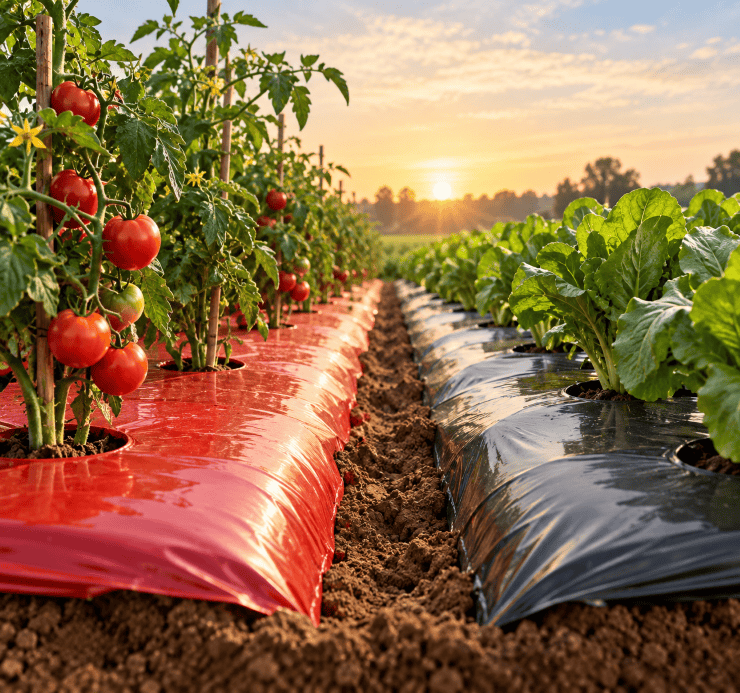
| Black mulch film | Good, if drainage is in place | Most vegetable crops in high-rainfall zones |
| Bi-colour (Black-Silver) | Best overall, sheds surface water faster | Waterlogging-prone farms, pest-sensitive crops |
| Transparent film | Poor, allows heat and moisture build-up | Avoid during monsoon in high-rainfall regions |
| Biodegradable film | Variable, degrades faster in sustained wet conditions | Short-cycle crops only |
Crops Most at Risk in Eastern India
Root structure and crop duration are the main reasons.| Crop | Why It's High Risk | Safe Window Before Damage |
| Chilli | Shallow roots, highly sensitive to wet soil | 24–36 hours |
| Brinjal | Dense canopy traps humidity, stem rot sets in fast | 36–48 hours |
| Tomato | Long crop cycle overlaps peak monsoon months | 48 hours |
| Strawberry | Low-growing, close soil contact, fruit rot risk | 24 hours |
| Cucumber | Sprawling roots, high soil moisture sensitivity | 36 hours |
When Mulch Film Alone Is Not Enough
These must work alongside mulch film:- Drainage channels on both sides of every bed as water directed away from the film has somewhere to go
- Bed slope: a slight gradient along the bed length moves water toward the channel rather than pooling at the centre
- Soil aeration before laying film: compacted soil drains poorly regardless of what sits above it
- Irrigation management: during sustained monsoon rain, scheduled irrigation should pause completely
- Re-anchor any loose film edges immediately to stop additional surface water entry
- Clear drainage channels of debris, blocked channels are the most common reason waterlogging worsens
- Do not add any fertiliser as stressed, oxygen-deprived roots cannot absorb it and it worsens soil conditions
- Assess root damage before deciding whether to save or replant the crop