Why Monsoon Rain Is So Damaging to Open Soil
Uncovered soil under intense rainfall behaves differently than most farmers expect. It is not just about water — it is about force, movement, and exposure.Soil Splash and Surface Erosion
Every raindrop hitting bare earth acts like a tiny hammer. On sloped land, repeated impact:- Dislodges the top layer of fertile soil
- Sends nutrient-rich particles downhill with runoff
- Leaves plant roots partially exposed
- Creates uneven, compacted patches across the bed
Nutrient Loss From Exposed Beds
Rain does not just move soil — it moves what's in the soil. Nitrogen, potassium, and organic matter dissolve and leach downward or wash away entirely with surface runoff. Farmers often apply fertilizer only to watch a large share of it disappear within days of heavy rain, well before the crop can absorb it.Weed Growth During Continuous Rain
Warmth combined with constant moisture is the ideal weed germination environment. Open beds during monsoon can see weed pressure double compared to drier months, pulling nutrients and light away from the actual crop and forcing farmers into repeated manual weeding in conditions where fieldwork is already difficult.How Mulch Film Addresses Each of These Problems
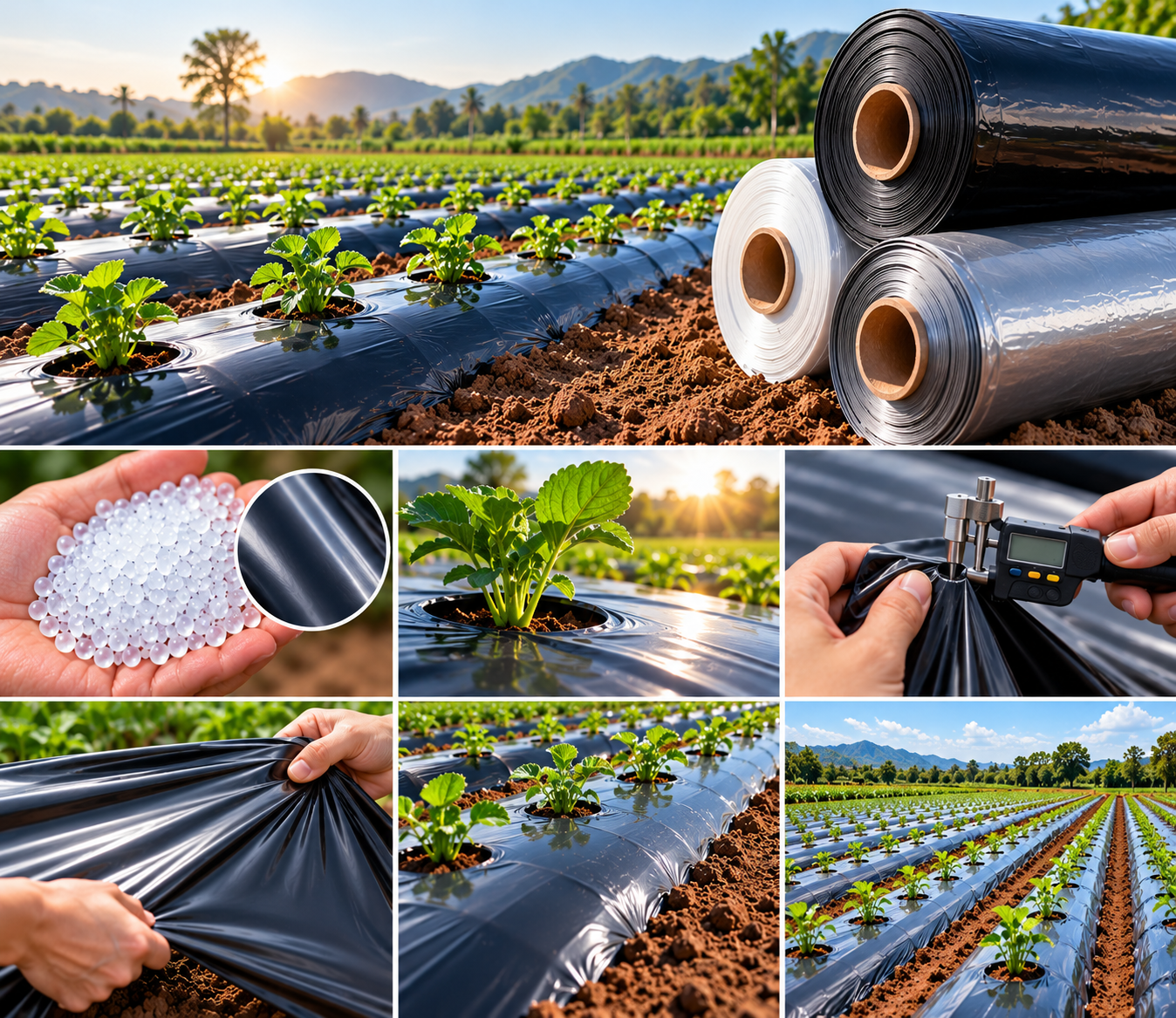
Agriculture mulch film works as a physical barrier between the crop bed and the elements. Its function during monsoon goes beyond simple ground cover.Breaking the Impact of Rainfall
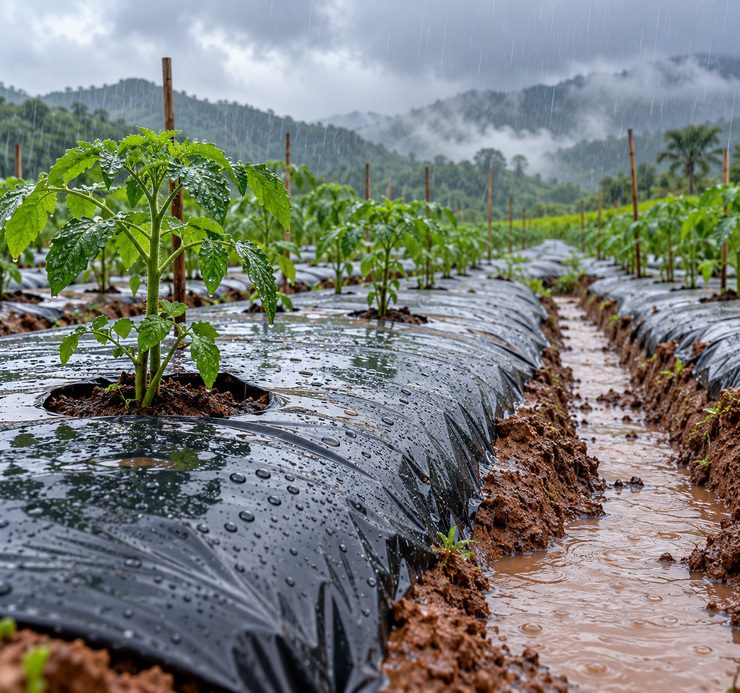
A properly laid mulch film absorbs the direct force of rain before it reaches the soil surface. Water is guided off the film's surface rather than driving directly into loose earth, which significantly reduces splash erosion and keeps the bed structure intact.Locking In Nutrients
By preventing direct rain contact with the soil, mulch film reduces nutrient leaching. Applied fertilizer stays closer to the root zone longer, which means better nutrient efficiency and less repeat application during the season.Suppressing Weed Growth
Mulch film blocks sunlight from reaching weed seeds beneath it. Without light, germination is drastically reduced, cutting down on manual labour and protecting the crop's access to nutrients and space.Regulating Soil Temperature and Moisture
Even during monsoon, mulch film helps maintain a more consistent root-zone environment, buffering the crop against sudden temperature swings that often accompany heavy rain followed by bursts of sun.Getting the Setup Right: Preparation Matters as Much as the Film
Mulch film performs best when the groundwork is done correctly. Skipping preparation is one of the most common reasons farmers see disappointing results.Raised-Bed Preparation
Before laying any film, beds should be raised above the surrounding field level. This single step does most of the heavy lifting for water management:- Prevents pooling directly under the film
- Encourages lateral water movement away from roots
- Reduces waterlogging risk in low-lying or clay-heavy soil
- Improves airflow around the base of the plant
Drainage Channels Around Mulched Beds
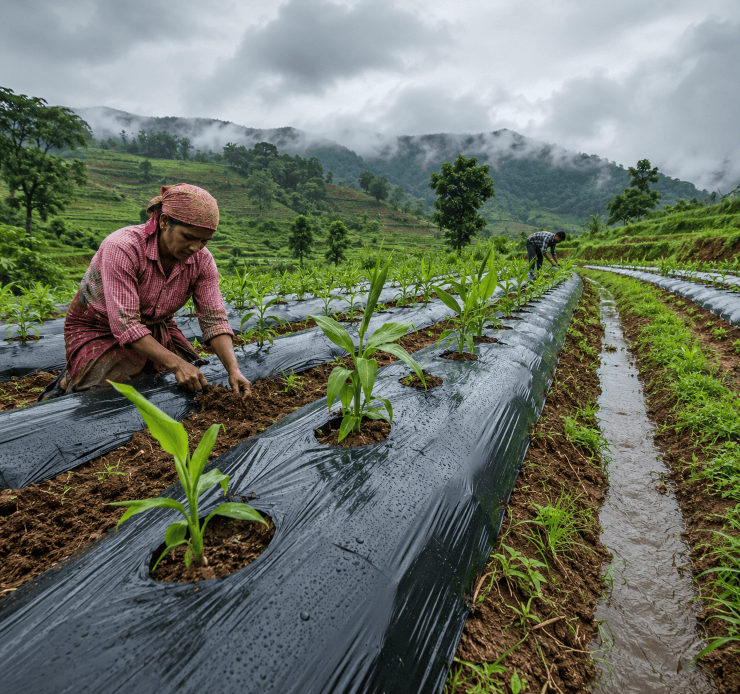
Raised beds alone are not enough on sloped terrain. Drainage channels cut alongside or between beds direct excess water away from the planting zone entirely. These channels should:- Follow the natural slope of the land
- Be deep enough to handle peak monsoon flow
- Be checked and cleared periodically during the season
- Connect to a proper outflow point, not another cultivated area
Correct Mulch Film Installation
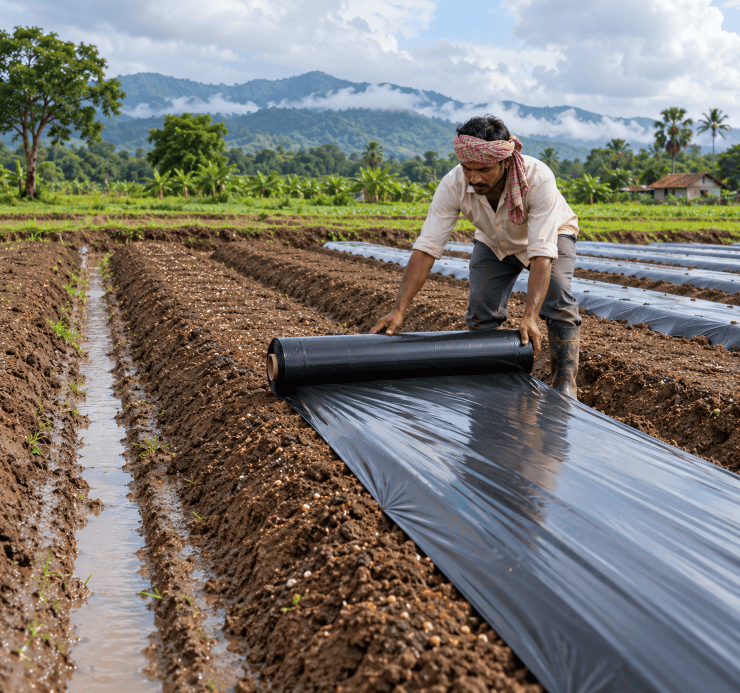
Installation quality directly affects performance. A few fundamentals make a significant difference:- Stretch the film tight and anchor edges firmly with soil to prevent wind and water from lifting it
- Use planting holes sized precisely to the seedling, not oversized, to limit water entry points
- Lay film after the bed has been shaped and moistened, not before
- Choose film thickness suited to the crop cycle length and expected rainfall intensity
Which Crops Benefit Most in This Climate
Not every crop needs the same approach, but several staples common to the region respond particularly well to mulch film during monsoon:- Ginger — highly sensitive to waterlogging; benefits enormously from improved drainage and reduced rot risk
- Turmeric — shares similar rhizome vulnerability to excess moisture and nutrient wash-off
- Chilli — prone to fungal stress in high humidity; mulch film reduces soil splash that spreads soil-borne pathogens onto lower leaves
- Leafy and root vegetables — benefit from consistent moisture levels and reduced weed competition during their shorter growth cycles
After Harvest: Removal and Responsible Disposal
A mulch film's job does not end at harvest. Proper removal protects both the field and the next planting cycle.- Remove film promptly once the crop is harvested to prevent it from breaking down into soil fragments
- Shake off and collect any soil-embedded film pieces rather than leaving them behind
- Store used film separately for recycling or approved disposal, never burning
- Inspect the bed for damage before the next preparation cycle
Building a Monsoon-Ready System, Not Just a Cover
The real value of mulch film during heavy rainfall comes from treating it as one part of a complete system — raised beds, planned drainage, correct installation, and crop-specific selection working together. Used as part of this full approach, it becomes one of the most effective tools a hill farm has against monsoon damage. Working with experienced mulch film manufacturers in Kolkata who understand regional rainfall intensity, soil type, and crop needs makes this system far easier to get right the first time. Neha Mulch Film offers crop-specific film grades built for exactly this kind of rainfall pressure. Talk to Neha Mulch Film today and get your beds monsoon-ready before the next downpour decides for you.Frequently Asked Questions
- Does mulch film actually stop water from damaging my crops, or does it just cover the soil? It does more than cover the ground. The film breaks the force of falling rain, stops soil from splashing away, and keeps fertilizer from washing off before the plant can use it. Combined with raised beds and drainage, it meaningfully cuts down monsoon damage.
- Won't the film trap water underneath and rot the roots? This only happens when the bed underneath is flat or sunken. If the bed is raised properly and there's a drainage path for excess water to escape, trapped water isn't a real concern. The bed shape matters just as much as the film itself.
- How do I stop weeds from growing even with the film on? Weeds mostly need sunlight to sprout. A tightly laid film with no gaps or torn edges blocks that light almost completely, so weed growth drops sharply. Just make sure the film stays anchored and undamaged through the season.
- Can I reuse mulch film for the next crop cycle? It depends on the film's condition and thickness. Thinner films usually degrade after one season and are best replaced. Thicker, higher-grade films can sometimes handle a second cycle if removed carefully and stored without tears, but checking for damage before reuse is essential.
- What happens if I don't remove the film properly after harvest? Leftover film breaks down into small pieces that mix into the soil over time, making the next bed preparation harder and affecting soil quality. Removing it fully right after harvest and disposing of it responsibly keeps the field clean for the next planting.