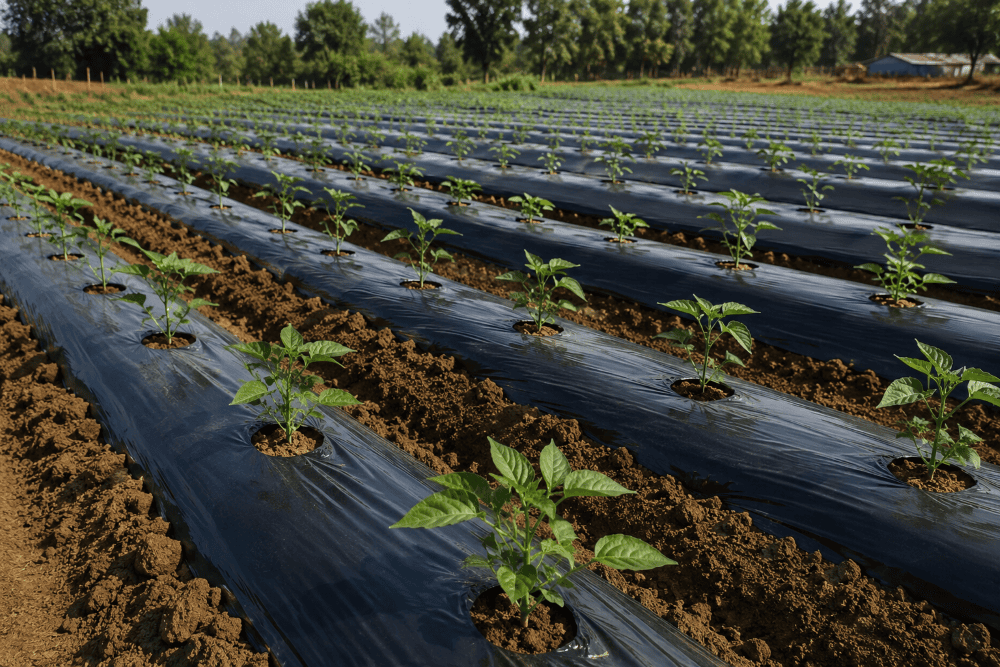
It Starts With the Soil Type
This is the one most farms overlook entirely. Mulch film works differently depending on what is underneath it. Sandy soil drains fast and holds very little moisture. Clay soil holds too much and can get waterlogged. Loamy soil sits in the middle and is usually the most responsive. When you lay the same film on different soil types without adjusting anything else:- Sandy soil loses moisture faster even under film needs a higher seal at edges
- Clay soil can trap heat and moisture too long needs better edge ventilation
- Loamy soil responds predictably the film does exactly what it promises
Colour Is a Technical Choice, Not a Visual One
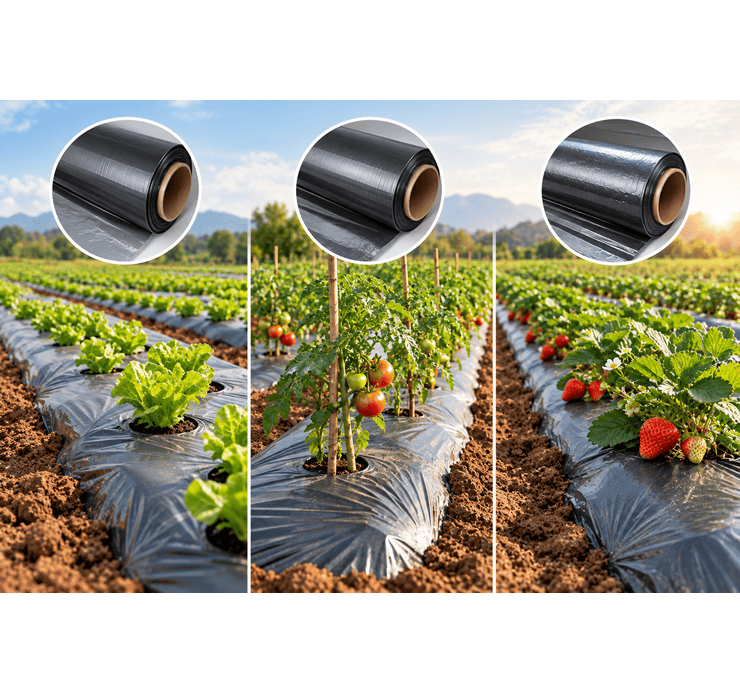
Most farms pick black because it is the most common. And black works well, for the right conditions. But plastic mulch film comes in multiple colours for a reason. Each colour interacts with sunlight, soil temperature, and pests differently.| Film Colour | Best For | What It Does |
| Black | Weed control, warm-season crops | Blocks light fully, warms soil |
| Silver / Reflective | Pest-sensitive crops, hot climates | Repels aphids, keeps soil cooler |
| Transparent / Clear | Soil solarisation, early season | Warms soil fastest, allows some weed growth |
| Bi-colour (Black-Silver) | Versatile, most horticulture crops | Weed control + pest deterrence combined |
Micron Matters More Than People Think
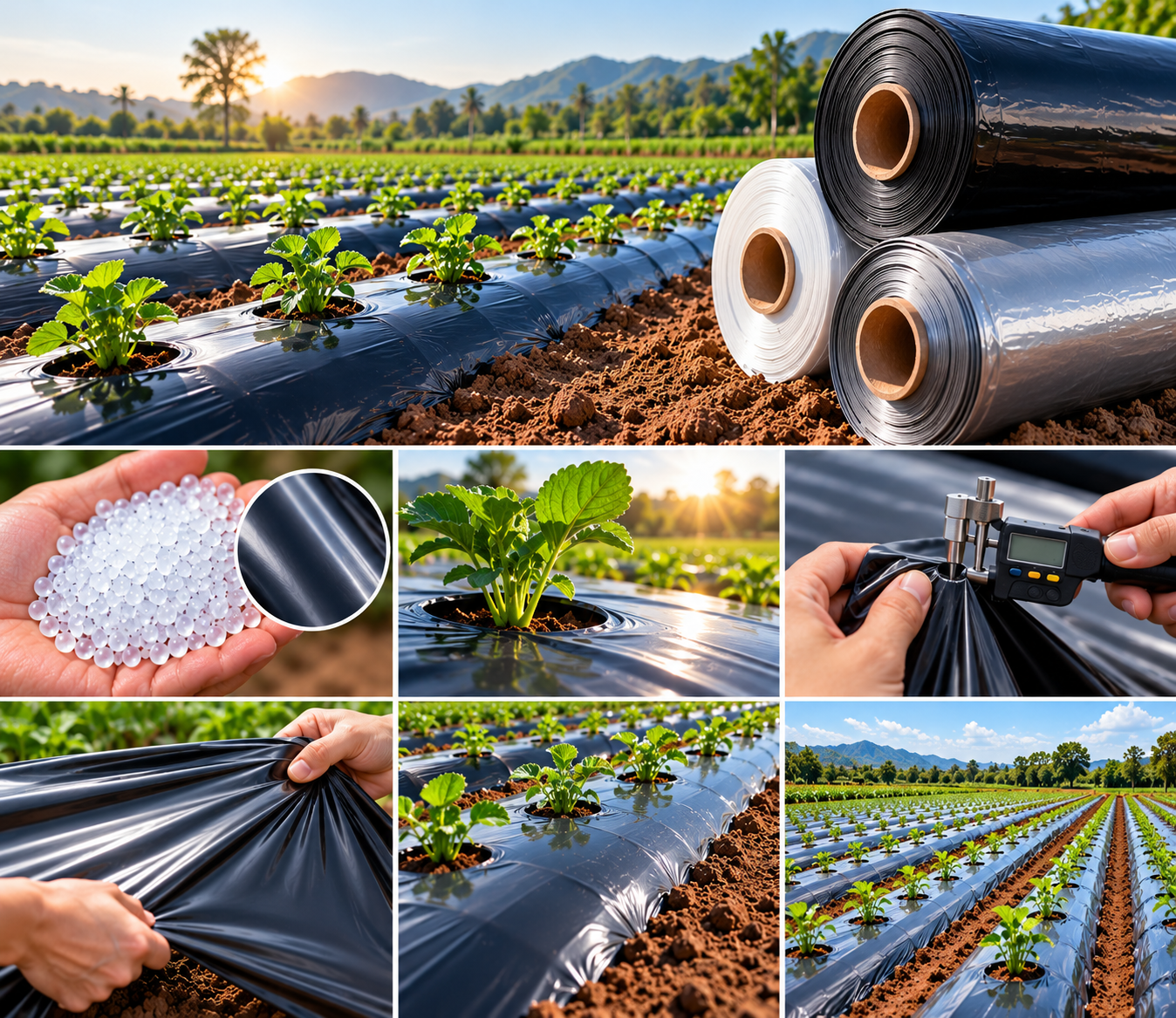
Micron is the thickness of the film. And in large farms, getting this wrong is one of the most common and most expensive mistakes.- Low micron (15–20 micron): Lighter, cheaper, but wears out faster is fine for short-duration crops
- Standard micron (25 micron): Works for most single-season crops
- Higher micron (30+ micron): More durable, better for mechanised laying, longer crop cycles
How You Water Changes Everything
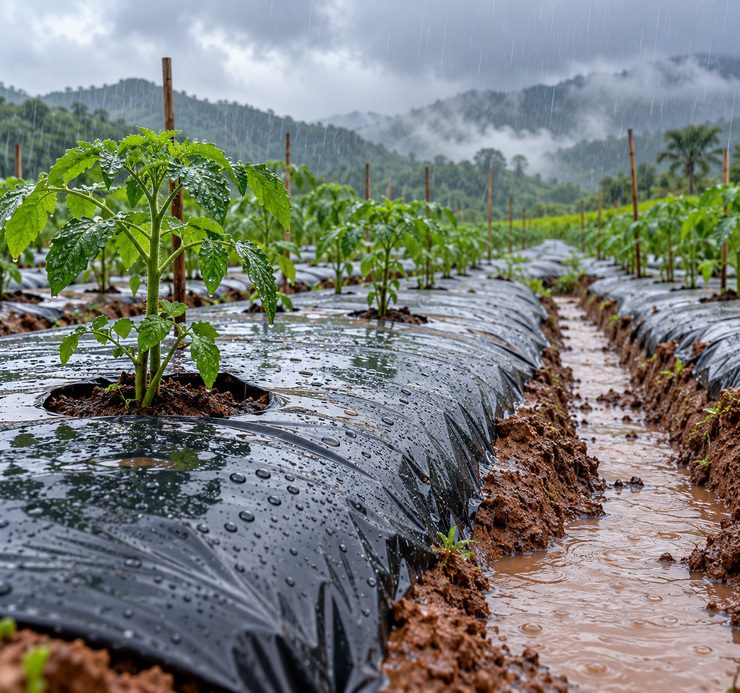
This is the part nobody talks about enough. The same mulch film Kolkata farmers buy performs very differently depending on whether you use drip irrigation or flood irrigation underneath it. With drip irrigation:- Water goes directly to the root zone
- The film keeps evaporation almost fully in check
- Moisture stays consistent at the root level throughout the day
- Water spreads across the surface before the film absorbs it
- Gaps or loose film edges allow pooling, which can cause root rot
- Uneven moisture distribution reduces the film's effectiveness significantly
Installation Is Half the Product
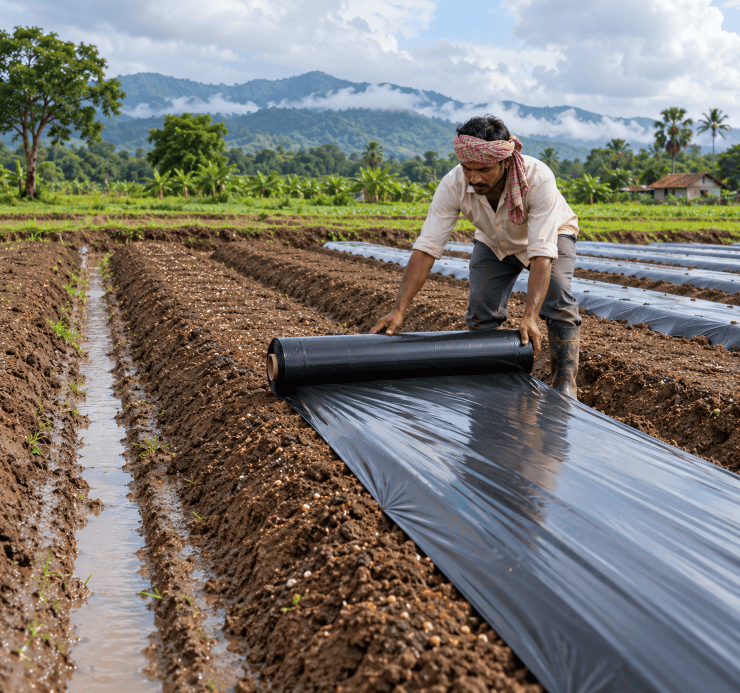
A good film installed loosely will always underperform. This is one of the most searched questions on Quora, Reddit, and farming forums, and the answer is almost always the same: the film was right, but the installation was not. Common installation mistakes that reduce mulch film performance:- Loose edges that let wind lift the film and break soil contact
- Gaps between film sections where weeds push through
- Film laid on unprepared, clumpy, or debris-filled soil
- Planting holes cut too wide, exposing unnecessary soil surface
- Insufficient anchoring on slopes or in windy regions