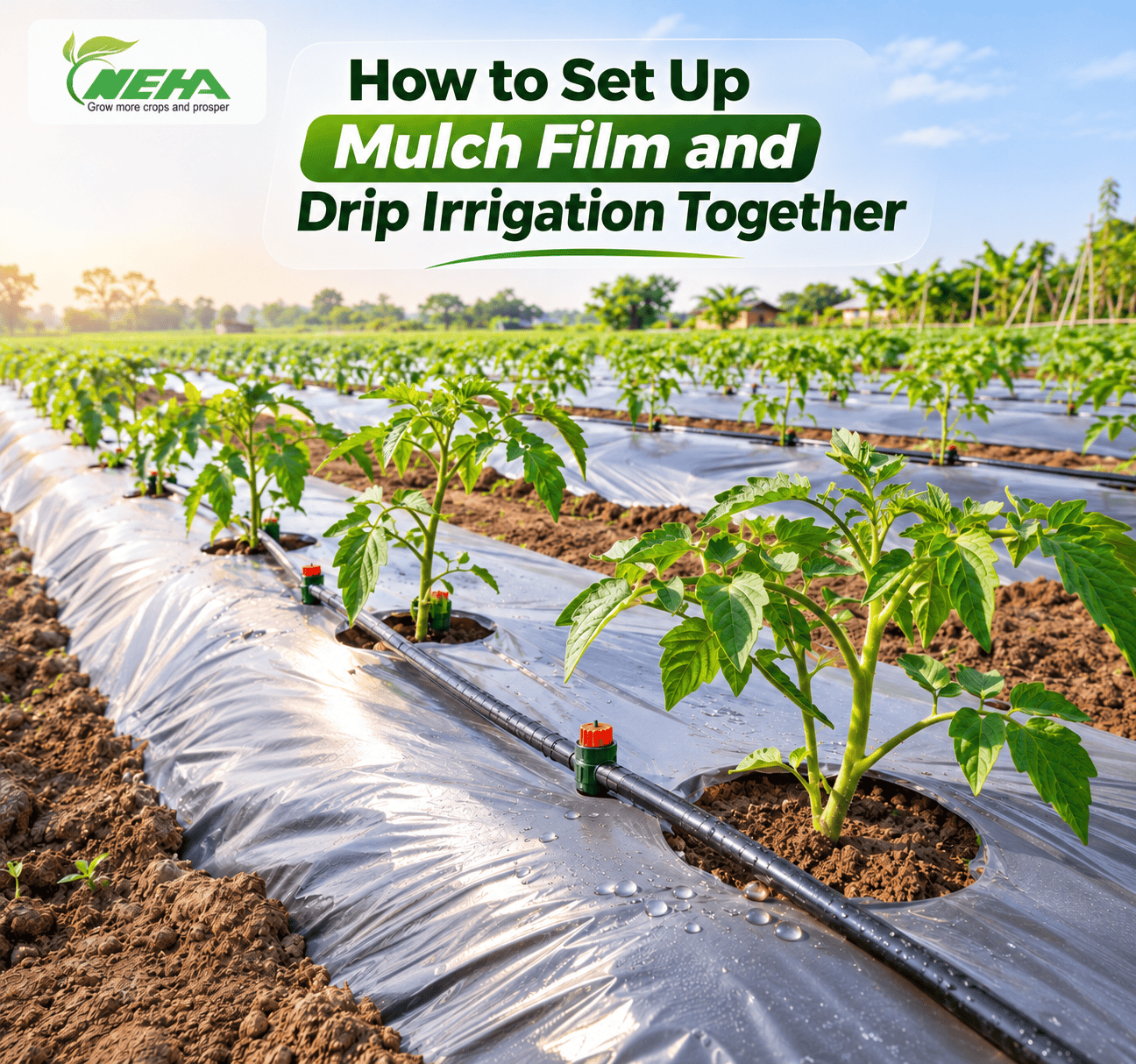
Why Use Mulch Film and Drip Together?
Drip sends water straight to the roots. Film keeps that water from escaping. Mulch films in agriculture are often paired with drip for this reason.- Less water lost to evaporation and runoff
- Fewer weeds, so water and feed reach the crop
- More even moisture around the roots
- Popular with tomato, chilli, watermelon, cucumber, and strawberry
Which Comes First: Drip Tape or Mulch Film?
Drip first, film second. Once the film is down, the line is hidden and hard to fix.- Prepare the bed: till the soil and make a raised, level bed.
- Lay the drip line along the bed.
- Test it: run the water and check for leaks and blocked emitters.
- Lay the film and bury the edges well.
- Punch holes and transplant.
How to Match Plastic Mulch Film Width to Your Bed
The film must cover the bed top and both shoulders, with extra to bury in the soil. Measure your bed first.| Bed Type | Film Width | Often Used For |
| Narrow bed | 2.5 ft (0.762 m) | Closely planted vegetables |
| Medium bed | 3 ft (0.914 m) | Chilli, brinjal |
| Wide single-row bed | 3.25 ft (1 m) | Tomato, cucumber |
| Wide or double-row bed | 4 ft (1.2 m) | Watermelon, strawberry |
Where Should the Drip Line Sit Under the Film?
- Single-row crops: one line along the bed centre or beside the plant row
- Wide or double-row beds: two lines
- Under the film: less water is lost to sun and wind
- Emitters facing up, lines straight: so water meets each planting hole
How to Plan Hole Spacing for Drip and Mulch Film
Holes work best near an emitter, so every plant gets water at its roots.| Crop | Common Plant Spacing |
| Tomato | 45 to 60 cm |
| Chilli | 45 to 60 cm |
| Cucumber | 30 to 45 cm |
| Watermelon | 60 to 90 cm |
- Hole size: big enough for the seedling, small enough to block weeds
- Pre-punched film: saves labour in the field
- Field punching: gives flexibility on spacing
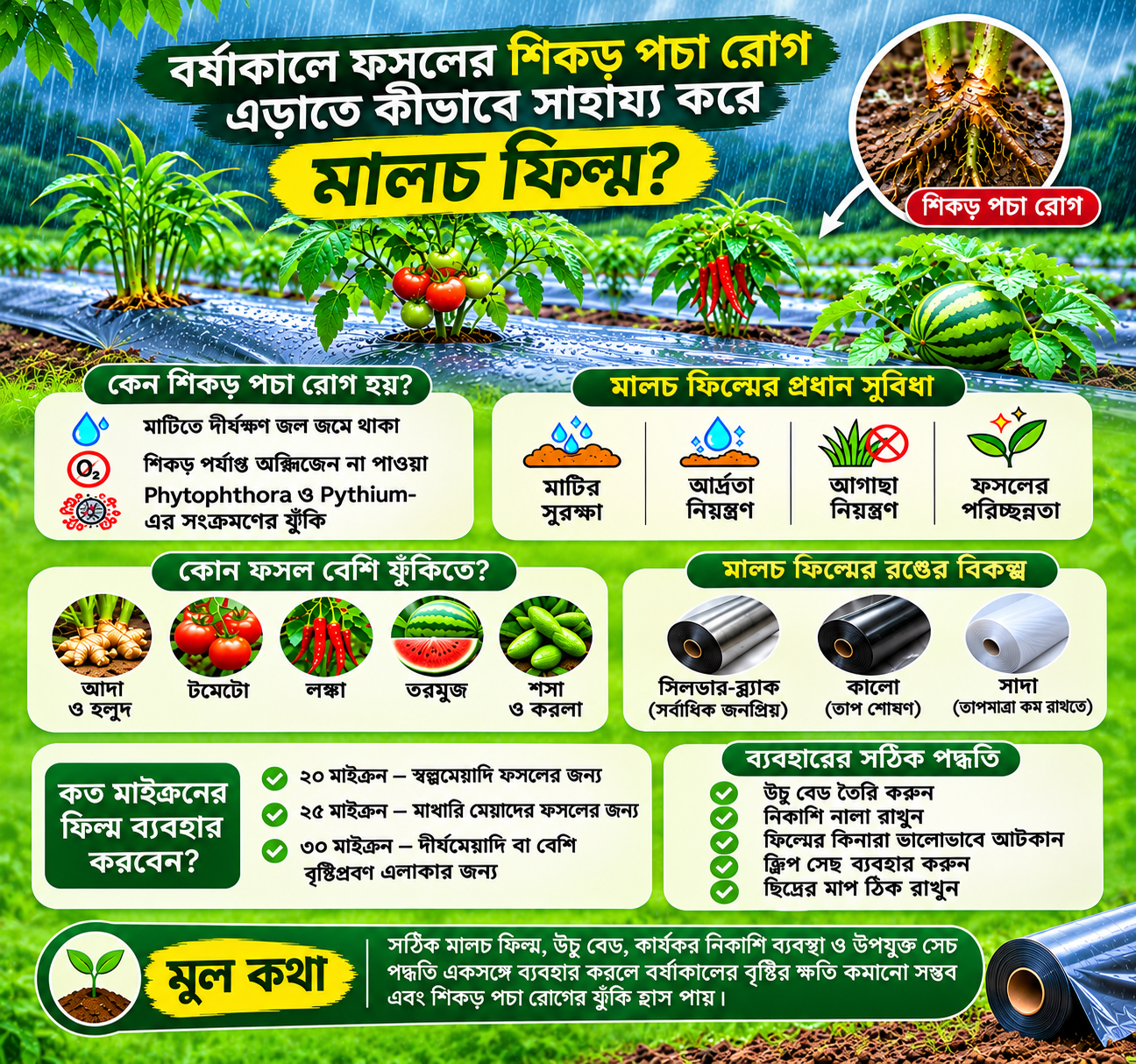
Which Micron Suits Agriculture Mulch Film With Drip?
- 20 micron: short crops and careful hand-laying
- 25 micron: widely used for mid-duration crops
- 30 micron and above: longer crops and tougher fields
Can You Feed Crops Through Drip Under Film?
Yes. Fertiliser mixed in drip water reaches the roots directly, and the film stops rain from washing it away.- Basal feed: goes into the bed before the film is laid
- Later feeds: go through the drip line
Common Mulch Film and Drip Mistakes to Avoid
- Laying the film before testing the drip line
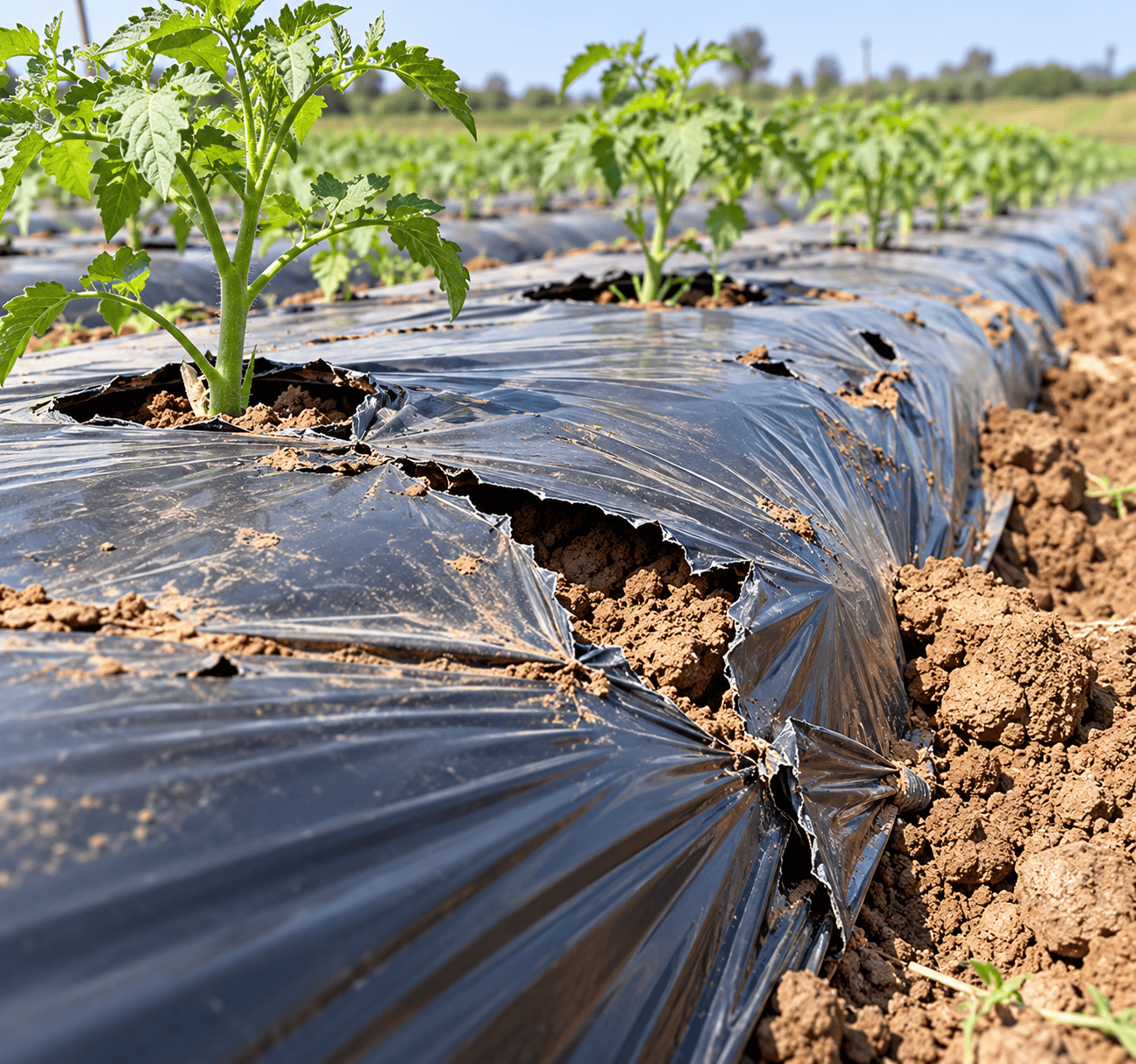
- Leaving the film loose, so water collects on top
- Punching holes too large or away from the emitter
- Buying film without measuring the bed
What to Check in Mulch Film Before Buying
Whether you buy from mulch film manufacturers in India or a local dealer, ask about these:- Raw material: virgin PE with UV stabilisation, to last the full crop cycle
- Thickness: even across the whole mulching film roll
- Size: width and length that suit your field
- Custom hole punching: ask mulch film suppliers if spacing can be set to your bed plan
- Testing: how each batch is checked before dispatch
At a Glance: Your Setup Checklist
| Steps | What to Do | What to Check |
| Bed | Raise and level it | Smooth surface, good drainage |
| Drip line | Lay along the bed | Leaks, blocked emitters |
| Film | Lay and bury edges | Width fits, film is tight |
| Holes | Punch near emitters | Spacing suits the crop |
| Planting | Transplant | Roots sit near the water |