What Black Mulch Film Does to Your Soil
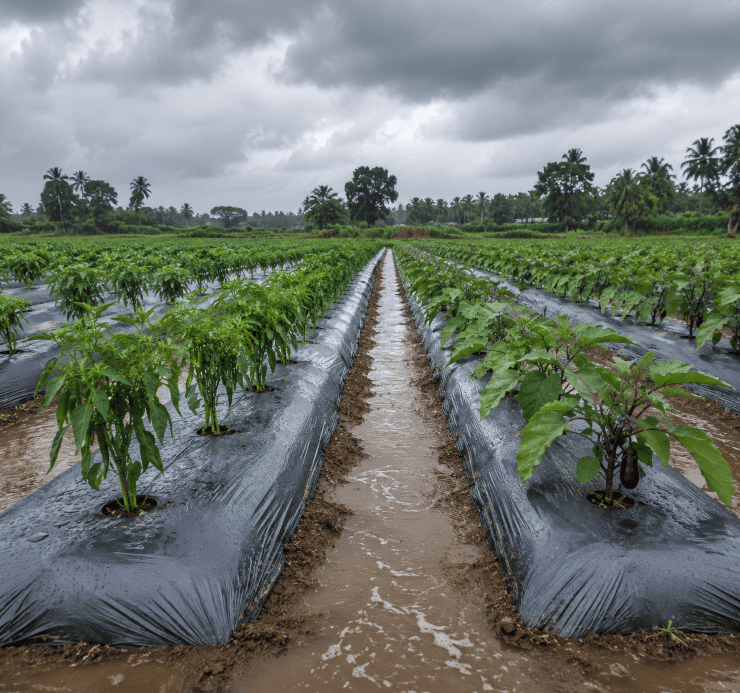
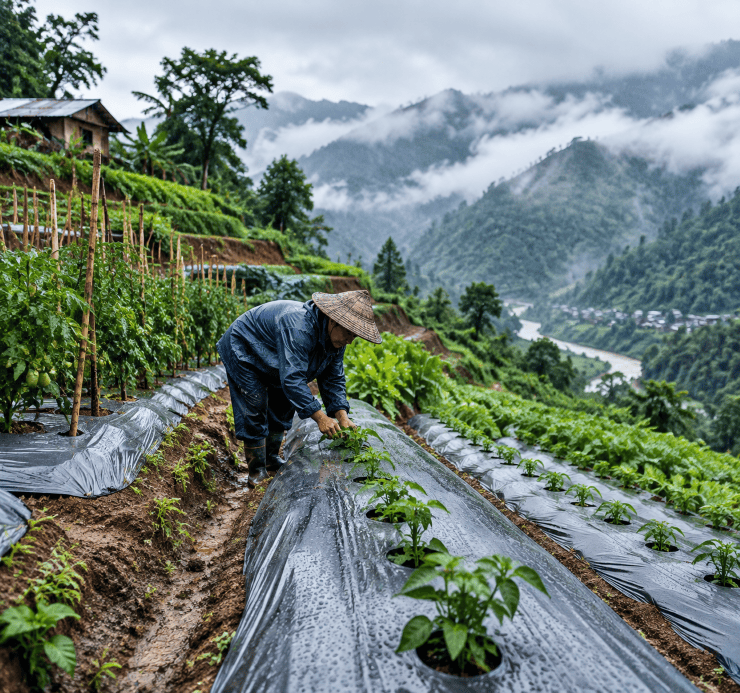
Black is the most widely used and trusted agriculture mulch film in the world. How it works:- Absorbs most UV, visible, and infrared wavelengths of sunlight
- Converts that absorbed energy into heat, which transfers into the soil
- Soil temperature under black film is typically 3-5°F warmer than bare soil at root depth
- Completely blocks light from reaching weed seeds and no herbicide needed alongside it
- Cool early-season planting where soil needs warming
- Crops with moderate temperature requirements
- Farms where weed pressure is the primary concern
- Any situation where a reliable, predictable, all-purpose film is needed
What Red Mulch Film Does Differently
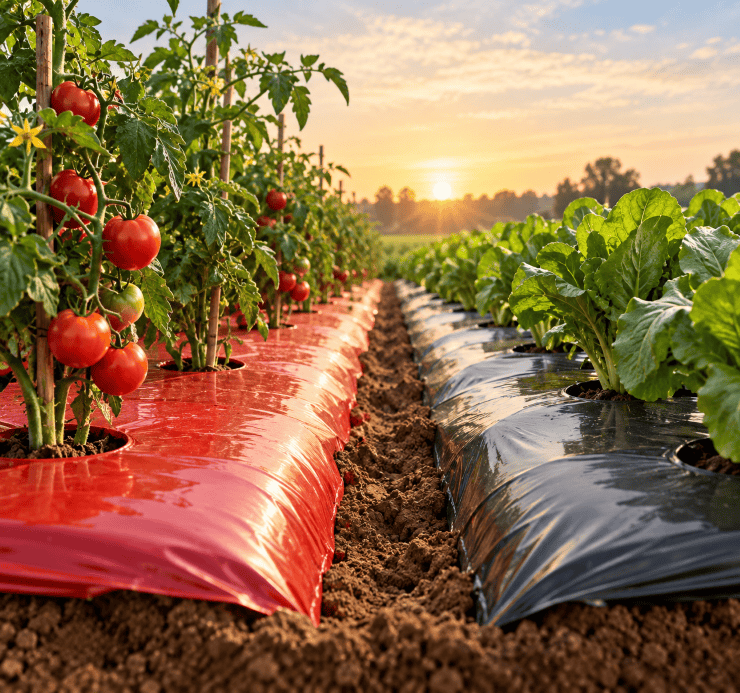
Red film belongs to a family called photoselective or wavelength-selective mulches. It does not just sit on the soil but actively changes the quality of light reaching your crop. How it works:- Reflects red wavelengths (625–800nm) back up into the plant canopy
- These wavelengths influence photosynthesis, vegetative growth, and fruit development
- Soil temperature under red film is similar to black; both absorb heat effectively
- Also opaque and weed suppression performance is comparable to black film
- Red plastic mulch film has shown yield improvements in tomato, zucchini, honeydew, and muskmelon in multiple trials
- Some trials also indicate red film may reduce severity of early blight in tomatoes
- Results are crop-specific and not every crop responds to red film the same way
- In trials where both were tested, differences between red and black were sometimes minimal depending on row orientation and farm conditions
Red vs Black Mulch Film: Side by Side
| Factor | Black Mulch Film | Red Mulch Film |
| Soil warming | Moderate; ~5°F above bare soil | Similar to black |
| Weed suppression | Excellent; fully opaque | Good; also opaque |
| Light reflected into canopy | Minimal | Reflects red wavelengths (625–800nm) |
| Crop response | Consistent across most crops | Specific — tomato, melon, zucchini |
| Pest management | None specific | None specific |
| Season suitability | All seasons | Spring and early summer preferred |
| Best use case | Reliable all-purpose choice | Yield-focused trials on specific crops |
| Availability | Widely available | Less commonly stocked |
Which Crop Prefers Which Colour?
| Crop | Recommended Colour | Reason |
| Tomato | Red or Black | Red shows yield and quality benefit in research trials; black is reliable fallback |
| Watermelon / Muskmelon | Red or Black | Red shows higher total yield in documented trials |
| Zucchini | Red | Documented yield benefit in research |
| Chilli / Pepper | Black | Consistent weed suppression and soil warming suits chilli well |
| Brinjal | Black | Moisture retention and weed control; no specific red film benefit documented |
| Strawberry | Black | Standard choice; weed suppression and fruit cleanliness |
| Cucumber | Black | Reliable moisture and temperature management |
| Potato | Black | Soil warming benefits root development, especially in cooler conditions |
| Papaya | Black or Clear | Black for weed control; clear for early-season soil warming |
Which Colour Suits Which Climate?
Climate is as important as crop type when choosing between red and black agricultural mulching films.| Climate Condition | Recommended Colour | Reason |
| Cool early season; spring planting | Black | Soil warming benefit is maximised |
| Hot summer; peak heat zones | Black with drainage management | Black can overheat roots without airflow |
| High rainfall; monsoon zones | Black or Bi-Colour | Weed suppression essential; bi-colour manages heat better |
| Moderate year-round temperatures | Black | Consistent and predictable performance |
| Altitude farming; cooler nights | Black | Soil warming critical for root development |
| Long crop cycles; spring to summer | Red (trial basis) | Canopy light interaction most consistent in this window |
5 Mistakes That Quietly Cost Your Season
- Defaulting to black every season without checking if your specific crop responds to red film
- Switching entirely to red film based on one trial result without testing on your own farm conditions
- Using black film in peak summer heat without managing drainage; this can stress roots in high-temperature zones
- Assuming both colours perform the same because they do not, especially in how they interact with the plant canopy above
- Not considering row orientation when trialling red film; research suggests North-South row direction helps red film's reflective effect work more consistently
How to Pick the Right Film For Your Farm
When sourcing either colour in India, check that the mulch film manufacturers offer UV-stabilised material and the right micron for your crop duration. Use this as a simple decision guide before ordering:- Crop is tomato, watermelon, or zucchini and you want to test for yield improvement: trial red film on a portion of your field first
- Crop is chilli, brinjal, strawberry, cucumber, or potato: black film is the well-documented, consistent choice
- Farming in high-heat conditions: manage drainage alongside black, or consider bi-colour
- Farming in cooler, early-season conditions: black film maximises the soil warming benefit
- Not sure which direction to go: black film is the safe, reliable default for nearly every situation