Mulch films for heat protection are becoming essential as farmers face stronger sunlight and sudden heat spikes. Many growers notice leaf burn, dry soil, and falling yields during peak summer. Crops that once handled the season now struggle with stress. Rising temperatures and intense UV exposure are no longer rare events. They are becoming normal farming challenges.
This shift makes solar radiation management more important than ever. While irrigation and shade help, they often do not solve soil heat buildup. This is where agricultural mulching films offer practical support. They help manage surface temperature and reduce plant stress in open fields.
Let’s understand how this works and why it matters.
What Is Solar Radiation Stress in Crops?
Solar radiation stress happens when crops receive more sunlight and heat than they can handle. Sunlight is necessary for growth. But excess exposure damages plant tissue.
High radiation causes:
- Leaf scorching
- Wilting
- Faster moisture loss
- Reduced photosynthesis
The soil also heats up quickly. Hot soil affects root function. Roots struggle to absorb water and nutrients properly. Over time, plants weaken.
Solar radiation stress often goes unnoticed at first. By the time visible damage appears, yield potential may already be reduced.
How Does Excess UV and Heat Affect Crop Yield?
Too much heat slows plant processes. Crops shift from growth mode to survival mode.
Common effects include:
- Smaller fruits
- Poor grain filling
- Flower drop
- Reduced oil content in oilseeds
For example:
- Maize may show leaf rolling and weak cob formation.
- Sunflower heads may mature unevenly.
- Okra may drop flowers during heat waves.
When soil temperature rises sharply, roots lose efficiency. Water evaporates faster. Even frequent irrigation may not restore balance.
Heat stress does not just reduce yield. It affects crop quality too.
Can Mulch Films Reduce Heat Stress in Crops?
Yes, when selected correctly, mulch films can reduce heat stress. They work by controlling how sunlight interacts with the soil surface.
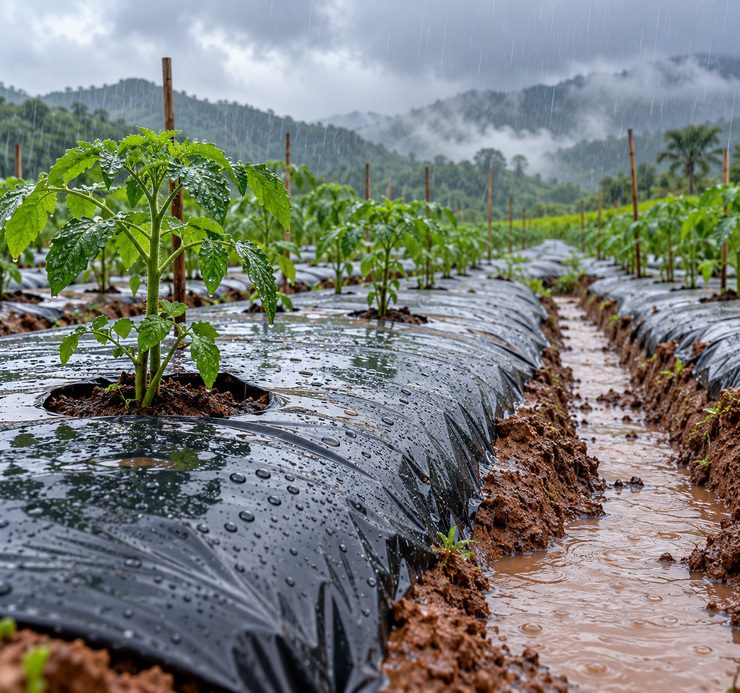
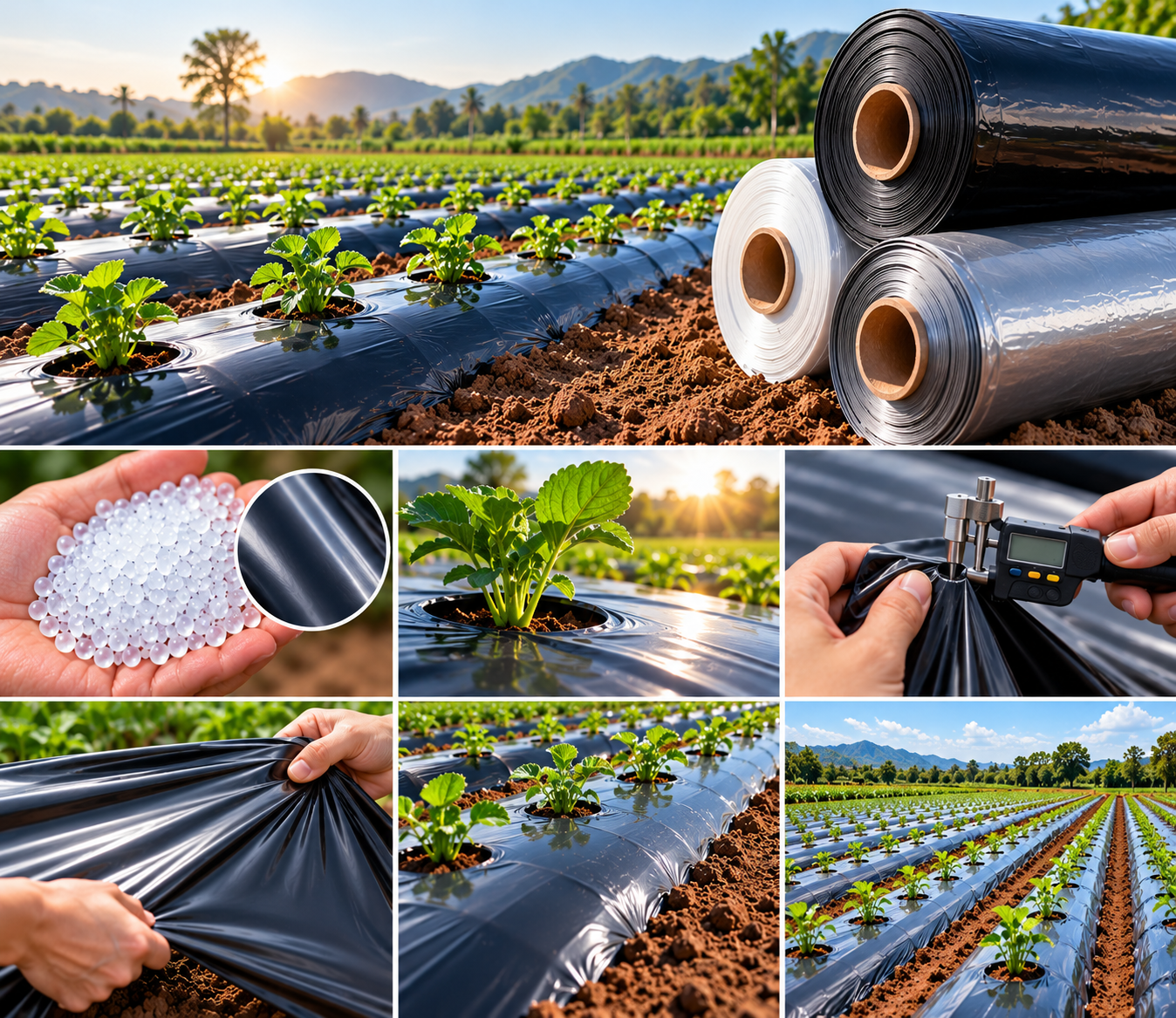
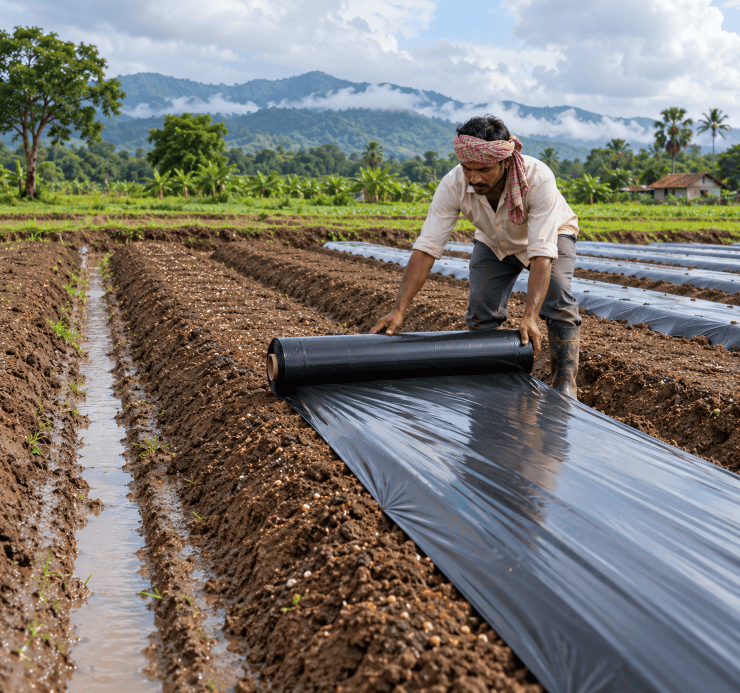
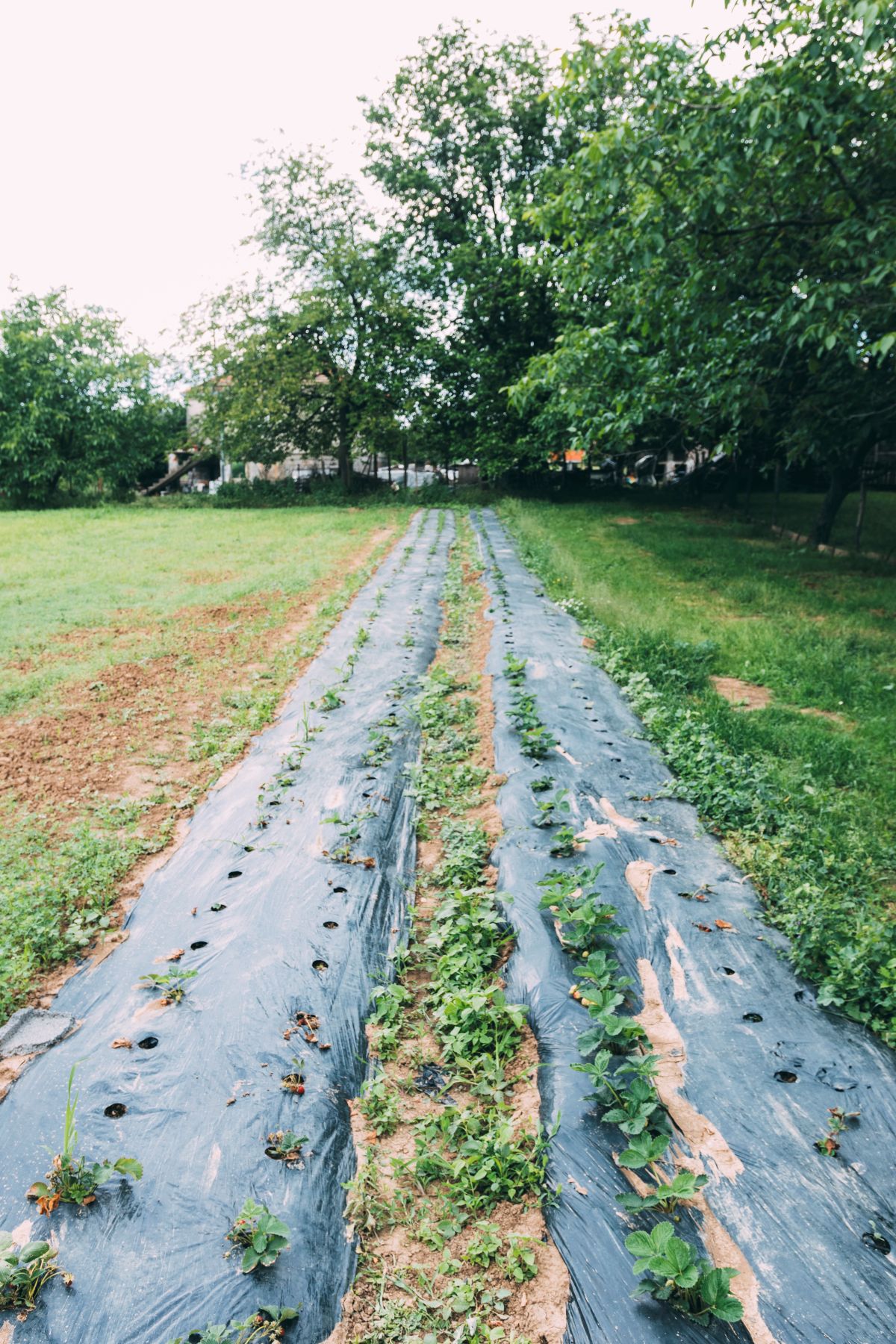
Agricultural mulching films create a protective layer over the soil. This layer influences how much heat is absorbed or reflected.
They help by:
- Reducing direct soil exposure to sunlight
- Lowering surface temperature fluctuations
- Slowing moisture evaporation
- Supporting stable root conditions
This thermal buffering protects crops during sudden heat spikes.
It is not about blocking sunlight completely. It is about managing how soil reacts to it.
How UV-Stabilized Mulch Films Work in Open Fields
UV-stabilized mulch films are designed to withstand prolonged sun exposure. Without UV stabilization, films degrade quickly under harsh sunlight.
UV stabilization helps the film:
- Maintain strength during high radiation
- Resist cracking
- Provide consistent performance through the season
At the same time, the film's surface manages heat transfer. Some films reflect excess radiation. Others balance absorption depending on crop needs.
This creates a controlled micro-environment at the root level. Stable roots mean stronger plants.
Which Mulch Film Colours Help Manage Solar Radiation?
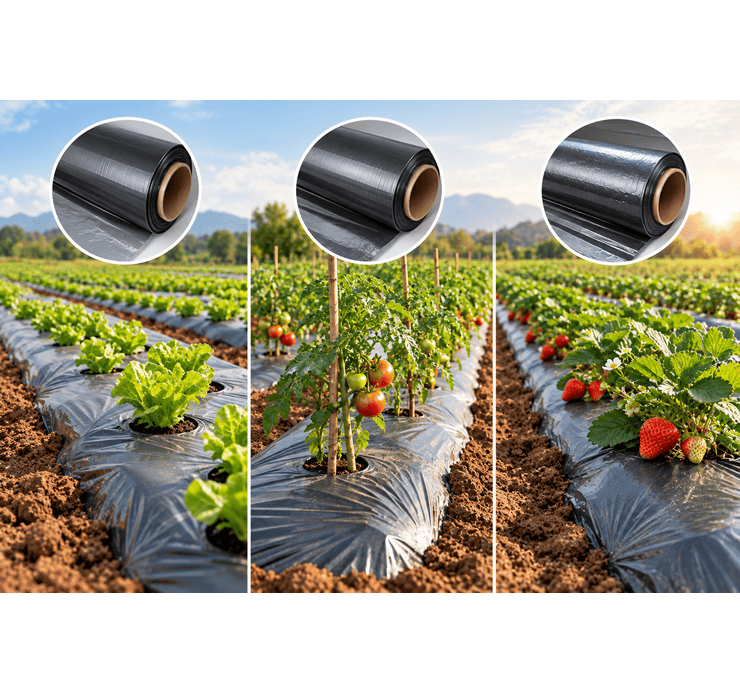
Colour plays a major role in solar radiation control. Different colours interact with sunlight differently.
Here is a simple comparison:
| Mulch Film Colour | Heat Impact | Suitable Conditions |
| Silver | Reflects sunlight | Hot and dry regions |
| White | Reduces heat buildup | Summer vegetable crops |
| Black | Absorbs heat | Early season planting |
| Black-Silver | Balanced effect | Mixed climates |
Reflective films reduce surface heat. Absorbing films help in cooler months. Choosing the right colour prevents overheating during peak summer.
This decision should match both crop type and local climate.
Best Crops That Benefit from Heat-Reducing Mulch Films
Certain crops respond strongly to temperature control.
Maize
Stable soil temperature supports better root depth and cob formation.
Sunflower
Balanced heat helps improve head development and seed filling.
Okra
Consistent moisture reduces flower drop during heat spikes.
Vegetable crops like chilli, tomato, and cucumber also benefit. These crops are sensitive to soil moisture loss and root stress.
Mulch films support uniform growth. They reduce sudden stress events. This improves crop consistency across the field.
How to Choose the Right Mulch Film for High-Temperature Regions
The selection should focus on climate first.
In high-temperature regions:
- Reflective or white films reduce surface heat.
- UV stabilization ensures durability.
- Proper thickness improves lifespan.
Farmers should consider:
- Peak summer temperature
- Duration of sunlight exposure
- Crop sensitivity
It is important not to overcomplicate the decision. The goal is to reduce heat stress while maintaining healthy plant growth.
Quality agricultural mulching films designed for open-field conditions perform better during extreme weather.
Climate Change and the Future of Solar Radiation Management in Farming
Heatwaves are becoming more frequent. Rainfall patterns are shifting. Solar intensity is increasing in many regions.
Farmers are adapting slowly. Water management alone may not be enough in the future. Soil surface protection will become more important.
Solar radiation management is not about eliminating sunlight. It is about reducing stress peaks. Small adjustments at the soil level can make a big difference over time.
Mulch films offer a practical approach to this challenge. They support resilience without changing core farming practices.
A Thoughtful Approach to Heat Protection in Farming
Managing heat stress is becoming part of modern agriculture. Crops need stability, especially during unpredictable summers. Mulch films for heat protection offer one layer of defence against rising solar radiation and sudden temperature spikes.
At Neha Mulch Film, agricultural mulching films are developed to support real field conditions. The focus remains on helping farmers manage soil temperature and maintain crop health through changing climates.
If you are planning for the next growing season, consider how solar radiation affects your soil and crops. Exploring suitable mulch film options could help you build a more resilient field and protect yields more consistently.
Heat challenges may increase, but thoughtful preparation keeps farming steady and sustainable.