Tomato farming can be incredibly rewarding, but it comes with its fair share of challenges. Many growers struggle with pests, uneven fruit ripening, and rising pesticide costs, which can be stressful and impact profits. That’s where agricultural mulching films come in.
These films help protect your tomatoes from pests, suppress weeds, conserve soil moisture, and even improve fruit colour. By choosing the right mulch, you can simplify farm management, reduce chemical use, and enjoy healthier, more uniform harvests—all while making your tomato plants thrive naturally.
With these challenges in mind, let’s explore how different mulch films can help tomato growers tackle pests, suppress weeds, and achieve uniform ripening effectively.
Why Do Tomato Growers Struggle With Pests And Ripening Issues?
Tomatoes are one of the most widely grown vegetables. But they are also one of the most delicate. Growers constantly deal with:
- Pest pressure, like nematodes, whiteflies, and thrips.
- High pesticide costs with limited effectiveness.
- Uneven fruit colour that lowers market value.
- Weed competition is stealing water and nutrients.
These problems don’t just reduce yield. They also increase costs and stress for farmers who rely on tomatoes for income.
This is where mulch film manufacturers play a crucial role. Advanced agricultural mulching films are no longer just about covering soil—they are a science-backed solution that helps control pests, improve quality, and maximize profits.
What Are Agricultural Mulching Films?
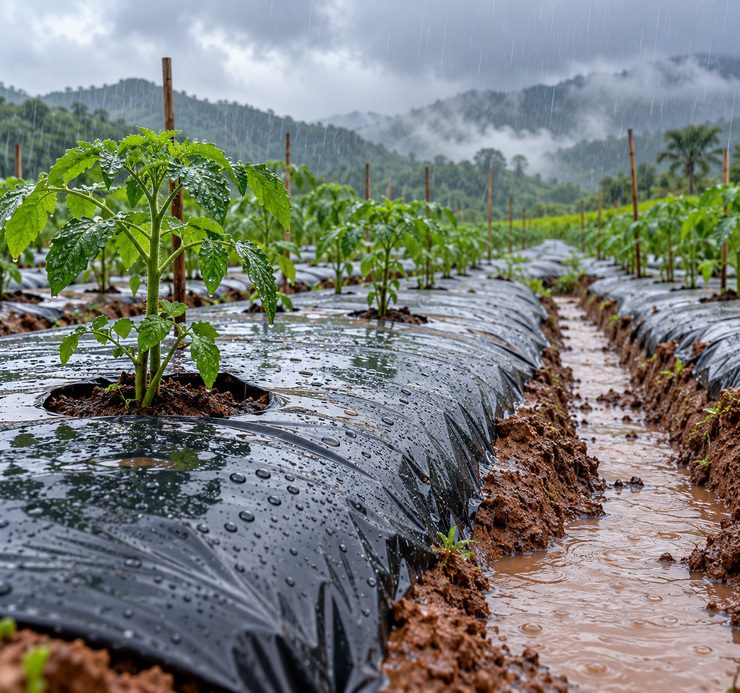
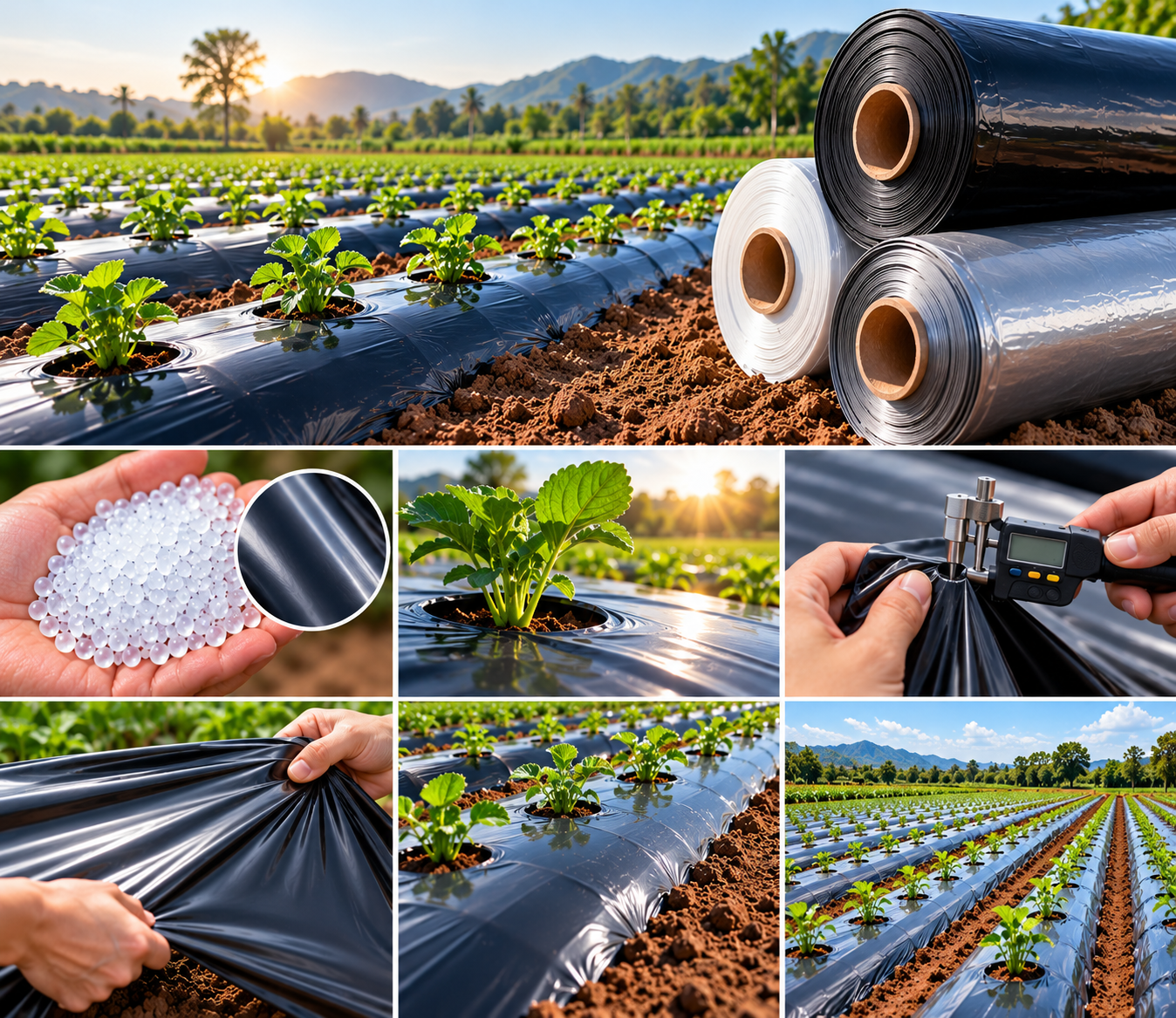
Agricultural mulching films are thin plastic sheets placed on soil around crops. They serve several functions:
- Conserve soil moisture.
- Maintain soil temperature.
- Block weed growth.
- Protect roots and stems.
- Influence crop growth and fruit quality.
For tomato growers, the real game-changer lies in colored mulch films—each colour delivers a unique benefit.
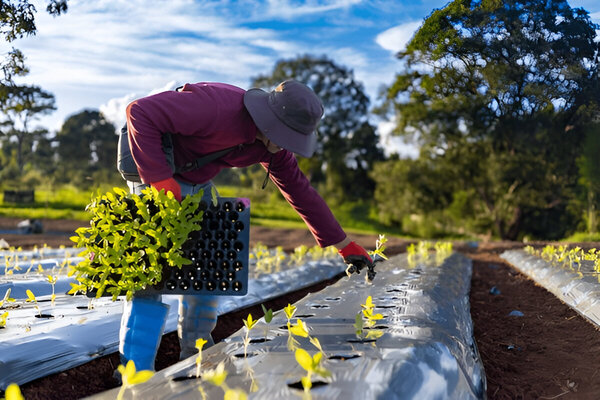
How To Mulch A Tomato Plant
Mulching a tomato plant is easier than it sounds—and it can make a huge difference in yield and fruit quality. Here’s a simple, step-by-step approach:
- Choose the Right Film
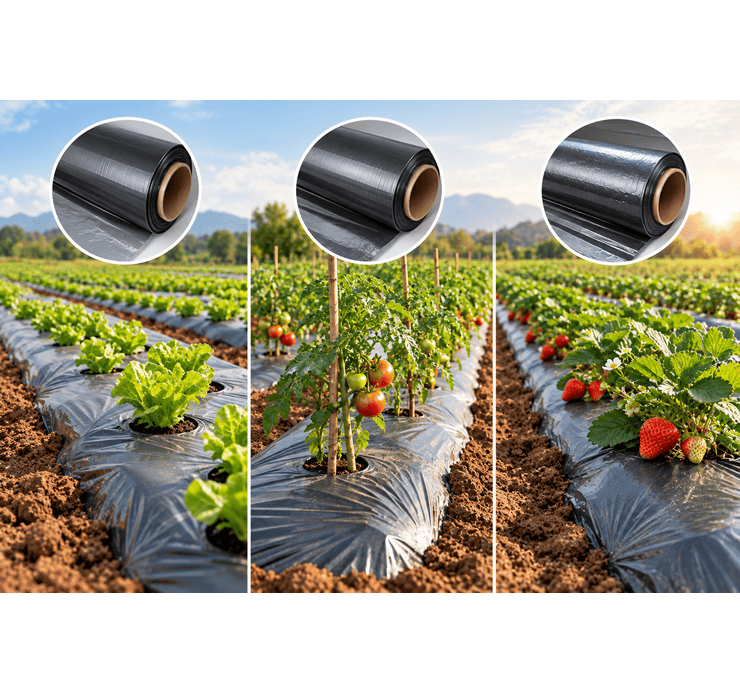
- Silver for pest control, black for weed suppression, red for better ripening.
- Pick the one that matches your main concern.
- Silver for pest control, black for weed suppression, red for better ripening.
- Prepare the Soil
- Remove weeds and loosen the soil around your tomato plants.
- Ensure the soil is slightly moist but not waterlogged.
- Remove weeds and loosen the soil around your tomato plants.
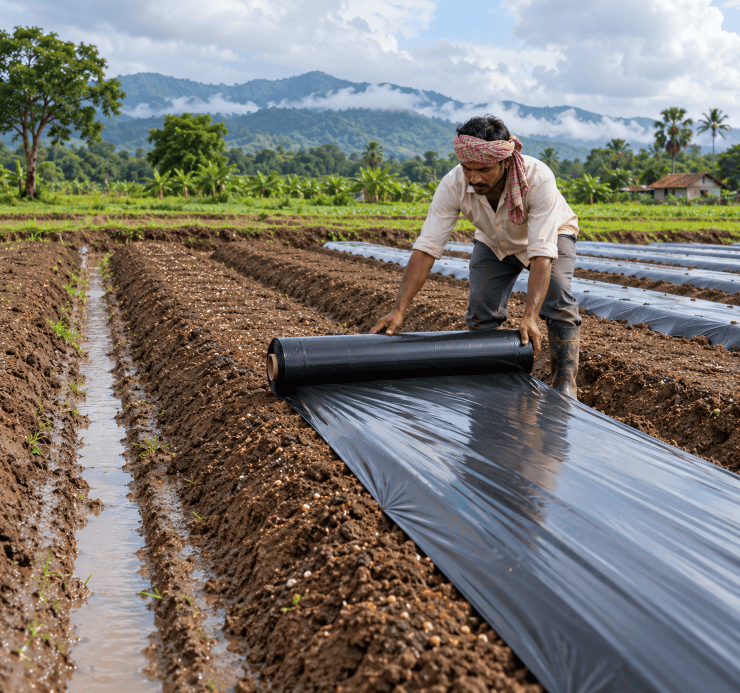
- Lay the Mulch Film
- Spread the film evenly along the row.
- Tuck the edges into the soil to prevent it from blowing away.
- Spread the film evenly along the row.
- Planting Through the Film
- Make small holes in the film where each tomato seedling will go.
- Place the plant gently and cover the base with a bit of soil for stability.
- Make small holes in the film where each tomato seedling will go.
- Watering and Care
- Use drip irrigation under the film for efficient water delivery.
- Regularly check for pests or diseases, even with protective mulch.
- Use drip irrigation under the film for efficient water delivery.
- Maintenance
- Replace torn or degraded film to maintain its effectiveness.
- At the end of the season, remove used films responsibly or follow biodegradable options.
- Replace torn or degraded film to maintain its effectiveness.
By following these simple steps, tomato growers can conserve moisture, reduce weeds, repel pests, and encourage uniform ripening—all while making their farm work smarter, not harder.
How Do Colored Mulch Films Help Tomato Growers?
| Film Type | Problem It Solves | How It Helps Tomatoes |
| Silver Mulch Film | Pests like whiteflies, aphids, and thrips | Reflects light, repels insects, reduces virus spread |
| Black Mulch Film | Weeds competing for nutrients | Blocks sunlight, prevents weed growth, and conserves soil moisture |
| Red Mulch Film | Uneven ripening, poor colour | Stimulates photosynthesis, improves fruit colour and uniformity |
By using these films, tomato farmers can cut pesticide sprays, reduce weed pressure, and achieve consistent, market-ready produce.
How Do Agricultural Mulching Films Reduce Pest Pressure?
Tomato fields are highly vulnerable to pests like:
- Nematodes (damage roots).
- Whiteflies (spread viruses).
- Thrips (cause leaf curl).
Silver mulch films reflect sunlight in a way that confuses and repels insects. This reduces the need for repeated chemical spraying, lowering input costs and keeping crops healthier.
How Do Mulch Films Ensure Uniform Ripening In Tomatoes?
One of the biggest complaints from tomato growers is uneven ripening. Some fruits stay pale while others over-ripen. This inconsistency leads to market losses.
Red mulch films solve this problem by enhancing light reflection that stimulates the plant’s photosynthesis. The result?
- Better fruit colour.
- Even ripening.
- Higher market prices.
Why Are Mulch Films A Smarter Investment Than Excessive Pesticides?
Pesticides:
- Costly over time.
- Harmful to soil and health.
- Risk of resistance in pests.
Mulch Films:
- One-time seasonal investment.
- Reduce the need for chemicals.
- Improve soil health and crop quality.
- Environmentally safer.
In the long run, agricultural mulching films provide higher returns with lower risks compared to depending solely on pesticides.
Best Practices For Tomato Farmers Using Mulch Films
To get the best results, tomato farmers should:
- Choose the right colour film based on their main challenge (pest, weed, or ripening).
- Ensure proper installation with tight sealing along edges.
- Combine with drip irrigation for efficient water use.
- Monitor crops regularly for early signs of stress or pests.
- Work with trusted mulch film manufacturers for consistent quality.
Curious about how mulch films can transform your tomato farming? Here are answers to the most common questions, helping you grow healthier, pest-free, and more uniform tomatoes.
Yes! Plastic film mulch helps conserve soil moisture, maintain optimal temperature, and suppress weeds. Tomato plants experience better root development, healthier growth, and more consistent fruit, making it a smart choice for growers.
The best mulch depends on your goal: silver for pest control, black for weed suppression, and red for uniform ripening. Choosing the right film ensures healthier tomatoes and higher-quality harvests.
Mulch films protect tomatoes from pests, weeds, and temperature fluctuations. They reduce pesticide use, save water, and promote uniform ripening, helping farmers achieve better yields and higher-quality produce with less effort.
Yes, shredded leaves can work as organic mulch. However, they may not control pests or ripening as effectively as colored plastic films. Combining leaves with films can balance protection and natural soil enrichment.
Absolutely! High-quality agricultural mulching films from trusted manufacturers like Neha Mulch Film are designed to protect crops while being safe for soil health and long-term fertility.
Helping Tomato Farmers Grow Smarter With Neha Mulch Film
Tomato farming will always come with challenges. But with the right solutions, growers can protect their crops, save money, and improve quality.
Agricultural mulching films—especially silver, black, and red films—offer simple, effective answers to pest pressure, weed growth, and uneven ripening.
At Neha Mulch Film, decades of experience as trusted mulch film manufacturers ensure that farmers get the right solutions for their crops. With reliable films, tomato growers can focus less on problems and more on harvesting healthy, market-ready produce.
Read More: Can Agricultural Mulch Film Reduce Pest Attacks In Brinjal Farming?