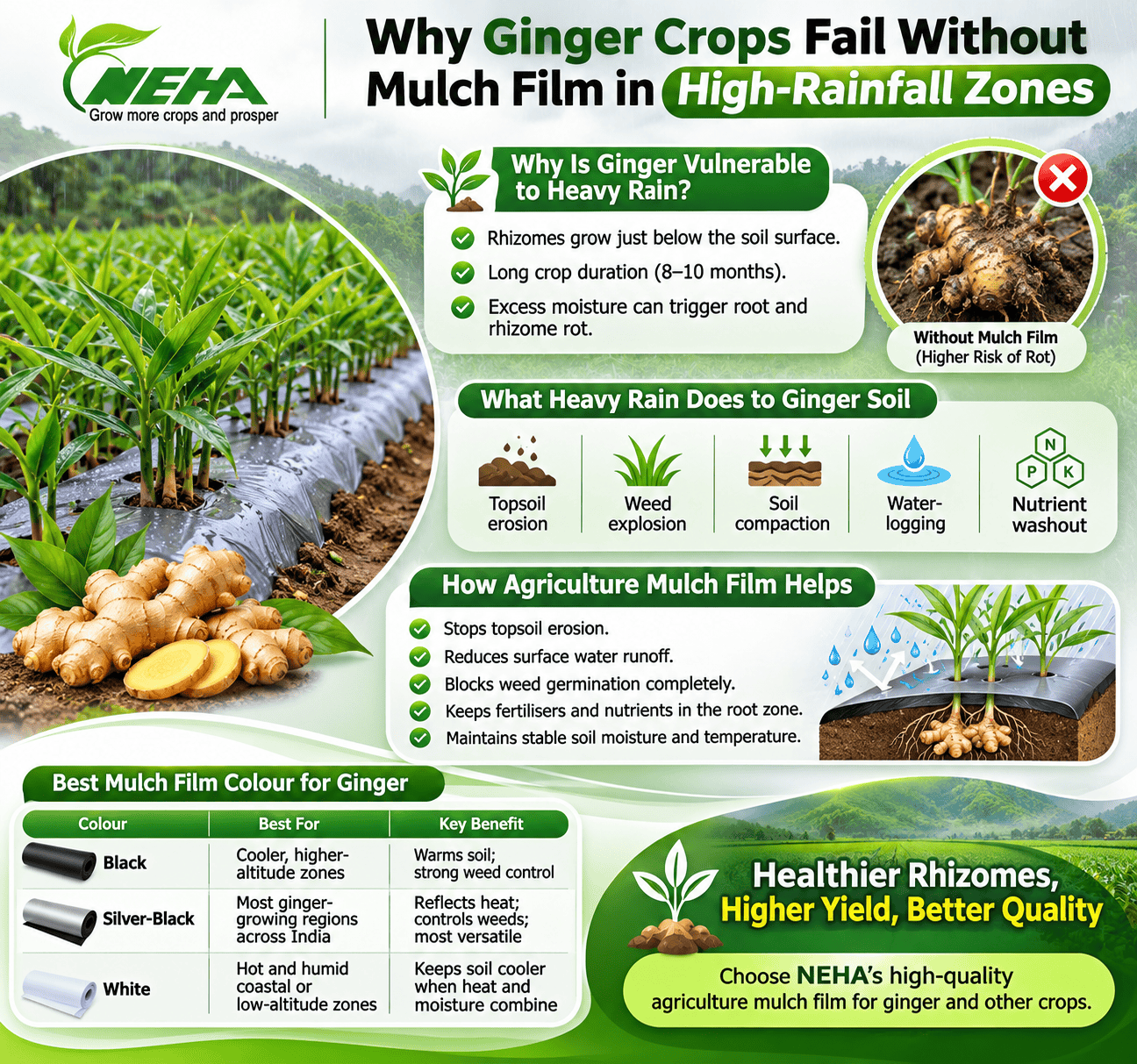
Why Is Ginger So Vulnerable to Rainfall?
Ginger is not like most crops. It grows underground, slowly, over 8 to 10 months. That long time in the soil is also its biggest vulnerability.- Ginger rhizomes sit just below the surface, close enough to be affected by every change in soil moisture
- By the time you see yellowing leaves or wilting stems above ground, the rhizome below has often already started rotting
What Heavy Rain Does to Ginger Soil
Rain does not just bring water. In a ginger field, sustained monsoon rain triggers a chain of problems:| Problem | What It Does to Ginger |
| Topsoil erosion | Strips away the nutrient-rich layer the roots depend on |
| Weed explosion | Wet conditions accelerate weed germination; weeds compete directly with ginger for space and food |
| Soil compaction | Heavy rain packs the soil tight, reducing the air pockets roots need to breathe |
| Waterlogging | Standing water around rhizomes cuts off oxygen and invites fungal activity |
| Nutrient washout | Fertilisers dissolve and drain away before ginger roots can absorb them |
How Agriculture Mulch Film Changes the Equation
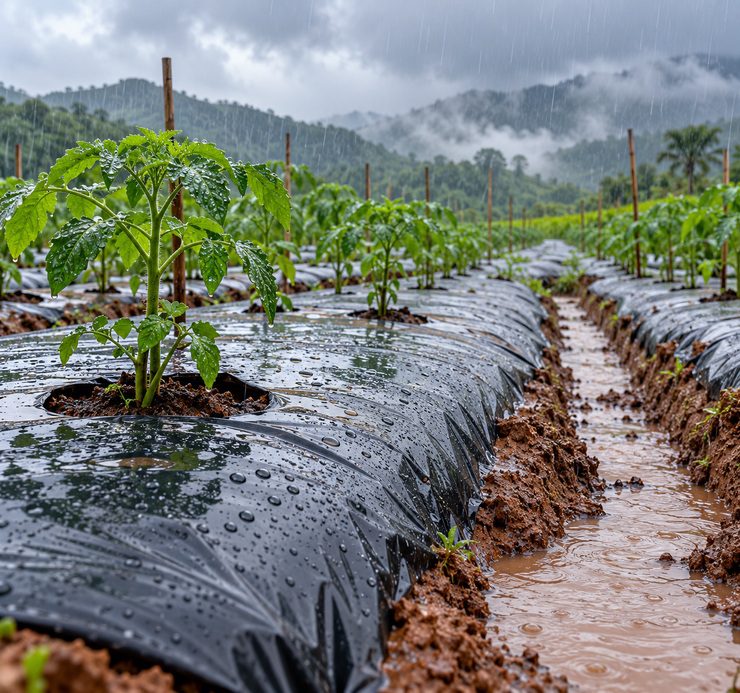
Laying agriculture mulch film over prepared ginger beds before planting changes what rain does when it reaches the field.- The film covers the soil surface, so raindrops hit the film, not the soil. This stops topsoil erosion at the source.
- It slows surface water movement, reducing the speed at which water runs across the bed and washes nutrients away
- It completely blocks weed germination underneath; no sunlight reaches covered soil, so weeds never get started
- It keeps fertilisers in place; nutrients stay close to the root zone instead of washing away with every rain
Does Plastic Mulch Film Prevent Rhizome Rot?
Plastic mulch film significantly reduces the conditions that cause rhizome rot. It does not eliminate the risk, but it addresses the main triggers. Here is how:- The film keeps soil moisture at a stable, consistent level under the bed. This is very different from waterlogged conditions, where moisture swings between drenched and drying out, which is exactly when fungal pathogens are most active
- By covering the soil, the film also maintains soil temperature more evenly. Fungal activity spikes when soil alternates between warm-wet and cool-wet. Stable temperature means less ideal conditions for the fungi that cause rot
- The film reduces soil splash when rain hits bare soil; it physically dislodges microbes and moves them around the root zone. Covered soil keeps everything in place
Which Mulch Film Colour Works Best for Ginger?
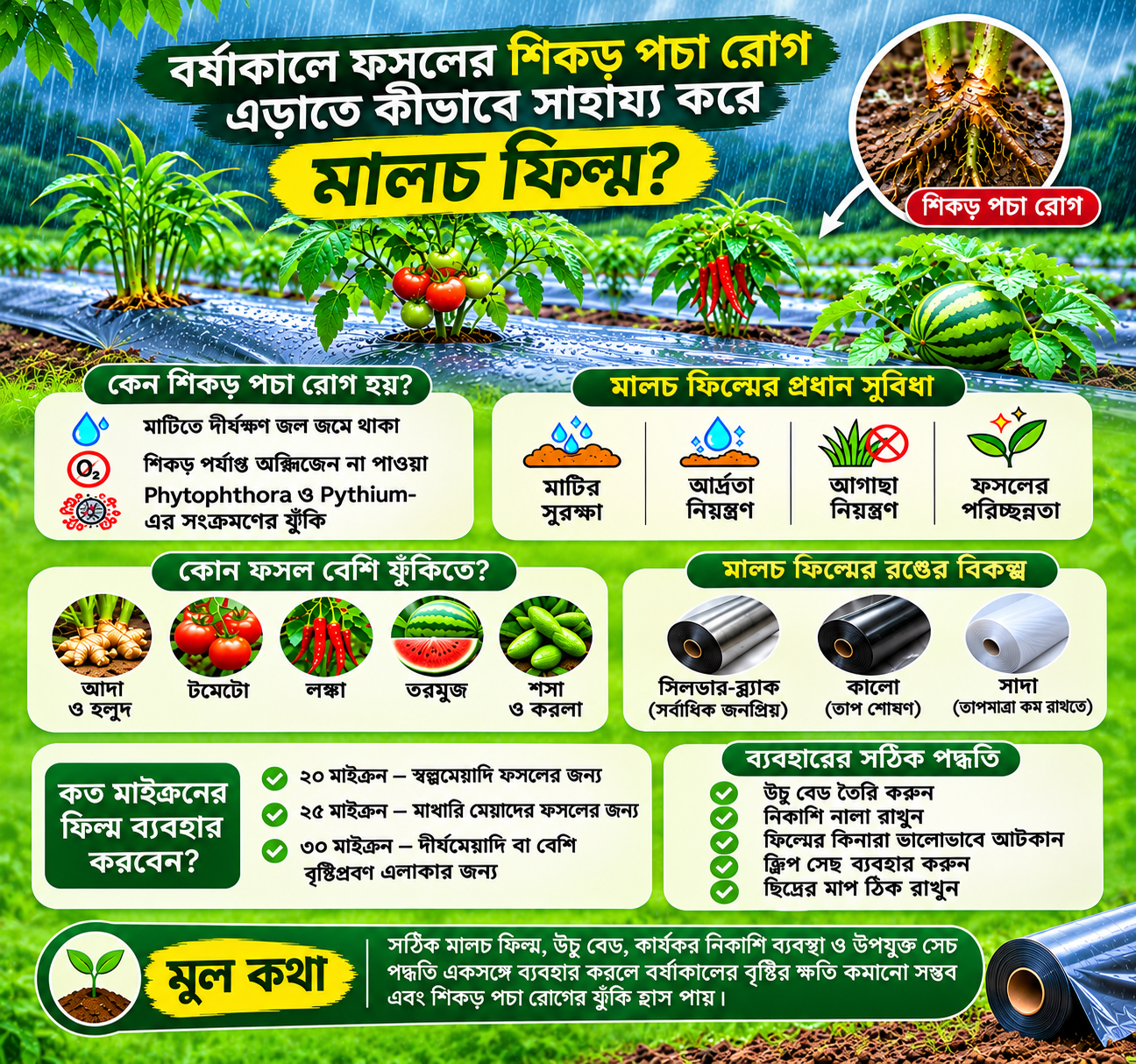
A common mistake farmers make is choosing colour based only on what is available rather than what suits the growing zone.| Colour | Best Condition for Ginger | Key Benefit |
| Black | Cooler, higher-altitude ginger zones | Warms soil; strong weed control |
| Silver-Black | Most ginger-growing regions across India | Reflects heat; controls weeds; most versatile |
| White | Hot and humid coastal or low-altitude zones | Keeps soil cooler when heat and moisture combine |
Which Micron Thickness Is Right for Ginger?
Ginger's long crop cycle is the deciding factor here.- 25 micron: works for ginger in moderate rainfall zones, managed field conditions, and where the film will be hand-laid on flat ground
- 30 micron: recommended for ginger in sustained monsoon regions, hilly or terraced land, and anywhere the film will face physical stress from rain, slope, or soil movement across a full season
How to Lay the Film Correctly for Ginger
The film is only as good as how it is put down.- Raised beds first: water drains away from raised beds far more effectively than flat soil. Lay film only after the bed is properly prepared and elevated
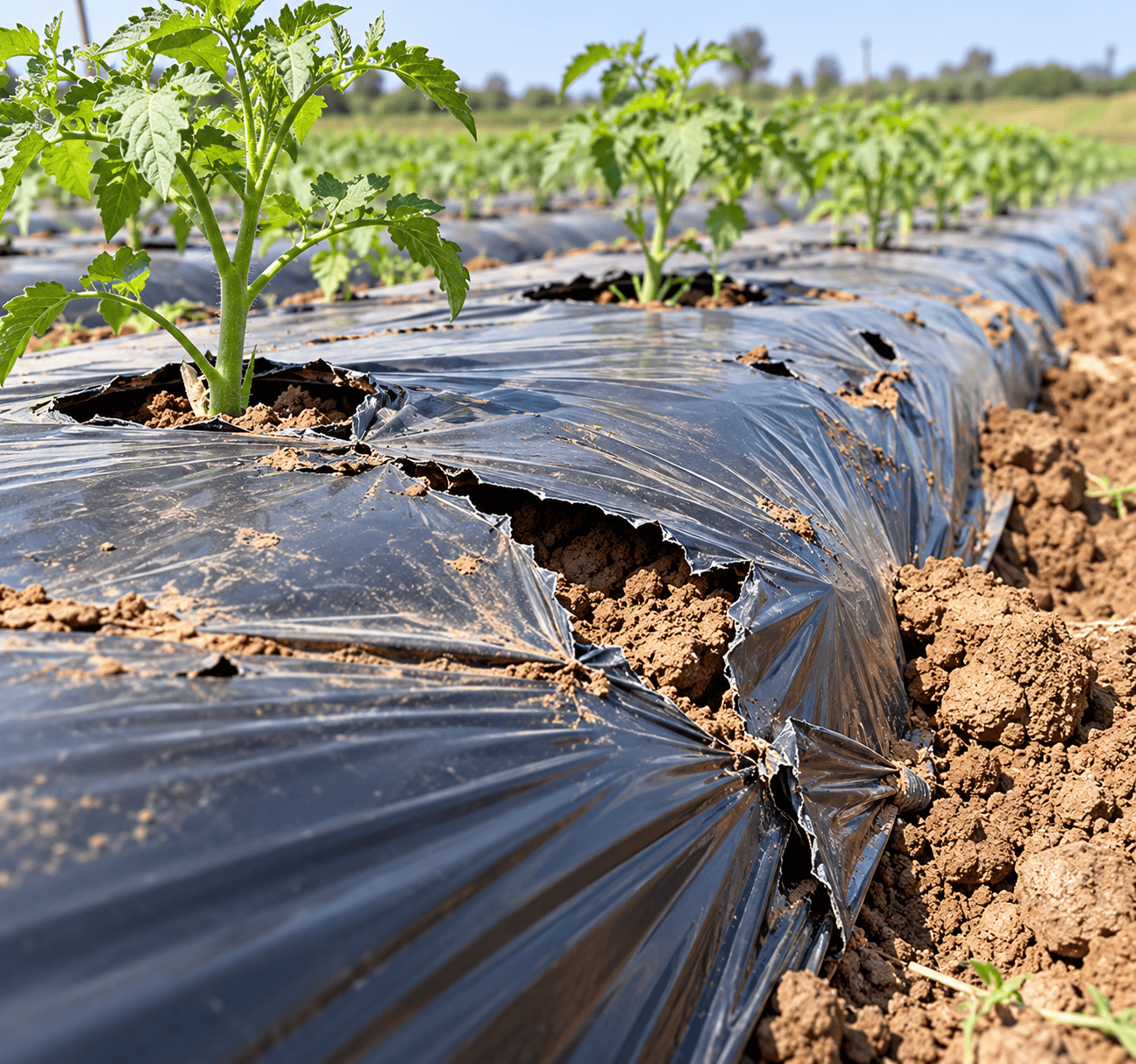
- Deep edge anchoring: in wet conditions, bury the edges deeper than you normally would. On sloped land, the uphill edge especially needs extra anchoring
- Drip irrigation under the film: this gives direct control over root-zone moisture and reduces dependence on rainfall for watering
- Hole punching: use the right spacing and hole size for ginger planting. Oversized or too many holes let surface water enter the root zone
Ginger and Mulch Film: At a Glance
| Ginger Growth Stage | Main Risk | What the Film Does |
| Planting (June–July) | Soil erosion from early monsoon | Protects soil bed, holds nutrients |
| Early growth (July–Aug) | Weed competition, waterlogging | Blocks weeds, regulates moisture |
| Mid-season (Aug–Sept) | Rhizome rot, fungal pressure | Stabilises temperature, limits fungal conditions |
| Late season (Oct–Nov) | Nutrient depletion, soil compaction | Keeps nutrients in place, maintains soil structure |
| Pre-harvest (Nov–Jan) | Surface contamination | Keeps rhizome area clean and stable |
What to Look for in a Mulch Film for Ginger Crops
For a crop that stays in the ground for nearly a year, the film specification matters more than it does for short-cycle crops.- Virgin PE only: recycled material gives inconsistent thickness and unpredictable UV performance across a long season
- UV stabilisation confirmed: ask for the UV life rating and confirm it covers your full crop cycle
- Consistent micron thickness: thin patches in a 30-micron roll behave like 20-micron film in monsoon conditions; check the roll before committing to a bulk order
- Reinforced edges: non-negotiable for wet soil and hilly terrain where film edges face constant pressure