
What Tearing Actually Costs You
Tearing is not a cosmetic issue. A split film lets sunlight reach weed seeds and lets wind get underneath the sheet. It also allows water to evaporate from the bed.- Weed pressure returns within weeks
- Soil moisture drops, so irrigation increases
- Soil temperature swings affect root growth
- Fertiliser applied under the film is lost faster
- Replacing film mid-season costs labour and crop stress
The 6 Causes Farmers Often Overlook
1. A Film That Doesn’t Match the Crop
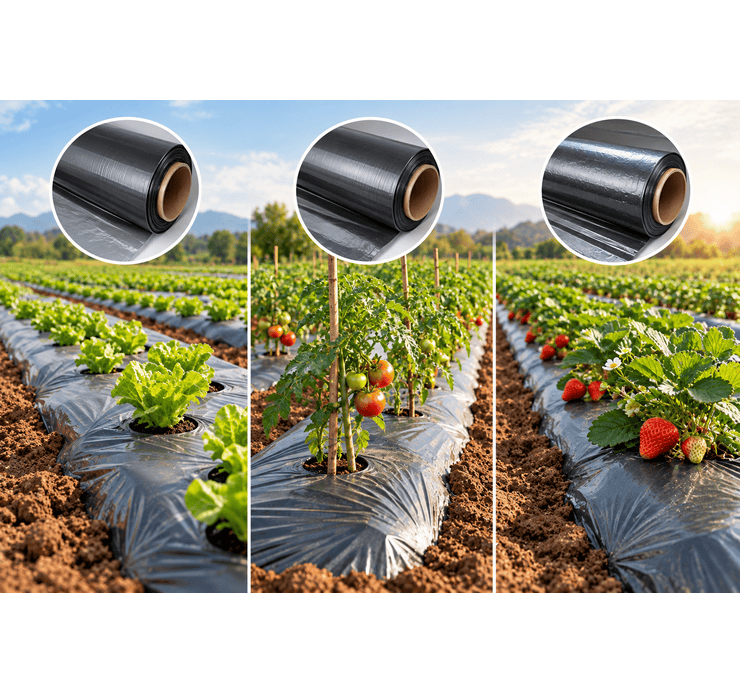
Not every sheet suits every field. A thin film that works for a 60-day leafy crop will not survive a long-duration crop such as tomato, brinjal, or papaya. Thickness is measured in microns, and it should follow crop duration, planting method, and exposure to sun and wind. Short-cycle vegetables often do well with lighter grades, while longer crops need a stronger film with UV stabilisation. Source matters as much as thickness. Reputable plastic mulch manufacturers control raw material quality and keep the thickness uniform across the roll. Films made from poorly blended material carry thin spots, and tears begin there first.2. Rough, Uneven Bed Preparation
Film does not tear on its own. It tears on something. Stones, hardened soil clods, crop stubble, and sharp stalk ends press against the sheet every time it expands in the sun. Prepare the bed with care:- Break clods into fine soil
- Remove stones, roots, and stubble
- Level the surface so the film sits flat
- Keep the bed slightly rounded so rainwater drains off
3. Overstretching During Laying
Pulling the film tight feels like the right way to get a neat finish. It isn’t. A film stretched at the time of installation is already under stress before the sun touches it. As the day heats up, the film expands. At night it contracts. A sheet laid too tight has nowhere to go during contraction, and small pinpricks become long splits. The correct tension is firm but relaxed. The film should lie flat on the bed without being pulled like a drumhead.4. Weak Edge Anchoring
Wind is one of the most underestimated causes of tearing. When edges are loosely held, wind slips underneath, lifts the sheet, and flaps it against the bed until it rips along the weakest line. Anchor the film properly:- Bury both edges in a trench at least 10 to 15 cm deep
- Compact the soil firmly over the buried edge
- Add soil mounds at regular intervals along the bed in open or windy fields
- Secure the ends of every row, since lifting usually starts there
5. Laying at the Wrong Time of Day
Installation timing changes how the film behaves. Laying in the harsh midday sun makes the sheet soft and prone to stretching. Laying in strong wind makes it hard to control and easy to damage. Early morning or late afternoon, when the air is calm and cooler, gives better results. The film settles evenly and sits naturally before the day’s heat peaks.6. Careless Planting Holes and Field Handling
Many tears do not begin where farmers expect. They begin at the planting holes. Ragged or oversized holes weaken the film around each plant. Cutting with a blunt knife or burning holes unevenly leaves a stressed edge that splits outward under tension. Handling damage adds to this:- Dragging heavy tools or tools with sharp edges across the bed
- Walking on the film repeatedly
- Rolling out film over uneven ground
- Livestock or rodents entering the field
A Simple Installation Checklist
Before laying your next roll, run through this list:- Confirm film thickness against crop duration
- Clear stones, clods, and stubble from the bed
- Level and slightly round the surface
- Lay in calm conditions, early or late in the day
- Keep tension firm but not tight
- Bury and compact both edges
- Make clean, small planting holes
How to Choose the Right Film Supplier
Quality starts before the film reaches your field. When comparing plastic mulch manufacturers, ask these questions:- Is the thickness consistent across the full roll?
- Is the film UV stabilised for the crop duration?
- Does the supplier recommend a grade based on your crop, not just on price?
- Can they guide you on width, colour, and perforation?
Quick Repairs for Small Tears
Not every tear needs a full replacement.- Patch small splits with a piece of film and a layer of soil on top
- Press loose edges back into the trench and compact them
- Replace a section when the tear runs longer than a few feet