What Heavy Rain Does to Bare Soil
Before judging mulch, it helps to see what uncovered soil goes through in a downpour.- Erosion: On sloping land, rain can wash away fertile topsoil within a single season.
- Nutrient loss: Water carries fertilizer and organic matter below the root zone.
- Disease splash: Raindrops throw soil-borne fungus and bacteria onto leaves and fruit.
- Soil crusting: Hard-hit surfaces seal over and starve roots of air.
- Weed flush: Constant moisture sends weeds up faster than they can be pulled.
How Mulch Protects Crops in Heavy Rain
Good mulch works like a roof for the soil surface. It does not stop the rain; it softens the blow.- Breaks the force of raindrops, so soil stays loose and in place
- Keeps fruit and leaves clean by blocking splash from the ground
- Limits nutrient leaching near the root zone
- Suppresses weeds by cutting off light
- Keeps soil temperature steadier on cool, cloudy days
How Rain Actually Moves Under Mulch
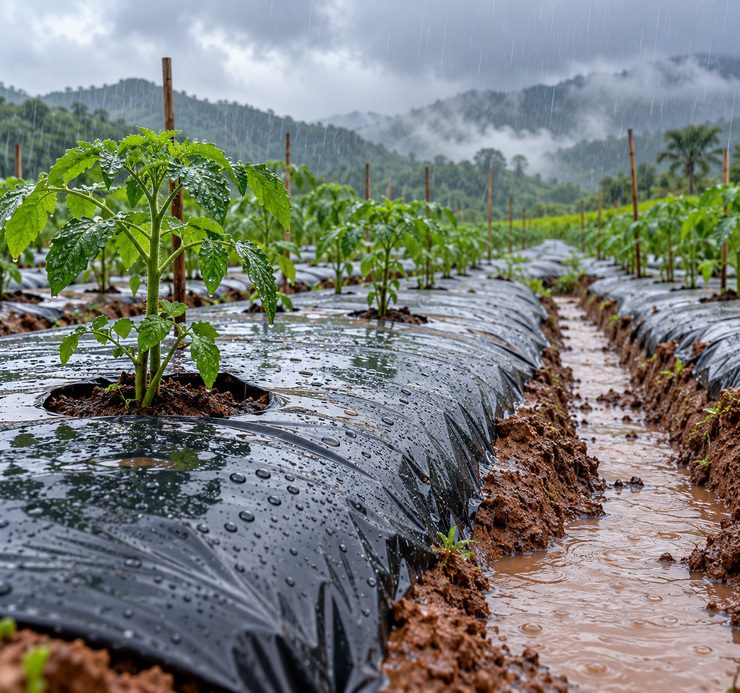
Film does not absorb water. Rain slides off the surface and enters through planting holes, perforations and the bare soil beside the bed. If that water has nowhere to go, it collects beneath the film and the root zone stays wet for days.When Mulch Causes Problems in Heavy Rain
Trouble starts when mulch is treated as a one-size-fits-all cover. Four mistakes cause most of the damage.Solid film on flat beds
Without a slope or perforations, rain pools on top and seeps through planting holes, leaving the roots soggy.Edges buried too tightly
Fully sealed edges stop water draining sideways, so the bed behaves like a tray.The wrong film
Very thin film tears in wind and rain, while clear film overheats the soil and lets weeds thrive underneath.Waterlogging-prone crops in low spots
Crops such as ginger and turmeric rot quickly when roots sit in standing water.Warning Signs Your Mulch Is Holding Too Much Water
- Water pooling on the film for more than a few hours
- Yellowing or drooping leaves despite regular feeding
- A sour, rotten smell when you lift the film
- Soft, discoloured stems or rhizomes at soil level
- Mould or algae on the soil surface
How to Mulch Smartly in a High-Rainfall Zone
Choose the right film
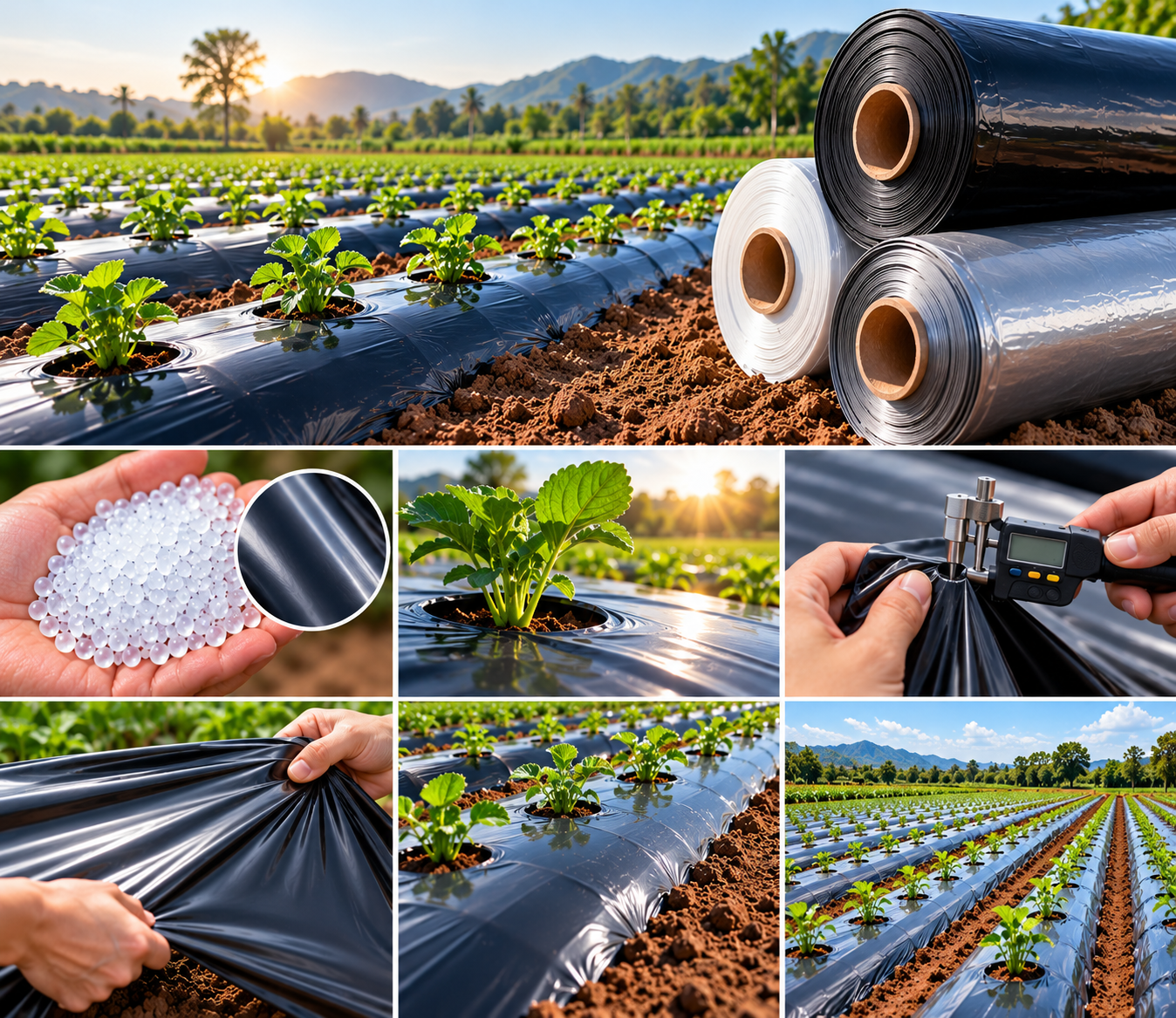
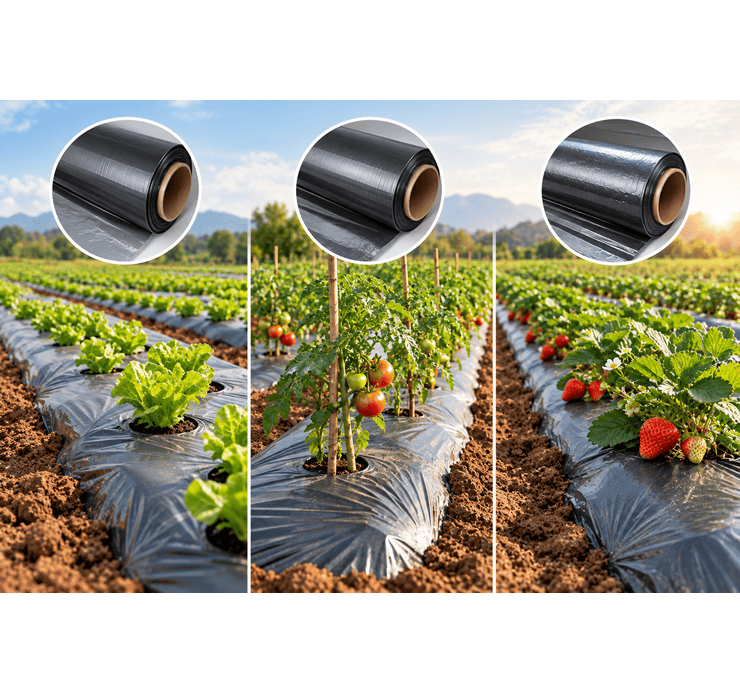
Pick perforated black or silver-black mulching films. Black blocks weeds, while silver-black reflects heat and helps deter some pests. For most vegetable and spice crops, a thickness of around 25 to 30 microns is a common choice; long-duration crops may need more.Build raised, sloped beds
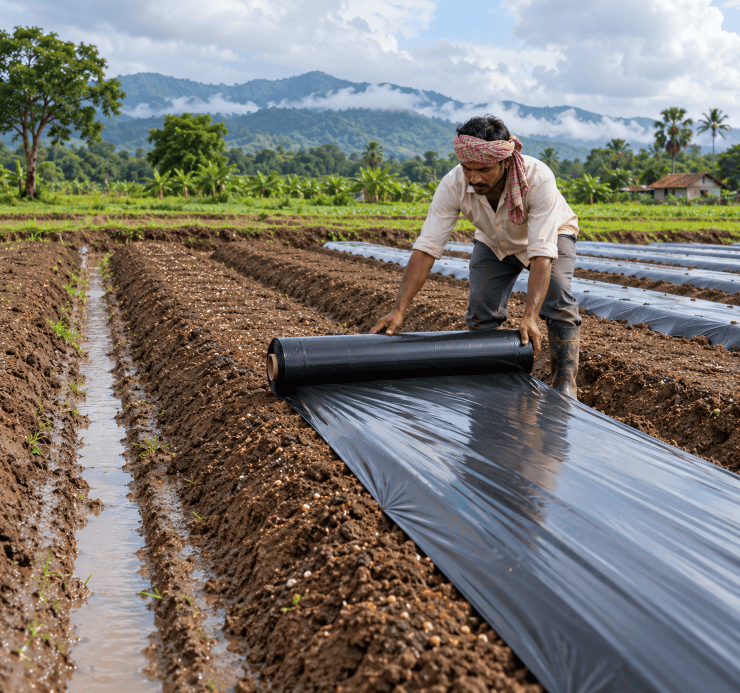
Beds six to eight inches high with a gentle slope let extra water run off instead of settling.Dig drainage channels
A shallow channel between beds carries water away before it reaches the roots.Anchor, don't seal
Hold the edges with soil in small trenches, but leave short gaps on the downhill side.Water under the film, not over it
Drip lines laid beneath the film give water only when the crop needs it, so you never add to what the sky is already supplying.Which Crops Benefit Most
- Ginger and turmeric: Raised beds with perforated film reduce rhizome rot and soil loss.
- Pineapple: Film between rows controls weeds on slopes.
- Tomato, chilli and capsicum: Cleaner fruit and fewer soil-borne diseases.
- Strawberry: Berries stay off wet soil, which cuts rot.
- Potato and cabbage: Better weed control, provided drainage is solid.
Plastic Film vs Organic Mulch in Heavy Rain
Both have a place on a hill farm.- Plastic film: A stronger rain shield that lasts longer, ideal for cash crops.
- Organic mulch (straw, pine needles, dry leaves): Improves soil as it breaks down, but can wash off steep slopes and shelter slugs when soaked.
- Biodegradable film: Breaks down after the season, leaving less waste behind.
What to Look for in Mulch Manufacturing Companies
Quality decides whether a film survives a monsoon. When comparing mulch manufacturing companies, check for:- Even thickness across the whole roll
- UV stabilisation, so the film does not crack under sun and rain
- Perforation options and a choice of widths
- A biodegradable range
- Honest guidance for your crop and climate