What Does Mulch Film Micron Thickness Mean?
A micron is a unit of measurement. One micron equals one-thousandth of a millimetre. In plastic mulch film, it tells you how thick the film sheet is. Think of it this way:- A human hair is roughly 70 microns thick
- A 20-micron film is very thin and light
- A 30-micron film is noticeably stronger and heavier
- How long the film survives in the field
- How well it holds up under rain, heat, and physical stress
- How easy or difficult it is to lay and remove
Thick or Thin: Which Mulch Film Is Better?
Not always. This is the most common misunderstanding among first-time buyers.| Factors | Thinner Film (20 mic) | Thicker Film (30 mic) |
| Cost | Lower | Higher |
| Durability | Shorter field life | Longer field life |
| Best for | Short crop cycles | Long or multi-season crops |
| Laying | Lighter, easier by hand | Slightly heavier, holds better |
| Removal | Can tear during pull-out | Comes off more cleanly |
Which Mulch Film Thickness Works for Which Crop?
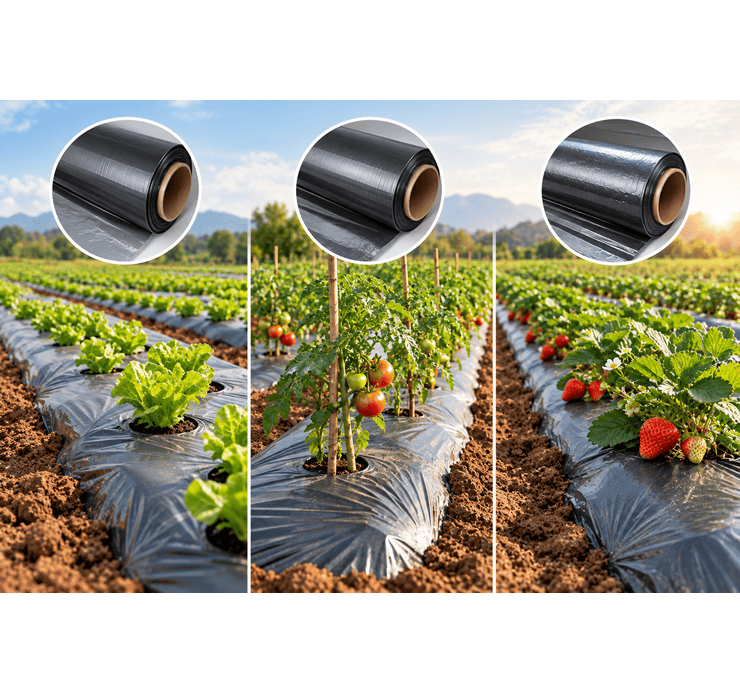
This is where most buyers need the clearest answer. Here is a straightforward breakdown: 20 Micron: Short-Duration Crops Suitable for crops with a growing cycle under 3 months. Works well for leafy vegetables like spinach, lettuce, coriander, and radish. Lightweight, easy to handle by hand, and cost-effective for fast-turnaround farming. Because the crop cycle is short, the film does not need to last long. 25 Micron: The Most Widely Used Option This is the standard choice across most of India for a reason. It covers mid-duration crops running 4 to 6 months: tomato, chilli, capsicum, cucumber, brinjal, and bitter gourd. It balances cost and durability well, and it is the thickness most agriculture mulch film buyers come back to season after season. For dealers, this is the fastest-moving option in most Eastern and Northeast India markets. 30 Micron: Long-Duration and High-Value Crops For crops that stay in the ground for 6 months or more: watermelon, papaya, strawberry, ginger, turmeric, 30 micron gives the film the life it needs to last the full season. It handles more physical stress during laying, holds up better under monsoon pressure, and removes more cleanly post-harvest. 50 Micron and Above: Heavy-Duty Use For mechanised farming operations, multi-season reuse, or farms where the film goes through significant physical stress, 50 micron and above offers the strongest durability. This range is less common for small and mid-sized farms but is worth knowing if your operation is scaling up.Does Terrain Affect Which Mulch Film You Need?
Yes, and this is something many buyers overlook.- Flat fields: Standard thickness recommendations apply directly. No additional stress on the film during or after laying.
- Hilly and terraced land: Film laid on a slope faces more pulling stress, especially during heavy rain when water runs down and lifts edges. A thicker film from 25 to 30 microns holds better and anchors more securely on uneven ground.
- Eastern and Northeast India: Regions like West Bengal, Assam, Meghalaya, and Jharkhand deal with intense monsoon seasons. The combination of heavy rainfall, soil pressure from waterlogging, and post-monsoon sun exposure means film durability matters more here. Going one step higher in microns from 20 to 25, or 25 to 30, is often the smarter call for these conditions.
How You Lay Mulch Film Affects Thickness Needed
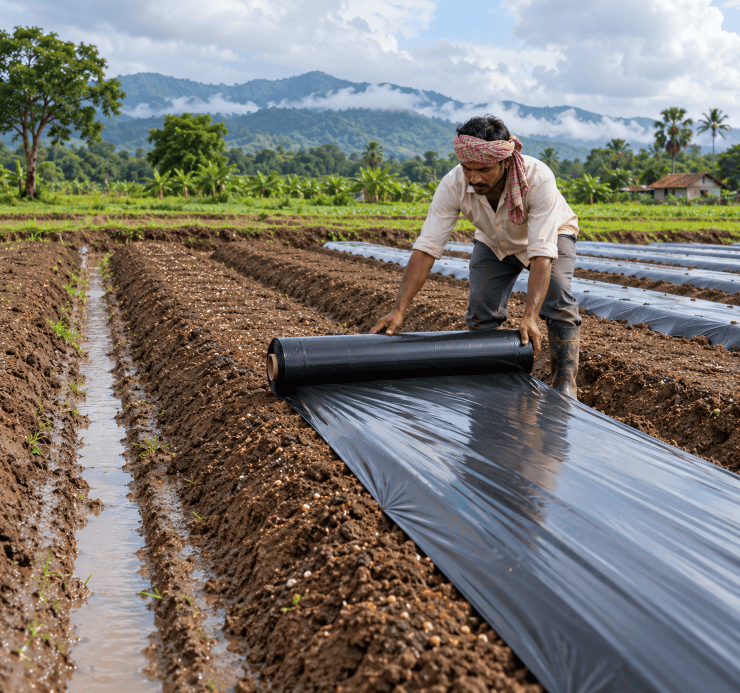
The way the film goes down affects which thickness works best.- Hand laying: Thinner films like 20 micron are lighter and easier to manage manually across long bed rows. Heavier films take more effort but offer better ground contact.
- Machine laying: Machines apply tension to the film as it rolls out. A minimum of 25 microns is generally recommended to avoid tearing under mechanical stress.
Things to Check Before Buying a Mulch Film?
Micron is important, but it is not the only thing on the spec sheet worth reading.- UV Stabilisation: A film without UV protection will break down within weeks under direct sun, regardless of how thick it is. Always confirm the film is UV-stabilised before buying.
- Virgin vs. Recycled Polyethylene: Agricultural mulching films made from 100% virgin PE give consistent thickness, reliable UV performance, and cleaner colour. Recycled material can vary batch to batch.
- Width and Roll Length: Match the width to your bed size. Common widths run from 2.5 ft to 4 ft. Roll lengths of 400m to 800m cover different field sizes. Confirm both before placing a bulk order.
Quick Reference: Mulch Film Thickness
| Micron | Crop Duration | Best Crop Examples | Terrain | Laying |
| 20 | Up to 3 months | Leafy vegetables, radish | Flat | Hand |
| 25 | 4 to 6 months | Tomato, chilli, cucumber | Flat or mild slope | Hand or machine |
| 30 | 6 to 12 months | Strawberry, watermelon, ginger | Hilly or heavy rain zones | Hand or machine |
| 50+ | Multi-season | Large-scale or mechanised farms | Any | Machine |
- Choosing thickness only on price, not crop cycle
- Using 20 micron on hilly terrain or through a full monsoon season
- Not checking whether the film is UV-stabilised before buying
- Ordering one width for all bed sizes on the farm
Which Mulch Film Thickness You Should Stock?
For dealers and distributors building inventory for Eastern and Northeast India:- 25 micron moves the fastest: stock this in the widest range of widths and roll lengths
- 30 micron is growing: especially for strawberry, ginger, and watermelon growers who have learned from one bad season with thinner film
- 20 micron suits price-sensitive buyers and short-cycle farming; keep it available but in smaller volumes
- When a buyer does not know what they need, ask two questions: What crop and how many months? The answer to both will tell you the right micron almost every time