What the Film Is Quietly Doing to Your Soil
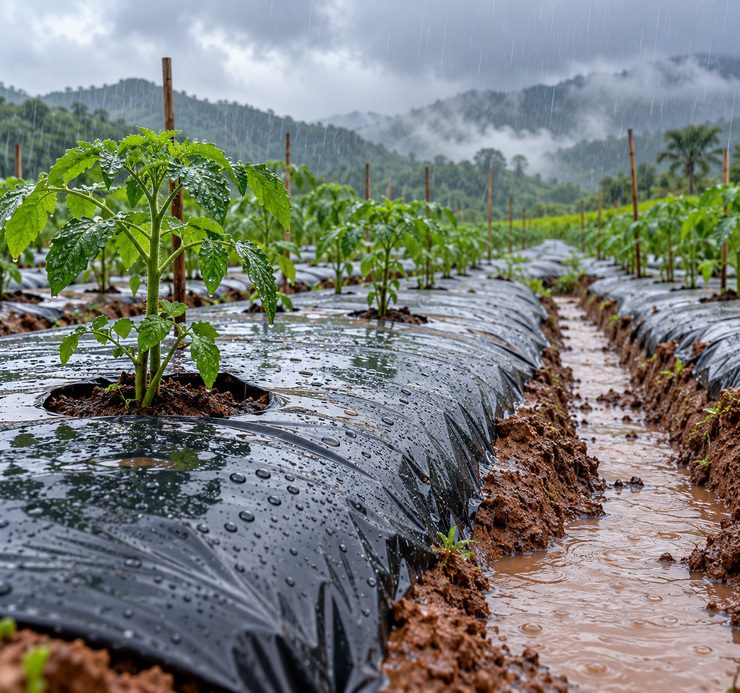
Mulch film covers the soil to retain moisture, regulate temperature, and suppress weeds. In dry seasons, this works exactly as it should. But in monsoon, the same properties that make film useful can work against you if the conditions are not managed correctly. Here is what changes under the film during heavy rain:- Moisture levels under the film rise sharply and stay high for longer
- Air circulation between the soil and the film surface drops close to zero
- Soil temperature stays warm while surface humidity stays high
- Organic matter trapped under the film begins to break down faster
Not All Mulch Film Handles Monsoon the Same Way
Not all agriculture mulch film behaves the same way in high-humidity conditions. The difference between a film that traps moisture and one that manages it comes down to colour, installation, and drainage.| Film Type | Monsoon Behaviour | Fungal Risk Level |
| Black film (no drainage) | Traps heat and moisture under surface | High in waterlogged zones |
| Black film (with drainage) | Manages moisture if installed correctly | Moderate |
| Silver / Bi-Colour film | Reflects surface heat, reduces under-film temperature | Lower |
| Transparent film | Allows heat build-up, worsens humidity | High, avoid in monsoon |
| Biodegradable film | Begins breaking down in high humidity | Medium, check decomposition rate |
Your Planting Holes May Be Inviting the Fungus
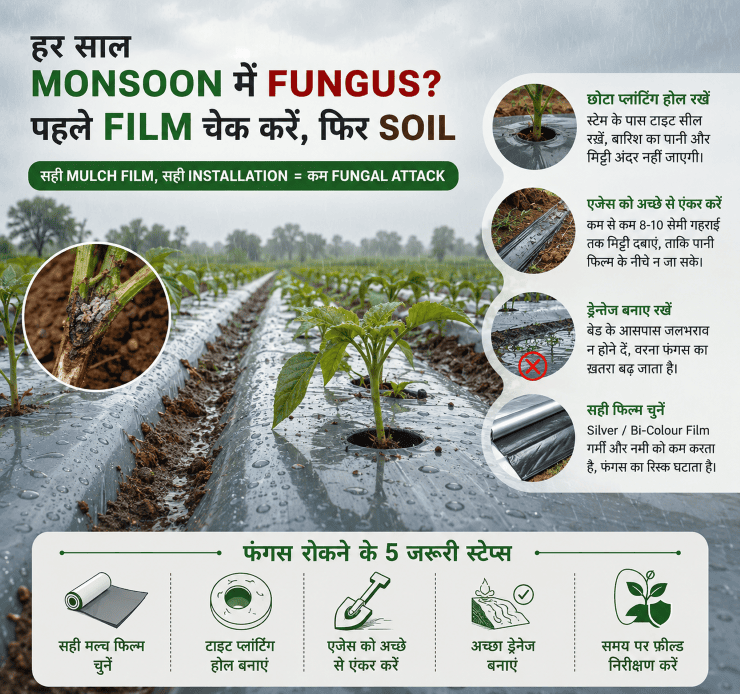
This is one of the most overlooked causes of monsoon fungal attacks and it has nothing to do with the film material itself. When planting holes are cut too large, a gap forms between the stem of the plant and the film edge. During heavy rain, this gap becomes an entry point. What happens through an oversized planting hole:- Rainwater carries soil particles and fungal spores directly into the root zone
- Soil splashes back upward through the gap, landing on the lower stem
- The gap stays wet longer than the surrounding film surface
- The enclosed warm air under the film creates the ideal temperature for spores to germinate
What Loose Film Edges Do During Heavy Rain
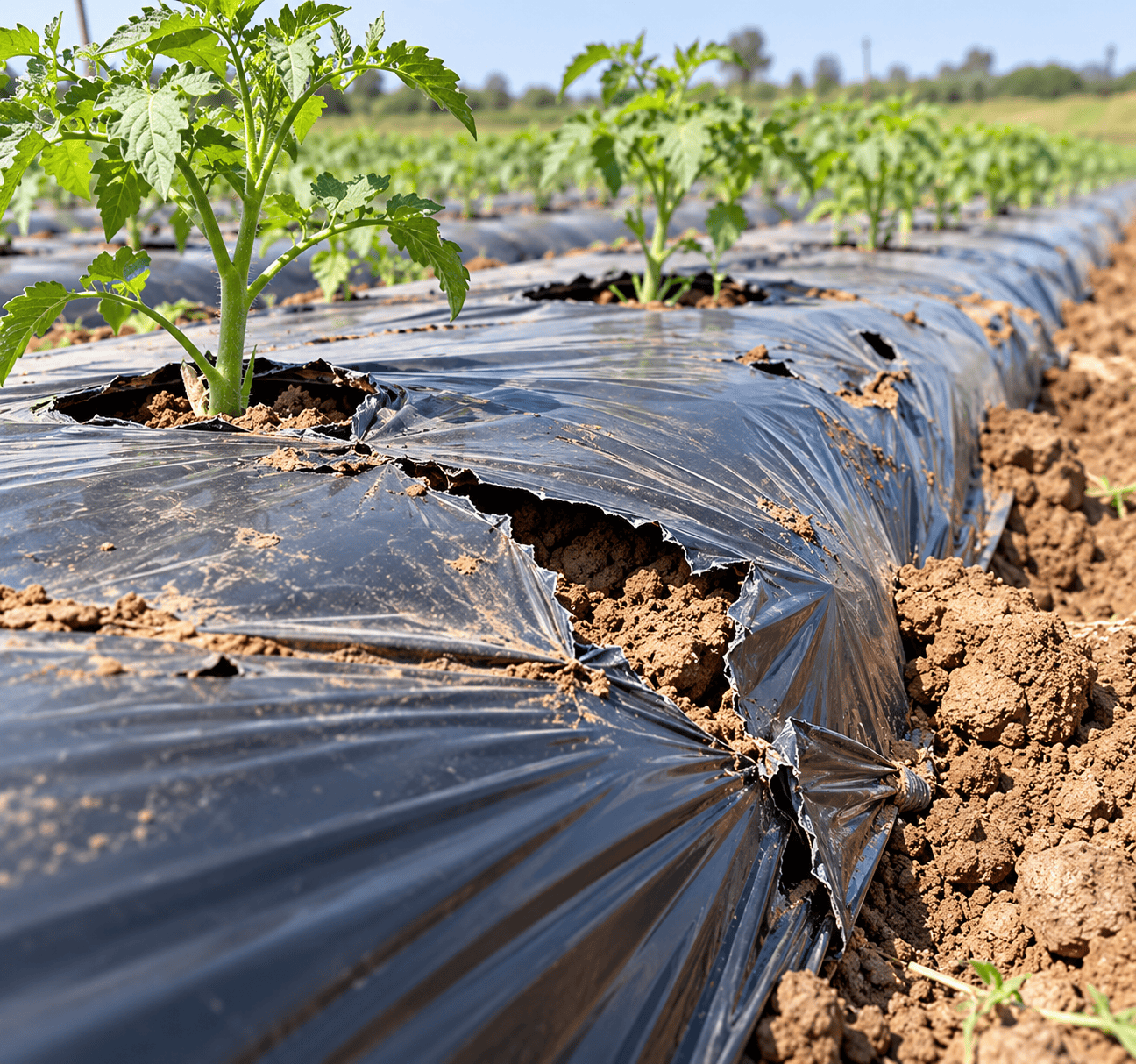
Most farmers focus on what is happening above the film. The real problem during the monsoon is often what is happening at the edges. When film edges are loosely anchored, monsoon rain lifts them. Water runs underneath. Soil disturbed by rain splash gets carried in. The wet soil under the film never fully dries out between rain events. Signs your film edges are failing during monsoon:- Visible soil deposits appearing near the base of plants under the film
- Fungal symptoms appearing first at the edges of beds, not the centre
- Film corners lifting after heavy rain events
- Wet soil visible under the film when you check edge anchoring
Fungus Already Spreading? Here Is What to Do
Sometimes the diagnosis comes too late. The fungal attack has already started under the film before you identified the cause. Here is what to do mid-monsoon if pressure is building:- Check planting holes first: widen or re-seal any gaps where soil splash is entering
- Lift and re-anchor any loose edges: stopping water entry is the first priority
- Improve drainage channels around beds: standing water near edges will keep finding a way under
- Avoid adding irrigation: most fungal pressure during monsoon comes from excess moisture, not lack of it
- Consider partial film removal on beds with severe waterlogging: ventilation sometimes matters more than moisture retention at this stage
- Do not pull the entire film if only edge sections are affected: targeted fixes cause less disruption
Which Crops Suffer Most Under Monsoon Film?
Some crops feel this problem more sharply than others. In Eastern India, these are the ones most commonly affected during monsoon:| Crop | Why It's Vulnerable | Common Fungal Issue |
| Chilli | Shallow roots, sensitive to wet soil | Phytophthora root rot |
| Brinjal | Dense canopy traps humidity at base | Stem rot, wilting |
| Tomato | Long crop cycle overlaps full monsoon | Early and late blight |
| Strawberry | Low-growing, close soil contact | Botrytis, grey mould |
| Cucumber | Sprawling growth, high soil moisture | Pythium rot |